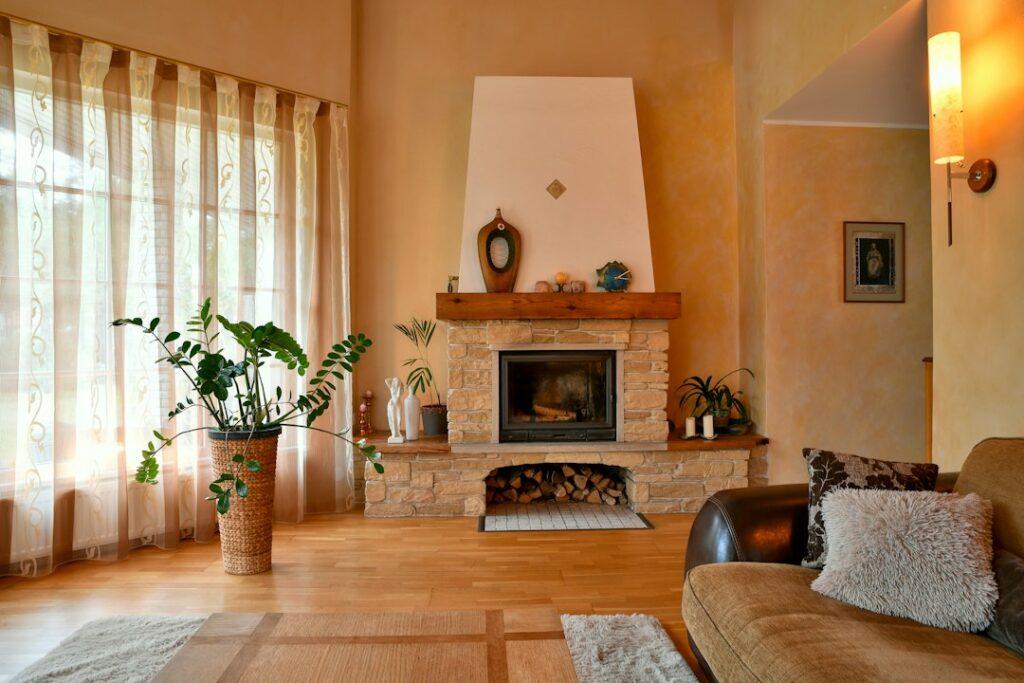
The floor in front of a fireplace does more heavy lifting than any other few square feet in your home. It catches stray embers, shrugs off dropped logs, and becomes the visual anchor that ties the whole room together. Great fireplace floor tile ideas balance three things at once: heat resistance, durability, and a look that complements your mantel and surround. Whether you are building a raised hearth, laying a flush landing, or refreshing a tired brick pad, the right tile turns a functional necessity into a design centerpiece.
Part of our Tile & Grout guide — explore the full guide →
Below are the materials, patterns, and practical specs that help you choose a hearth tile you will still love in ten years.
- Why Tile Is the Smart Choice for a Hearth
- Slate for Rustic and Craftsman Rooms
- Porcelain That Mimics Stone, Wood, or Concrete
- Marble and Travertine for Elegant Formal Spaces
- Patterned and Encaustic Tile for a Statement Hearth
- Herringbone, Basketweave, and Layout Ideas
- Color Pairings That Work
- Installation and Safety Notes
- Coordinating the Hearth with the Surround
- Maintenance and Cleaning
- Budgeting for a Tile Hearth
- Frequently Asked Questions
Why Tile Is the Smart Choice for a Hearth
Building codes require a noncombustible surface extending in front of and to the sides of most fireplaces, usually at least 16 inches out for openings under six square feet and 20 inches for larger ones. Tile satisfies that requirement beautifully. It resists heat, cleans up with a damp cloth, and comes in more colors and formats than any competing material.
Not every tile is equal, though. Porcelain and natural stone handle radiant heat and the occasional ember far better than glazed wall tile or anything with a resin component. Stick to floor-rated tiles with a PEI wear rating of 4 or 5 for a hearth that sees foot traffic, and confirm the material is rated for the temperatures near your firebox.
Slate for Rustic and Craftsman Rooms
Slate remains a hearth favorite for good reason. Its naturally cleft surface hides ash and soot, its earthy grays, rusts, and greens pair with brick and wood, and it takes heat without complaint. A hearth of 12-by-12 or 16-by-16 slate tiles reads warm and grounded, especially in Craftsman, farmhouse, and mountain-lodge interiors.
Seal slate with a penetrating stone sealer before grouting and again once a year. The sealer deepens the color and keeps soot from staining the porous surface. For a sleeker look, honed slate offers a smoother, matte finish that still hides dust well.
Porcelain That Mimics Stone, Wood, or Concrete
Modern porcelain is the workhorse of hearth design. High-definition printing lets a single tile convincingly imitate marble veining, weathered oak, or poured concrete at a fraction of the cost and maintenance of the real thing. Large-format porcelain slabs, some as big as 24 by 48 inches, create a nearly seamless hearth with minimal grout lines.
Concrete-look porcelain in soft gray suits contemporary and industrial rooms, while wood-look planks laid perpendicular to the firebox add warmth without the fire risk of actual timber. Because porcelain is dense and nearly nonporous, it needs no sealing and wipes clean effortlessly.
Marble and Travertine for Elegant Formal Spaces
When you want the hearth to feel refined, natural marble and travertine deliver quiet luxury. Carrara and Calacatta marble bring cool white fields with gray veining that dresses up a formal living room. Travertine offers warmer beige and cream tones with a naturally pitted texture that hides wear.
Both are softer and more porous than porcelain, so they demand sealing and a bit more care. Keep them away from acidic cleaners, which etch the surface. For a polished formal look, use large tiles with tight grout joints and a matching or contrasting marble surround to unify the design.
Patterned and Encaustic Tile for a Statement Hearth
If your fireplace is the focal point of the room, lean into it with pattern. Encaustic cement tiles and patterned porcelain create a bold, tapestry-like hearth that draws the eye. Moroccan-inspired geometrics, black-and-white checkerboards, and Victorian florals all work, especially in eclectic, bohemian, or vintage interiors.
- Encaustic cement tile: Rich matte patterns, but porous and needs sealing before and after grouting.
- Patterned porcelain: The same look with zero maintenance and better heat resistance.
- Handmade zellige: Glossy, slightly irregular tiles that catch firelight beautifully on a raised hearth face.
Frame a patterned field with a simple border tile to keep the design from fighting with the rest of the room.
Herringbone, Basketweave, and Layout Ideas
The tile pattern you choose changes the whole feel of the hearth, even with a single material. A running-bond layout feels casual and modern. Herringbone brings movement and a tailored, upscale look that works with brick surrounds. Basketweave mosaics add vintage charm to a small landing. For large slabs, a simple side-by-side layout with minimal grout lets the material speak for itself.
Consider the transition to your existing floor. A flush hearth that sits level with hardwood or carpet needs a clean metal or bullnose edge. A raised hearth becomes a step and, often, extra seating, so wrap the vertical face in the same or a coordinating tile.
Color Pairings That Work
Match the hearth to the surround and mantel rather than the wall paint, which changes over time. Cool gray tile flatters white or black surrounds and modern rooms. Warm terracotta, rust, and cream pair with brick, wood mantels, and traditional interiors. Black slate or dark porcelain grounds a light room and hides soot best of all. When in doubt, pull one color from your surround stone or brick and echo it in the floor tile for a cohesive result.
Installation and Safety Notes
Set hearth tile in a heat-resistant thinset mortar over a cement backer board, never directly over combustible subfloor within the required clearance zone. Use an unsanded grout for joints under 1/8 inch and a sanded grout for wider ones, and choose a grout color that hides ash. For gas fireplaces, standard floor tile setups are usually fine, but always follow the appliance manufacturer’s clearance specifications, which override general guidance.
If you are unsure about clearances or code in your area, have a mason or licensed installer confirm the layout before you tile. A properly built hearth protects your home and lasts decades. With the right material and pattern from these fireplace floor tile ideas, the space in front of your fire becomes as beautiful as it is safe.
Coordinating the Hearth with the Surround
The floor tile should never be chosen in isolation. It works as part of a trio with the surround, which frames the firebox, and the mantel above. A common and reliable approach is to use the same tile on the hearth floor and the surround for a unified, monolithic look, especially with large-format porcelain or marble. This makes a small fireplace feel more substantial and modern.
Alternatively, contrast the two intentionally. A patterned hearth floor paired with a simple stone surround lets each element shine without competing. Whichever direction you choose, pull a color from the surround into the floor, or vice versa, so the eye reads the fireplace as one composition rather than three unrelated finishes.
Maintenance and Cleaning
A hearth sees soot, ash, and the occasional scuff from firewood, so easy cleaning matters. Porcelain and glazed tile wipe clean with a damp cloth and mild cleaner, which is why they are the lowest-maintenance choice. Natural stone like slate, marble, and travertine needs periodic resealing, typically once a year, to keep soot and spills from staining the porous surface.
For everyday care, sweep or vacuum ash regularly so it does not grind into the finish. Avoid harsh acidic cleaners on marble and travertine, which etch and dull the stone. Keep a small ash bucket and a hearth brush nearby, and address soot marks promptly before they set. With minimal upkeep, a well-sealed tile hearth stays looking sharp season after season.
Budgeting for a Tile Hearth
A hearth is a small area, which keeps tile projects affordable even with premium materials. Basic ceramic and porcelain run a few dollars per square foot, slate falls in the middle, and marble or handmade patterned tile costs more. Because a typical hearth covers only 10 to 20 square feet, even a luxury tile keeps the total material cost modest, often under a couple hundred dollars.
The bigger cost driver is labor if you hire a pro, plus the heat-resistant setting materials and backer board. Still, a hearth is one of the most cost-effective places to use a tile you love, since the small footprint lets you splurge on a statement material that would be expensive across a whole floor. Factor in the surround if you are tiling that too, and get an itemized quote covering materials, labor, and prep.
Frequently Asked Questions
How far does hearth tile need to extend to the sides of the fireplace?
Under common US code, the noncombustible hearth extension must reach at least 8 inches past each side of the firebox opening when the opening is under six square feet, and at least 12 inches past each side for larger openings. That is in addition to the 16 or 20 inches in front. Local codes and the appliance manual can require more, so confirm before tiling.
Can you tile over an existing brick hearth?
Yes, if the brick is solid, clean, and not crumbling. Scrub off soot, grind down high spots, and fill the mortar joints and dips with a skim coat of thinset or patching mortar so the surface is flat. Tile set over uneven brick tends to crack or rock. Loose or heavily damaged brick should be repaired or removed first.
Can you use Mexican Talavera tile on a fireplace?
Yes, but put it where it suits. Handmade Talavera is a softer, glazed tile best used on the surround or the vertical face of a raised hearth, where it adds color without taking foot traffic. For the floor of the hearth, terracotta pavers such as Saltillo, sealed well, or a durable porcelain in a Mexican-style pattern stand up better to logs and boots.
Can vinyl or laminate flooring run up to a tile hearth?
Yes, as long as it stops at the edge of the required noncombustible hearth extension and never runs underneath it. Leave the expansion gap the flooring calls for, then finish the joint with a transition strip, bullnose tile, or quarter round so the edge looks clean. Check the flooring maker’s guidance on heat exposure near wood-burning fireplaces.
Prefer to explore on your own?
See how new flooring looks in your actual room in seconds — free, no signup.
Try the free Floor Studio →