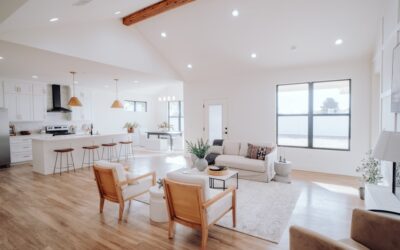
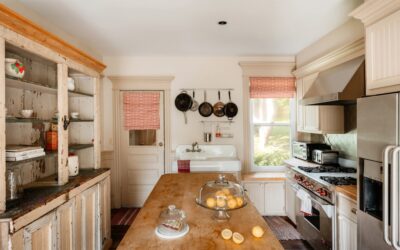
The Joanna Gaines effect changed every kitchen and mudroom remodel I quoted between 2017 and 2023. Clients arrived with photos of black-and-white checkerboard tile, plank-style wood-look porcelain, and hexagon mosaic transitions that stretched the flooring budget by 30 percent. Farmhouse tile flooring ideas deliver durability, timeless design, and a vocabulary that holds up across kitchens, baths, mudrooms, and entries. The trick is choosing the right tile for the right room and not overdoing the rustic notes.
Part of our Tile & Grout guide — explore the full guide →
- The Foundation Materials
- Idea One: Wood-Look Porcelain Plank
- Idea Two: Black and White Checkerboard
- Idea Three: Hexagon Mosaic Mudroom
- Idea Four: Subway Tile Around Fireplace
- Idea Five: Slate or Soapstone Hearth
- Idea Six: Cement Look Tile
- Idea Seven: Travertine Mudroom
- Pros of Farmhouse Tile Flooring
- Cons to Plan For
- Design Pairings That Work
- Bottom Line on Selection
The Foundation Materials
Farmhouse style works with three main tile categories. Porcelain in wood-look planks and matte solid colors handles 80 percent of the look. Ceramic in classic patterns (subway, hexagon, basketweave) accents specific rooms. Natural stone (slate, soapstone, travertine) appears as targeted statement areas — fireplace hearths, mudroom floors, sometimes powder rooms.
Each material has different durability, cost, and installation needs. Mixing them tastefully is the entire challenge.
Idea One: Wood-Look Porcelain Plank
The dominant farmhouse floor now is 8 to 12 inch wide porcelain planks printed to look like distressed white oak, weathered barn wood, or aged hickory. Brands like Daltile Emerson Wood, Marazzi American Heritage, and Florida Tile Berkshire all run $3 to $7 per sq ft for the tile alone.
The advantages are real: porcelain is waterproof, scratchproof, and indestructible against pet claws. The look reads as authentic farmhouse from 5 feet away even though the tile is fully synthetic. Installed cost runs $8 to $14 per sq ft.
The catch is grout color and joint width. Use a 1/16-inch joint with a grout color matched to the planks (warm gray, mocha, weathered cream) to maintain the wood illusion. Wide grout in stark white kills the effect immediately.
Idea Two: Black and White Checkerboard
The classic farmhouse kitchen floor is 8 by 8 or 12 by 12 inch tiles in alternating black and white, set on the diagonal or square. Daltile and American Olean both offer the basics at $1.50 to $4 per sq ft material. Premium options in honed marble (Carrara white and Nero Marquina) run $8 to $20 per sq ft.
The look anchors a kitchen in unmistakable farmhouse style. It reads slightly more formal than wood-look planks, which makes it ideal for kitchens that want a country French or English farmhouse feel rather than rustic American.
For a budget version, consider sheet vinyl or LVT in checkerboard pattern at $2 to $5 per sq ft installed. The look is similar from standing height, and the warmer underfoot feel is welcome in a kitchen.
Idea Three: Hexagon Mosaic Mudroom
A 2 to 3 inch hexagon mosaic in matte porcelain works beautifully in mudrooms, half-baths, and laundry rooms as a defined zone within a larger plank floor. White hex with dark gray grout reads classic; cement-look gray hex reads more modern farmhouse.
Hex mosaic comes pre-mounted on 12 by 12 inch sheets at $5 to $15 per sq ft. Installation is easier than it looks because the sheets handle the spacing automatically. Plan on $9 to $18 per sq ft installed.
Use hex mosaic to mark transitions — from kitchen to mudroom, from main hall to powder bath. The shape change reads as intentional architectural distinction rather than sloppy material mixing.
Idea Four: Subway Tile Around Fireplace
Subway tile is more typically a backsplash material, but 4 by 12 or 4 by 16 inch white subway around a kitchen fireplace surround or a hearth ties the floor and wall vocabulary together. Offset 1/3 brick pattern looks classic; vertical stack reads modern farmhouse.
Beveled subway in pure white runs $2.50 to $5 per sq ft. Hand-made or zellige-style subway from companies like Cle or Fireclay Tile climbs to $20 to $40 per sq ft for true artisan tile with color variation.
Idea Five: Slate or Soapstone Hearth
For a wood-stove or fireplace hearth, natural slate or soapstone in 12 by 12 or 16 by 24 inch tiles delivers the rustic farmhouse note without committing the whole floor. Vermont slate runs $7 to $14 per sq ft. Brazilian soapstone hits $15 to $30 per sq ft.
Both materials are heat-resistant, indestructible, and develop patina over years. They contrast nicely with wood-look porcelain throughout the rest of the room, anchoring the fireplace as a focal point.
Idea Six: Cement Look Tile
Encaustic-look cement tile (printed porcelain that mimics traditional cement tile patterns) brings vintage European farmhouse character to entries, half-baths, and laundry rooms. Printed patterns include florals, geometrics, and Moroccan motifs. Brands like Walker Zanger, Cement Tile Shop, and Daltile Quartetto run $4 to $14 per sq ft for porcelain replicas.
Genuine cement tile (Cle, Granada Tile) costs $10 to $30 per sq ft. The real material is more porous and needs sealing, but the depth and texture is unmatched. Use it in low-water entries, not full bathrooms.
Idea Seven: Travertine Mudroom
Tumbled travertine in 4 by 4 or 6 by 6 inch tiles brings warm, lived-in character to mudrooms and entries. The natural stone reads farmhouse and ages beautifully under boot traffic. Installed cost runs $9 to $16 per sq ft.
Travertine needs sealing (Aqua Mix Sealer’s Choice Gold, $35 a quart covers 200 sq ft) and re-sealing every 2 to 3 years. The maintenance is reasonable for a defined mudroom area, less so for whole-house installation.
Pros of Farmhouse Tile Flooring
- Indestructible against pets and kids: Porcelain shrugs off claws, dropped tools, spills
- Waterproof in wet zones: Kitchens, baths, mudrooms all benefit
- Easy cleaning: Damp mop with neutral cleaner; no special products required
- 20 to 50 year lifespan: Tile outlasts every other flooring category
- Strong resale appeal: Farmhouse style remains broadly popular across regional markets
Cons to Plan For
Cold underfoot is the most common complaint. Tile sits 10 to 15 degrees below room air temperature in cool climates. Electric radiant cable underneath solves it ($8 to $12 per sq ft installed) but doubles the project budget.
Hard underfoot fatigue is real in kitchens with long standing time. Anti-fatigue mats at the sink and prep zones are non-negotiable for cooks who spend 4-plus hours in the kitchen daily.
Grout maintenance never goes away. Even sealed grout collects dirt and stains over years. Plan on a deep grout cleaning every 12 to 24 months and a re-seal every 2 to 4 years.
Design Pairings That Work
White or cream walls, distressed wood ceiling beams, and shaker-style cabinets in white, cream, sage green, or navy all pair with farmhouse tile flooring. Hardware in matte black, oil-rubbed bronze, or antique brass completes the look.
Avoid stark contemporary furniture, glass dining tables, and mid-century modern accents that fight the farmhouse vocabulary. The design language rewards consistency.
Bottom Line on Selection
Pick one dominant tile (typically wood-look porcelain plank) and one accent tile (hex mosaic, checkerboard, or cement look) per project. Trying to use four or five different tiles creates visual chaos that reads as design indecision rather than thoughtful detail. The best farmhouse tile flooring ideas commit to a clear vocabulary and let the tile do the work over the next 20 years.
Prefer to explore on your own?
See how new flooring looks in your actual room in seconds — free, no signup.
Try the free Floor Studio →