
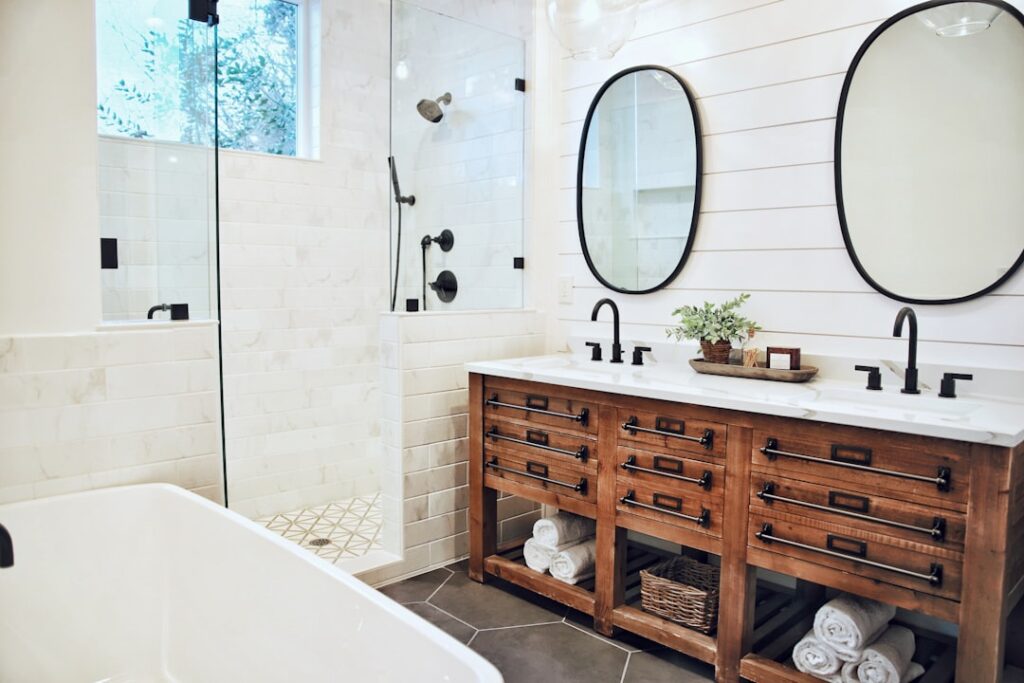
The farmhouse bathroom has staying power because it is built on practical, hardworking materials, not fleeting trends. At the heart of the look is farmhouse bathroom tile — think crisp white subway on the walls, a checkerboard or hex pattern underfoot, and grout lines that feel honest rather than fussy. Done well, the style reads warm and lived-in, like a room that has been comfortable for a hundred years. Done poorly, it tips into theme-park country kitsch. The difference comes down to a few choices about pattern, color, and material.
What Defines the Farmhouse Tile Look
Farmhouse style borrows from old rural homes where everything had to be durable and easy to clean. That heritage shows up in the tile: simple shapes, matte or lightly textured surfaces, and palettes built around white, soft black, and natural wood tones. Pattern does the decorating, not loud color.
The contrast between light tile and darker grout — or the reverse — is a signature move. It outlines each tile, emphasizes classic shapes, and gives the room that handmade, slightly imperfect character that defines the style. Glossy, ultra-modern finishes work against the look; matte, honed, and crackle glazes work with it.
Classic Tile Patterns for Farmhouse Bathrooms
A handful of layouts carry the style. Mix two or three across floor, walls, and shower for depth.
- Subway tile: 3×6 white subway in a running bond is the backbone of farmhouse walls. A herringbone or vertical stack reads more updated.
- Black and white checkerboard: the quintessential farmhouse floor, laid straight or on the diagonal for a vintage feel.
- Hexagon mosaics: small white hex with contrasting grout nods to early-1900s bathrooms and resists slips when honed.
- Penny round: tiny circular tiles bring texture and a period-correct touch on floors and shower niches.
- Basketweave: marble-look basketweave delivers an instant heritage feel underfoot.
Best Materials and Why
Bathrooms are wet, humid rooms, so material choice is about performance first and looks second. The good news is that the most authentic-looking options also hold up well.
Porcelain and ceramic
For most homeowners, glazed porcelain is the smart pick. It mimics marble, cement, and aged stone convincingly, costs roughly $3 to $12 per square foot, and shrugs off moisture with near-zero maintenance. Ceramic subway tile runs even cheaper, often under $3 a square foot for plain white.
Natural stone
Honed marble and limestone deliver unmatched authenticity for that aged farmhouse feel, but they cost more — frequently $10 to $25 per square foot — and need periodic sealing because they stain and etch. Reserve stone for a feature floor or shower bench rather than every surface.
Cement-look tile
True encaustic cement tile is gorgeous and porous; the porcelain versions that copy it give you the pattern without the sealing chores. For a busy family bathroom, the porcelain look-alike is usually the wiser call.
Color Palettes That Work
Keep the base neutral and let one or two accents do the talking. White and warm off-white walls reflect light and make small bathrooms feel larger. Soft black, charcoal, and muted greens or blues bring depth without overwhelming the room.
Grout color is a design decision, not an afterthought. White tile with light gray grout stays clean-looking and easy to maintain; white tile with charcoal grout delivers the high-contrast vintage look but shows lime scale faster. For floors, a mid-gray grout hides dirt better than bright white, which is worth remembering in a bathroom that sees daily use.
Layout and Scale Tips
Scale tile to the room. Large-format tiles can swallow a small powder room, while tiny penny rounds can feel busy across a large floor. In a compact farmhouse bath, 3×6 subway on the walls and a 1- or 2-inch hex on the floor balances nicely.
Run subway tile to the ceiling on at least one wall for that drenched, period feel, and cap it with a simple bullnose or a thin pencil trim rather than an ornate border. On floors, a diagonal checkerboard makes a narrow bathroom feel wider, while a straight set keeps a larger room calm.
Grout and Sealing
Grout is where farmhouse bathrooms succeed or fail over the long haul. Use a quality grout in a color you have tested against a tile sample, because grout dries lighter than it looks wet. Seal cement-based grout after it cures, and reseal floor grout every year or two to keep it from absorbing dirt and water.
If you want to skip sealing altogether, epoxy grout is waterproof and stain-proof out of the gate. It costs more and is harder to install, but in a high-use shower it pays off by staying clean for years.
Budgeting Your Tile Project
Tile cost varies widely with material and how much surface you cover. A simple farmhouse bathroom with white ceramic subway walls and a porcelain hex floor can land at the low end, while a fully tiled room in honed marble climbs quickly. Beyond the tile itself, budget for thinset, grout, trim pieces, a waterproofing membrane in the shower, and labor if you hire out — installation often runs $7 to $15 per square foot depending on the pattern’s complexity.
Patterns like herringbone, basketweave, and diagonal layouts cost more to install because they take longer and waste more tile in cuts. A smart way to control cost is to splurge on a feature — a marble shower floor or a checkerboard floor — and keep the surrounding field tile simple and affordable. That approach gives you the high-end farmhouse look without tiling the entire room in premium stone.
Pulling the Look Together
Tile sets the stage, but the supporting cast finishes the scene. Pair your farmhouse bathroom tile with a pedestal or apron-front vanity, oil-rubbed bronze or matte black fixtures, and warm wood accents to keep the room from feeling cold. Add a vintage-style mirror and simple lighting, and the tile reads as part of a cohesive room rather than a showroom display. Choose durable porcelain where water lives, save natural stone for the accents, and the bathroom will look right for decades, not just until the next trend.
Prefer to explore on your own?
See how new flooring looks in your actual room in seconds — free, no signup.
Try the free Floor Studio →

