It seems like the simplest object in the bathroom, yet the wrong one turns your bar soap into a melting puddle within days. A good ceramic soap dish does one job exceptionally well: it lets the bar drain and dry between uses so it lasts longer, stays firm, and does not leave a slimy ring on your counter. With the resurgence of bar soap and natural soap makers, these dishes are back in demand. Here is how to pick one that actually keeps soap dry and looks great doing it.
Part of our Tile & Grout guide — explore the full guide →
Why Drainage Matters More Than Looks
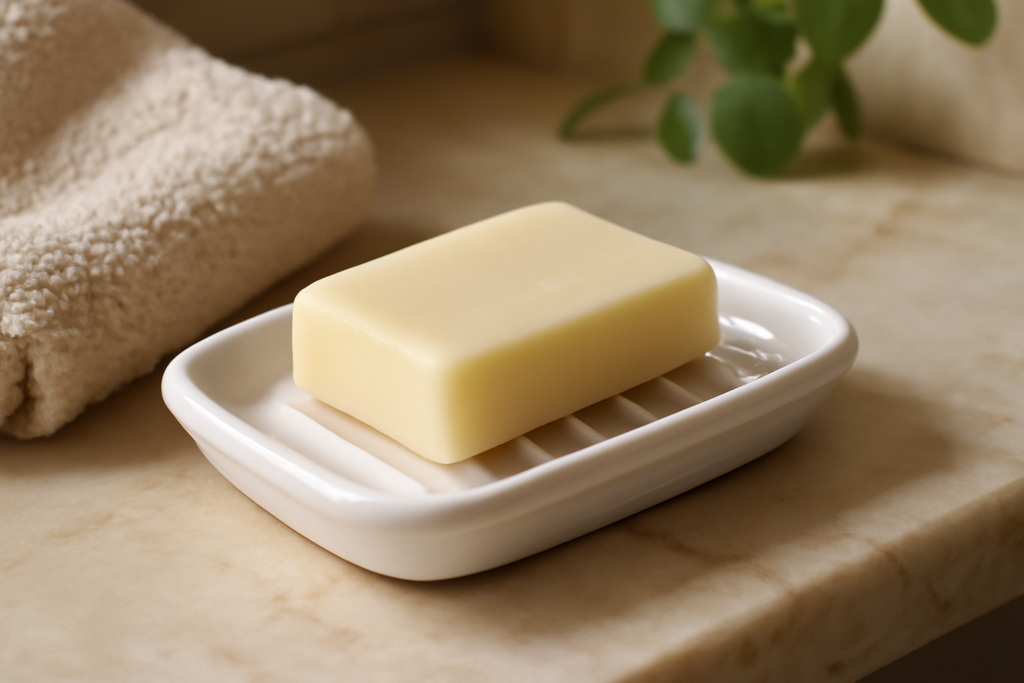
Bar soap dissolves when it sits in standing water. A soap dish without proper drainage traps that moisture against the bar, and within a few uses you get a soft, mushy mess that disappears twice as fast. The best ceramic soap dishes solve this with ridges, slots, holes, or a slatted design that lifts the bar above any water that drips off it. The water either drains away or evaporates instead of pooling.
When shopping, prioritize drainage geometry over decoration. A beautiful flat dish with no ridges will frustrate you. A simple dish with raised bumps or channels will keep your soap firm and stretch its life considerably.
Common Drainage Styles
Ceramic dishes handle water in a few distinct ways.
- Ridged or bumped base: Raised ribs hold the bar above a shallow well. Simple and effective.
- Drainage holes: Perforations let water escape onto the counter or sink below.
- Two-piece self-draining: A slotted top tray sits over a lower catch basin you empty periodically.
- Slatted bridge: Open slats that maximize airflow under the bar.
Two-piece self-draining designs are the gold standard for keeping counters dry, since the catch basin contains the runoff instead of letting it spread.
Glazes and Finishes
Ceramic soap dishes come glazed or unglazed, and each behaves differently. Glazed ceramic has a glossy, sealed surface that wipes clean easily and resists staining, making it the low-maintenance choice for most bathrooms. Unglazed or matte stoneware has a porous, tactile finish that some people love for its earthy look, but it can absorb soap residue and stain over time, so it needs more frequent cleaning.
For a kitchen sink where you wash dishes by hand, a wipe-clean glazed dish is the practical pick. For a powder room where appearance leads, a handmade matte stoneware dish can be a charming accent.
Choosing the Right Size
Match the dish to your soap and your space. Standard bath bars need a dish roughly 4 to 5 inches long, while large artisan or kitchen bars may require something closer to 5 to 6 inches. Measure your counter or sink ledge before buying so the dish does not crowd the faucet. A general price range for a quality ceramic soap dish runs about $8 to $30, with handmade pottery pieces costing more.
Why Ceramic Over Other Materials
Soap dishes come in plastic, bamboo, concrete, metal, and ceramic, and each has trade-offs. Ceramic stands out for a few reasons. It is heavier and more stable than plastic, so it does not slide around or tip when you set a wet bar on it. The glazed surface does not harbor odors the way some plastics and porous woods can, and it wipes clean easily. Ceramic also resists the rust that plagues metal dishes in humid bathrooms.
Aesthetically, ceramic simply looks more finished. A glossy white or hand-glazed stoneware dish reads as a deliberate accent rather than a utilitarian afterthought, which is why it remains the default choice for bathrooms and kitchens where appearance counts. The main downside is that ceramic can chip or crack if dropped on a hard floor, so handle it with the same care you would any pottery.
Matching a Dish to Your Decor
A soap dish is small, but it is visible every day, so coordinate it with your space. In a clean modern bathroom, a simple glossy white or matte black dish blends seamlessly. For a farmhouse or rustic look, handmade stoneware in earthy glazes adds warmth and texture. Coastal and spa-style baths suit soft blues, greens, and sandy tones. If you have a soap dispenser, toothbrush holder, or tumbler in the same finish, matching the soap dish to that set pulls the counter together. Many makers sell coordinated bath accessory sets so the pieces share a glaze and shape.
How to Clean a Ceramic Soap Dish
Soap dishes accumulate scum, which is dried soap residue mixed with hard-water minerals. Clean it regularly with this routine:
- Empty and rinse the dish under warm running water.
- Scrub built-up scum with a soft brush or sponge and a little dish soap.
- For stubborn residue or mineral deposits, soak the dish in a solution of equal parts warm water and white vinegar for 15 to 30 minutes, then scrub and rinse.
- Dry thoroughly before returning the soap.
Avoid harsh abrasive pads on glossy glazes, which can dull the finish. A vinegar soak handles both soap scum and the chalky white limescale that hard water leaves behind.
Getting the Longest Life From Your Soap
Pairing the right dish with a few habits makes bar soap last noticeably longer. Let the bar dry fully between uses, cut large bars in half so each half stays drier, and empty any catch basin before water sits stagnant. A well-chosen ceramic soap dish is a tiny upgrade that quietly saves money, keeps your counters clean, and looks far nicer than a soggy bar sitting in a puddle.
Where to Place a Soap Dish
Placement is its own small decision. Beside a bathroom sink, set the dish where drips will not run toward outlets or onto the floor, ideally on the dry side of the faucet. In a shower, a recessed niche or a corner shelf away from the direct spray keeps the bar from washing away between uses; a dish that drains toward the wall rather than onto the seat works best there. At a kitchen sink, position it close enough to reach with wet hands but far enough from the basin that constant splashing does not keep the bar wet.
If counter space is tight, consider a wall-mounted ceramic dish or a self-draining model with a catch tray, both of which keep the surrounding surface dry. Thoughtful placement does as much as the dish design itself to keep soap firm and your space tidy.
Prefer to explore on your own?
See how new flooring looks in your actual room in seconds — free, no signup.
Try the free Floor Studio →