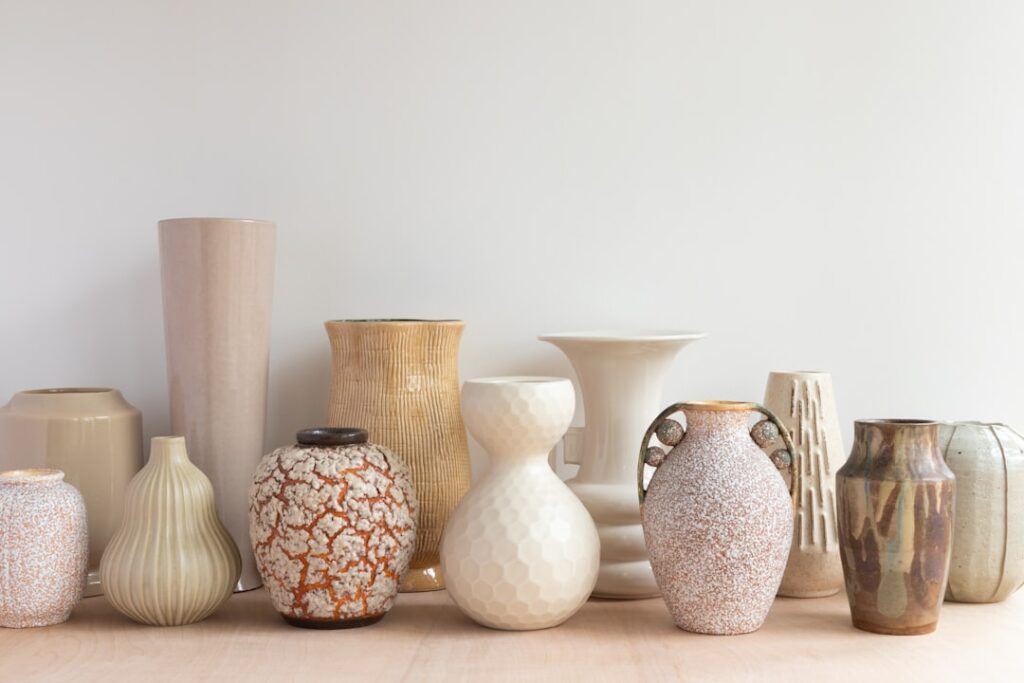
Few decor pieces work as hard as a good vase. Ceramic vases bring sculptural form, color, and texture to a room whether they hold fresh flowers, dried stems, or simply stand on their own as art. From minimalist matte cylinders to glossy hand-thrown bottle shapes, ceramic offers more variety than glass or metal, and the material’s weight gives it a grounded, quality feel. This guide covers the styles available, glaze and finish options, how to choose the right size, and how to care for them.
Why Ceramic Stands Out
Ceramic is formed from fired clay, which means it can be shaped into almost any silhouette and finished in an endless range of glazes and textures. Unlike clear glass, ceramic hides stems and water lines, so an arrangement looks clean from every angle. Its heft also keeps top-heavy bouquets from tipping, a practical advantage over lighter materials.
The material reads as both classic and contemporary depending on the form. A crackle-glaze ginger jar feels traditional, while a sleek matte-black vessel looks modern. That versatility is why ceramic remains a designer staple.
Common Styles and Shapes
Vase shape drives the whole look, and certain silhouettes recur across decor.
- Bud vases — small and slim, perfect for a single stem or a tight grouping.
- Bottle and bottleneck vases — narrow necks that hold a few stems upright with structure.
- Cylinder vases — clean, modern columns for full bouquets.
- Bulb and ginger-jar shapes — rounded bodies with classic, traditional appeal.
- Sculptural and organic forms — asymmetrical or abstract pieces meant to stand alone.
Grouping vases of varied heights and shapes in odd numbers, such as three or five, creates a curated vignette that feels more intentional than a single piece.
Glazes and Finishes
The glaze defines a vase’s personality as much as its shape. Common finishes include glossy glazes that reflect light and feel polished, matte glazes that read soft and contemporary, and reactive or crackle glazes that pool and vary across the surface for a one-of-a-kind look. Unglazed terracotta and stoneware offer an earthy, natural texture.
Color ranges from neutral whites, creams, and greiges that suit any palette to bold cobalt, terracotta, and forest green for a statement. Earthy, organic glazes have been especially popular for the handmade, artisanal feel they bring to a room.
Choosing the Right Size and Placement
Scale is what makes a vase look right in its spot. A piece that is too small disappears, while one too large overwhelms.
- On a dining or coffee table, keep low vases under about 12 inches so they do not block sightlines.
- On a mantel or console, taller vases of 12 to 24 inches add vertical interest.
- Floor vases, often 24 inches and up, fill empty corners and flank furniture.
- For flowers, the vase opening should support the stems; narrow necks hold loose bouquets upright.
Consider the proportion to your flowers too. A general rule is that the arrangement looks balanced when the flowers rise to roughly one and a half times the vase height.
What You Will Pay
Ceramic vases span a wide price range. Mass-produced decorative vases run roughly $15 to $50. Mid-range pieces with quality glazes and heavier bodies land around $40 to $120. Handmade, artisan, and large floor vases can reach $150 to $400 or more, with collectible studio pottery higher still. Sets of coordinating vases often offer better value than buying individually.
Care and Maintenance
Ceramic vases are easy to care for with a little attention. Dust glazed surfaces with a soft, dry cloth, or wipe with a damp cloth and mild soap for grime, then dry to avoid water spots. For the inside, where mineral deposits and flower residue build up, fill the vase with warm water and a splash of white vinegar, let it sit, then scrub gently with a bottle brush.
- Check whether the vase is watertight before using fresh flowers; some unglazed pieces seep and need a liner.
- Add felt pads to the base to protect wood and stone surfaces from scratches.
- Avoid sudden temperature changes, which can crack the body through thermal shock.
- Handle by the body, not the neck, since narrow necks are the most fragile point.
Styling Ideas
Beyond flowers, ceramic vases earn their place in many ways. Fill a tall vase with dried pampas grass or eucalyptus for a low-maintenance arrangement, cluster bud vases down a table runner for a dinner party, or let a single sculptural piece stand alone on a shelf as art. Mixing finishes, such as one glossy and two matte, adds depth to a grouping.
Ceramic vs Other Vase Materials
Each vase material has its place. Clear glass shows off stems and water, which suits a single dramatic flower, but it reveals murky water and tangled stems just as readily. Metal vases feel sleek and modern but can be cold and prone to fingerprints. Ceramic strikes a balance: it hides the inner workings of an arrangement, comes in endless colors and textures, and carries enough weight to stay stable.
The main consideration with ceramic is fragility and weight. A large ceramic floor vase is heavy and can chip if knocked, so it suits a settled spot rather than one you move often. For most homeowners, the trade-off is well worth the depth of color and form that ceramic provides.
Seasonal and Year-Round Display
Ceramic vases adapt easily to the seasons, which makes them a smart investment. In spring and summer, fill them with fresh-cut flowers or bright blooms. In fall, switch to branches, dried wheat, or warm-toned stems. In winter, evergreen sprigs or simple bare branches keep the look fresh without fresh flowers.
For year-round, low-effort styling, dried and preserved botanicals such as pampas grass, eucalyptus, and bunny tails last for months and need no water. A few well-chosen vases with seasonal fillers let you refresh a room’s look repeatedly without buying new decor, getting maximum value from each piece.
Final Thoughts
Versatile, durable, and endlessly varied, ceramic vases are among the easiest ways to add texture and personality to a home. Choose shapes and glazes that suit your style, scale them to their spot, and keep them clean inside and out, and they will stay beautiful display pieces for years, with or without flowers.
Prefer to explore on your own?
See how new flooring looks in your actual room in seconds — free, no signup.
Try the free Floor Studio →