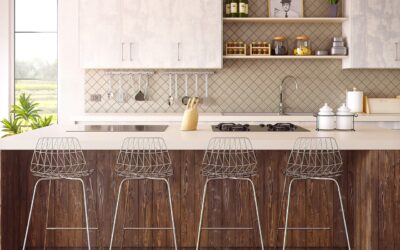
A full kitchen remodel can run $25,000 or more, but here’s a secret contractors know: your cabinet boxes are usually fine. It’s the doors and drawer fronts, scratched, dated, or warped, that make a kitchen look tired. A cheap cabinet doors replacement swaps just those visible surfaces, transforming the entire room for a tiny fraction of the cost of new cabinetry. Done as a DIY project, you can reface a whole kitchen for a few hundred to a couple thousand dollars. This guide shows you exactly how to do it affordably and where to find the best deals.
Part of our Kitchen Remodeling guide — explore the full guide →
- Why Replace Doors Instead of Whole Cabinets
- What It Costs
- Where to Find Cheap Doors
- Measuring for Replacement Doors
- The DIY Replacement Steps
- Painting to Save Even More
- Hardware Makes a Big Difference
- Choosing a Door Style and Material
- Avoiding Common Mistakes
- Tools and Timeline for the Project
- The Bottom Line
Why Replace Doors Instead of Whole Cabinets
The economics are compelling. New cabinets cost $5,000 to $20,000-plus installed, most of that for boxes you’d rip out perfectly good ones to install. If your existing cabinet frames are solid, no water damage, no sagging, no delaminating particleboard, replacing only the doors and drawer fronts gives you 90 percent of the visual upgrade at 10 to 20 percent of the cost. You keep the boxes, the layout, and the countertops, and just refresh what everyone actually sees.
What It Costs
Prices vary by material and source, but here’s the realistic range:
- Unfinished MDF or paint-grade doors: $8 to $25 each, the cheapest route
- Ready-to-assemble replacement doors online: $15 to $40 per door
- Solid wood or higher-grade doors: $30 to $80 each
- New hinges and hardware: $2 to $8 per door for hinges, $2 to $10 per knob or pull
For an average kitchen with 20 doors and 10 drawer fronts, budget roughly $400 to $1,500 in materials for a DIY reface, compared to $8,000-plus for new cabinets.
Where to Find Cheap Doors
Knowing where to shop is half the battle.
- Online cabinet-door makers: companies that cut doors to your exact measurements ship unfinished or finished doors, often the best price-to-quality ratio.
- Big-box stores: Home Depot and Lowe’s stock stock-size doors and can special-order others; watch for clearance.
- Habitat for Humanity ReStore: salvaged doors for a few dollars each if you can match sizes.
- Unfinished-furniture and lumber yards: paint-grade MDF doors at rock-bottom prices you finish yourself.
- RTA (ready-to-assemble) cabinet sites: many sell just the doors separately.
Measuring for Replacement Doors
Getting measurements right is critical, an eighth of an inch off looks sloppy. Most modern kitchens use full-overlay or partial-overlay doors.
- Measure the existing door’s height and width precisely, or measure the opening and add the overlay (typically 1 inch total for a 1/2-inch overlay on each side).
- Note the hinge type, European concealed cup hinges are the standard and easiest to adjust.
- Count doors and drawer fronts, and record which are left- versus right-hinged.
- When in doubt, unscrew one existing door and measure it flat on a table.
The DIY Replacement Steps
This is a very achievable weekend project.
- Remove all old doors and drawer fronts, unscrewing hinges from the boxes.
- If reusing the frames’ look, clean and lightly sand the boxes; for a full reface, apply peel-and-stick or veneer to the visible frame faces.
- Finish your new unfinished doors, prime and paint with a durable cabinet enamel, or stain and seal, before hanging so drips don’t mar your boxes.
- Attach the concealed hinges to the new doors, then mount them to the boxes.
- Adjust the hinge screws so every door hangs level with even gaps, European hinges adjust in three directions with a screwdriver.
- Install new knobs or pulls using a drilling template for consistent placement.
Painting to Save Even More
The absolute cheapest option skips new doors entirely: if your current doors are structurally sound and just dated, paint them. Buy paint-grade unfinished doors only where the old ones are damaged, and paint the rest to match. A quality bonding primer plus a urethane-fortified cabinet enamel gives a factory-smooth, durable finish. The key is prep, degrease, sand or de-gloss, and prime, because paint that skips prep peels within months. This route can reface a kitchen for under $200 in materials.
Hardware Makes a Big Difference
Don’t overlook the small stuff. Swapping dated brass knobs for matte black or brushed nickel pulls costs a few dollars per door but dramatically modernizes the look. Cup pulls on drawers paired with knobs on doors is a timeless combination. New soft-close hinges (or clip-on soft-close dampers for $2 each) add a premium feel that makes cheap doors feel expensive.
Choosing a Door Style and Material
The style you pick sets the whole mood of the kitchen, and cheaper doesn’t have to mean plain. Shaker doors, with their clean recessed panel, are the most popular choice and work in nearly any home, from farmhouse to modern. Flat slab doors give a sleek, contemporary look and are often the cheapest to produce. Raised-panel doors read more traditional. For material, MDF is the budget champion, it’s dimensionally stable, takes paint beautifully with no visible grain, and won’t warp like some solid woods. Choose paint-grade MDF if you’re painting, and solid wood or wood veneer only if you want a stained, natural look.
- MDF (paint-grade): cheapest, smooth painted finish, stable, no grain
- Solid wood: best for staining, more expensive, can move with humidity
- Thermofoil: a vinyl-wrapped MDF that mimics painted wood at low cost, though it can peel near heat
Avoiding Common Mistakes
A few missteps trip up first-time refacers, and knowing them saves a frustrating do-over. The biggest is measuring wrong, always confirm overlay versus inset and double-check every measurement before ordering, since custom doors usually aren’t returnable. Another is skipping proper finishing: unfinished doors need priming and painting on both sides and all edges, or they’ll absorb moisture unevenly and warp. Don’t hang doors before the finish fully cures, or they’ll stick and mar. Finally, don’t cheap out on hinges, worn or mismatched hinges make even beautiful new doors hang crooked. Buy quality European concealed hinges so you can adjust each door to hang perfectly level with even reveals.
Take your time with the adjustment step. European hinges adjust in three directions, up-down, in-out, and side-to-side, with a couple of screws each. Getting all the gaps even is what makes a DIY reface look professional rather than homemade, so budget an afternoon just for fine-tuning after everything is hung.
Tools and Timeline for the Project
You don’t need a workshop to reface a kitchen, but a few basics make the job go smoothly. Gather a cordless drill, a Phillips and a hex bit for hinge adjustment, a tape measure, a level, a foam roller and a fine-bristle brush or a small sprayer for finishing, 220-grit sandpaper, and a hardware-drilling template so every knob lands in the same spot. Budget about $50 to $80 for these if you’re starting from nothing.
Plan the work across a weekend rather than a single day, since finish coats need curing time between steps.
- Day one, morning: remove and label all doors and drawer fronts, then clean and de-gloss the boxes.
- Day one, afternoon: prime the new doors on both faces and let them cure 4 to 6 hours.
- Day two, morning: apply two thin coats of cabinet enamel, allowing about 2 hours between coats at 70°F.
- Day two, afternoon: hang doors, mount hardware, and spend an hour dialing in even reveals.
Full enamel cure to a hard, scratch-resistant finish takes up to 2 weeks, so treat the doors gently at first.
The Bottom Line
Before you commit to replacing every door, take an honest look at your cabinet boxes to confirm they’re worth keeping. Open the doors and check for water damage under the sink, sagging shelves, delaminating particleboard, and whether the boxes are still square and solidly attached to the wall. If the frames are sound, refacing is a smart investment. If they’re crumbling or the layout genuinely doesn’t work for how you cook, new cabinets may be the better long-term call despite the cost. Refacing shines precisely when good bones are hiding behind tired faces.
You don’t need to gut your kitchen to make it feel new. A cheap cabinet doors replacement updates the single most visible element of the room for a few hundred dollars if you DIY, keeping your solid boxes and countertops right where they are. Measure carefully, shop online cabinet-door makers or salvage stores for the best prices, finish the doors before hanging, and top it off with fresh hardware. The result looks like a full remodel at a fraction of the price, and you’ll have done it yourself in a weekend.