There’s smart cheap and there’s false-economy cheap, and with carpet the difference shows up fast. Cheap carpeting can be a genuinely good decision for rentals, basements, and low-traffic bedrooms, but the wrong bargain mats down, sheds, and looks tired within a year. The trick is knowing which corners are safe to cut and which ones cost you double down the road. After outfitting plenty of budget projects, here’s exactly how I’d spend a tight carpet dollar.
What Drives Carpet Price
Carpet cost comes down to fiber type, face weight, and density. Cheaper carpets use less yarn per square yard and lower-cost fibers, which is fine for light use but wears faster under traffic. Understanding the drivers helps you buy down intelligently rather than blindly:
- Fiber: Polyester and olefin (polypropylene) cost less than nylon or wool.
- Face weight: Measured in ounces per square yard; lower weight means less yarn and lower cost.
- Pile style: Basic level-loop and textured styles are cheaper than plush or patterned.
Best Budget Fibers
Not all cheap fiber is equal. Two options dominate the budget tier, each with a sweet spot. Polyester (PET) offers good stain resistance and rich color at a low price, making it ideal for bedrooms and family rooms with moderate traffic. Olefin is even cheaper, highly moisture- and fade-resistant, and a smart pick for basements and indoor-outdoor spaces, though it crushes more easily underfoot.
For a small step up, look for solution-dyed polyester, which resists stains and bleaching better than standard PET for only a little more per square foot.
Realistic Price Ranges
Budget carpet is genuinely affordable when you know the numbers. Here’s what to expect for the carpet itself, before pad and labor:
- Builder-grade olefin: $0.50 to $1.20 per sq ft.
- Entry polyester: $1.00 to $2.00 per sq ft.
- Mid-budget textured nylon: $2.00 to $3.00 per sq ft.
Add $0.30 to $0.70 per square foot for padding and $0.50 to $1.50 for installation. A 200 sq ft bedroom in entry polyester can be fully carpeted for $400 to $800.
Where You Can Safely Save
Plenty of legitimate savings exist without hurting the result. Shop remnants and discontinued rolls at liquidators, where leftover broadloom from larger jobs sells at steep discounts, often perfect for a single bedroom or closet. Choose a tighter level-loop or textured style over plush, since they hide footprints and wear longer at a lower price.
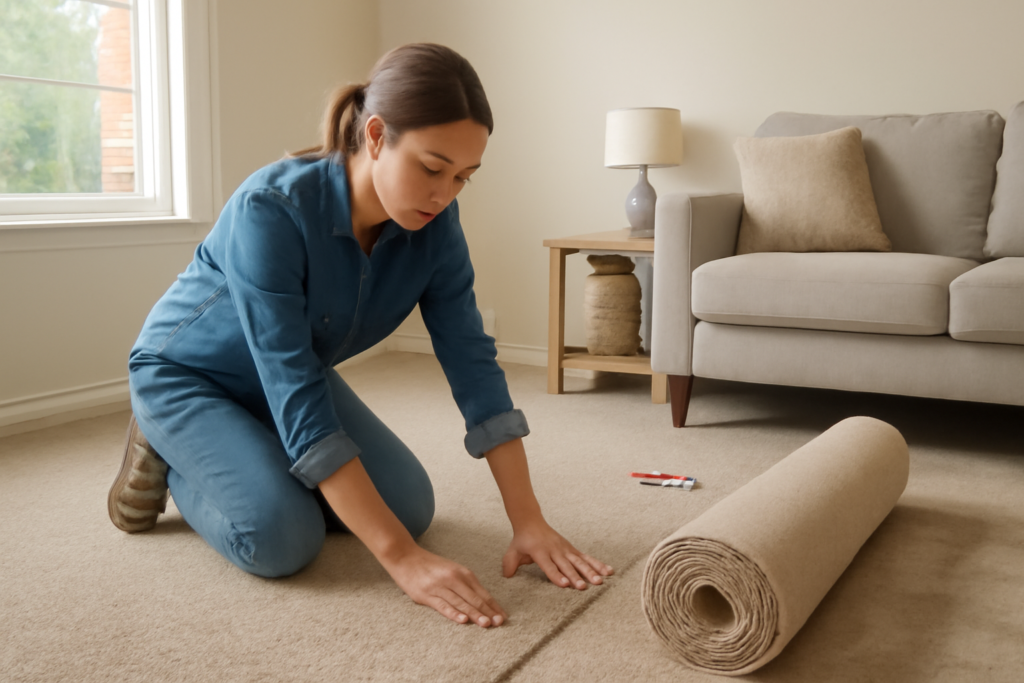
Buying carpet from warehouse clubs and during seasonal sales also trims cost. And if you’re handy, installing carpet tiles yourself eliminates labor entirely.
Corners You Should Never Cut
Here’s where false economy bites. The single biggest mistake is skimping on padding. A cheap thin pad lets even decent carpet crush and wear out years early, while a quality 6 to 8 pound rebond pad protects your investment for pennies more per square foot.
Don’t put bargain carpet in high-traffic zones like stairs and main hallways, where it’ll wear visibly fast. And never skip professional installation on stretched-in broadloom, since poor seams and loose stretching ruin even good carpet within months.
Matching Cheap Carpet to the Right Room
Budget carpet belongs where traffic is light and the stakes are low. Guest bedrooms, kids’ rooms, basements, and rental units are ideal homes for low-cost fiber. Olefin handles basement moisture; polyester gives bedrooms a soft, colorful, stain-resistant surface for very little money.
Keep the cheapest options out of family rooms, stairs, and entries. In those spaces, spend up to a mid-grade nylon, because the longer lifespan more than offsets the higher upfront price.
How to Shop for Budget Carpet
Timing and sourcing make a real difference at the low end. Carpet goes on sale predictably around major holidays and at the end of the year, when stores clear inventory, and that’s when installation promotions stack on top of already-low prices. Sign up for retailer email lists a few weeks before you plan to buy so you catch the markdowns.
When you visit a store, ask specifically about the remnant rack and any discontinued rolls in the back. Mills constantly retire colors and styles, and a perfectly good carpet that’s simply out of the current catalog can sell for half its original price. Bring your room measurements so you can pounce on a remnant that fits without a special order.
Caring for Budget Carpet
Inexpensive carpet rewards a little routine care with a much longer life. Vacuum at least weekly to lift out the grit that grinds down fibers from below, and place walk-off mats at every exterior door to trap dirt before it reaches the carpet. Treat spills immediately by blotting, never rubbing, since rubbing pushes stains deeper into the pile and the backing.
Plan on a professional deep clean every 12 to 18 months to refresh the fibers and pull out embedded soil. With that simple regimen, an entry-level polyester carpet that cost under $2 per square foot can stay presentable for five to eight years, far outlasting what its bargain price would suggest.
Rotating area rugs and rearranging furniture occasionally also helps, since it spreads out wear and prevents permanent crush patterns from forming under heavy pieces. A small shift every six months or so keeps the pile standing more evenly across the room and disguises the high-traffic lanes that otherwise wear first.
The Bottom Line
Smart cheap carpeting means buying low-cost fiber for the right rooms while protecting it with a quality pad and a proper installation. Choose solution-dyed polyester or olefin, shop remnants and sales, and reserve your budget picks for bedrooms and basements rather than high-traffic zones. Spend wisely on the parts that matter and you’ll get soft, attractive carpet that lasts far longer than its price suggests.