Real hardwood does not have to cost $12 a square foot. Cheap solid wood flooring exists if you know which species to chase, which grades to accept, and where the honest compromises hide. The catch is that “cheap” and “solid wood” pull in opposite directions, so the smart play is understanding exactly what you give up to hit a lower price and deciding whether that trade is worth it for your room.
- Why Solid Wood Costs What It Does
- The Most Affordable Species
- Grade Is Where You Save Real Money
- Unfinished vs. Prefinished
- The Honest Trade-Offs
- How It Stacks Up Against Engineered and Laminate
- Where to Find the Deals
- Installation Notes
- Making a Budget Floor Look Expensive
- Total Cost Beyond the Boards
- Bottom Line
Why Solid Wood Costs What It Does
A solid wood plank is milled from a single piece of timber, top to bottom. That means the price tracks the cost of the raw lumber, the rarity of the species, and the grade of the boards. Exotic species and clear, knot-free grades command premium prices. To find cheap solid wood, you work the other direction: common domestic species, lower visual grades, and unfinished boards you finish yourself.
The Most Affordable Species
Species is the biggest lever on price. A few domestic woods deliver real hardwood at budget-friendly numbers:
- Red oak: the classic value pick. Widely available, hard enough for daily life (about 1,290 on the Janka scale), and often the cheapest true hardwood at roughly $3 to $5 per square foot unfinished.
- White oak: slightly pricier than red but trendy and durable.
- Southern yellow pine: technically a softwood, sold cheap and beloved for rustic and farmhouse looks, though it dents easily.
- Hickory and maple: harder than oak, sometimes competitively priced when bought unfinished.
Skip the exotics like Brazilian cherry or teak if budget is the goal; their price starts where oak’s ends.
Grade Is Where You Save Real Money
Lumber grades describe appearance, not structural strength. A lower grade is not weaker underfoot, it just shows more character. That is where budget shoppers win:
- Clear/Select grade: uniform color, minimal knots, most expensive.
- Common #1: some knots and color variation, noticeably cheaper, still very usable.
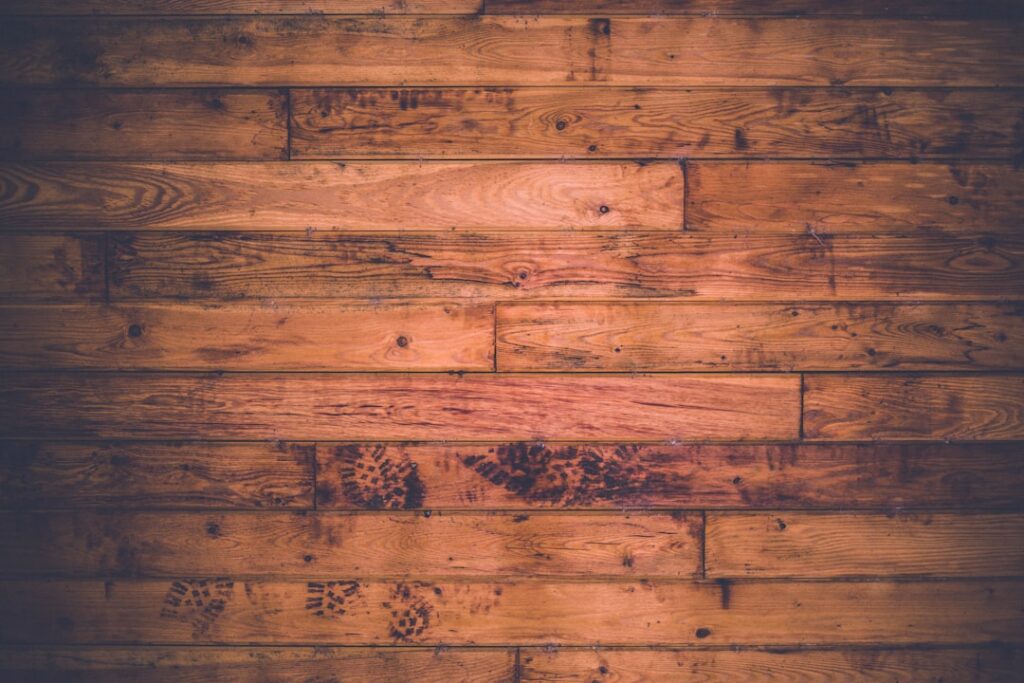
- Common #2 (rustic/cabin grade): lots of knots, streaks, and mineral marks; the cheapest solid wood you can buy and perfect if you love a rustic look.
Buying cabin-grade oak instead of select can cut the board price nearly in half for a floor that is every bit as durable, just more characterful.
Unfinished vs. Prefinished
Unfinished solid wood almost always costs less per square foot than prefinished, because you are not paying for the factory’s sanding, staining, and multiple coats of aluminum-oxide finish. The trade is labor: you rent the sander, apply stain and polyurethane, and live with the dust and fumes for a few days. If you have the time and a little DIY nerve, finishing site-built saves money and gives you a seamless, custom color. If you want to walk on it the day it goes down, prefinished is worth the premium.
The Honest Trade-Offs
Cheap solid wood is real wood, but corners get cut somewhere, and you should know where:
- More waste: lower grades and mill-run bundles include more unusable boards, so buy 10 to 15 percent extra rather than the usual 7 to 10.
- More sorting: you will spend time culling split ends, warped pieces, and off-color boards.
- Thinner or shorter boards: some budget solid wood comes in shorter random lengths or slightly thinner profiles that allow fewer future sandings.
- Softer species dent: pine and even oak show dings from pet claws and dropped pans.
How It Stacks Up Against Engineered and Laminate
Before you commit, be honest about whether solid wood is even the right call. Engineered wood puts a real hardwood veneer over a plywood core, costs similar to mid-grade solid oak, and handles moisture and basements far better. Laminate and luxury vinyl mimic wood for $1 to $4 a square foot with better scratch and water resistance, but they are not real wood and cannot be refinished.
The one thing cheap solid wood does that neither engineered nor laminate can match: it can be sanded and refinished several times over decades, so a $4 oak floor can outlive three vinyl floors. If longevity and the genuine article matter to you, that refinishing lifespan is the real value.
Where to Find the Deals
Contractor-grade and #2 common bundles at flooring liquidators and big-box lumber yards are the reliable sources. Watch for mill-run and “tavern grade” oak, which mixes grades in one bundle at a low blended price. Buying unfinished by the pallet drops the per-foot cost further. And check for closeout colors on prefinished lines if you would rather not finish it yourself.
Installation Notes
Solid wood must be nailed or stapled down to a wood subfloor, so it is not a floating floor and not ideal for concrete slabs or below-grade basements where moisture lives. Let the boards acclimate in the room for several days before installing, since solid wood expands and contracts with humidity. Budget for a nailer rental if you go DIY.
Making a Budget Floor Look Expensive
The secret with cheap solid wood is that finish and installation quality matter more than the price of the boards. A carefully sanded and finished cabin-grade oak floor can look richer than a sloppily installed premium one. A few moves stretch a budget:
- Choose a stain that embraces the character: mid-tone browns and warm neutrals hide grade variation, while very light or very dark stains highlight every knot and streak.
- Use a satin or matte finish: it downplays imperfections and scratches better than high gloss.
- Rack the floor thoughtfully: spread the worst boards into closets and under furniture, and put the cleanest ones in the center of the room.
- Wire-brush or lightly distress it: a rustic texture turns grade defects into intentional character.
Total Cost Beyond the Boards
When you budget, remember the sticker price of the wood is only part of the job. Unfinished solid wood needs sander rental, stain, several coats of polyurethane, and abrasives, which can add a dollar or more per square foot in materials plus your labor. Nails or staples, underlayment or rosin paper, and the extra 10 to 15 percent overage for a lower grade all add up. Even so, doing the finishing yourself keeps the all-in cost of a cheap solid oak floor well below prefinished hardwood, and comfortably in the range of mid-grade laminate or vinyl, while giving you something those products never can: a genuine wood floor you can sand and refinish decades from now.
Bottom Line
Cheap solid wood flooring is absolutely achievable: reach for red oak or pine, accept a common or cabin grade, and finish it yourself. You trade uniform looks and a little extra labor for a genuine hardwood floor you can refinish for generations. Just go in clear-eyed about the sorting, the waste, and the denting, and cheap solid wood becomes one of the best long-term values in flooring.
Prefer to explore on your own?
See how new flooring looks in your actual room in seconds — free, no signup.
Try the free Floor Studio →