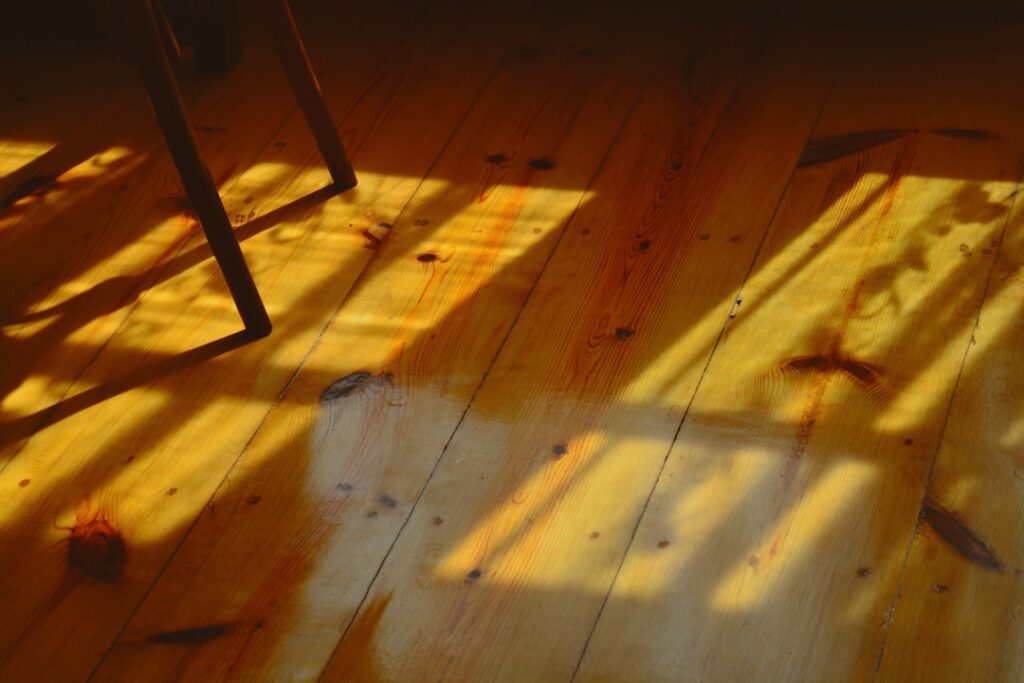
Cherry wood flooring is one of the most beautiful and distinctive hardwood options available. Its rich, warm reddish-brown tones, smooth grain, and natural luster create a refined elegance that few other species can match. Cherry is also one of the most misunderstood flooring choices because of its softness, dramatic color changes, and the significant differences between American cherry and Brazilian cherry.
- American Cherry vs. Brazilian Cherry (Jatoba)
- American Cherry vs. Brazilian Cherry Comparison
- Cherry’s Distinctive Color Change
- Solid vs. Engineered Cherry Flooring
- Pros and Cons of Cherry Wood Flooring
- How Cherry Compares to Other Hardwoods
- Best Rooms for Cherry Flooring
- Cherry Flooring Cost
- Maintenance Tips for Cherry Floors
- Frequently Asked Questions
This guide covers both species in detail, including hardness ratings, how cherry darkens over time, solid vs. engineered options, costs, pros and cons, and which rooms are best (and worst) suited for cherry hardwood flooring.
American Cherry vs. Brazilian Cherry (Jatoba)
When people say “cherry flooring,” they could mean two very different species. Understanding the difference is critical because they look different, perform differently, and cost different amounts.
American Cherry (Prunus serotina)
American cherry, also called black cherry, is a domestic hardwood native to eastern North America. It is prized for its fine, straight grain, smooth texture, and warm color that ranges from light pinkish-brown when freshly milled to deep reddish-brown as it ages.
- Janka hardness: 950 lbf (relatively soft for a hardwood floor)
- Color: Starts pinkish-tan, darkens significantly to rich reddish-brown with sunlight exposure
- Grain: Fine, straight, with occasional pin knots and mineral streaks
- Availability: Readily available domestically, moderately priced
Brazilian Cherry / Jatoba (Hymenaea courbaril)
Despite the name, Brazilian cherry is not related to American cherry at all. Jatoba is a tropical hardwood from Central and South America. It is dramatically harder, denser, and darker than American cherry.
- Janka hardness: 2,350 lbf (one of the hardest commercially available hardwoods)
- Color: Ranges from tan to deep reddish-brown with dark brown and black streaks
- Grain: Interlocked, wavy grain with high natural luster
- Availability: Imported, more expensive, less common than a decade ago due to sustainability concerns
American Cherry vs. Brazilian Cherry Comparison
| Feature | American Cherry | Brazilian Cherry (Jatoba) |
|---|---|---|
| Janka hardness | 950 lbf | 2,350 lbf |
| Dent resistance | Low (dents easily) | Excellent |
| Color change | Dramatic (darkens significantly) | Moderate (deepens and mellows) |
| Initial color | Light pinkish-brown | Tan to medium brown |
| Mature color | Deep reddish-brown | Deep reddish-brown with dark streaks |
| Grain pattern | Fine, straight | Interlocked, bold |
| Cost (material only) | $5 to $10 per sq ft | $7 to $14 per sq ft |
| Sustainability | Responsibly harvested, FSC available | Sustainability concerns; verify FSC certification |
| Best for | Formal rooms, low-traffic areas | High-traffic areas, durability needs |
Cherry’s Distinctive Color Change
The most unique characteristic of cherry wood flooring, and the one that catches many homeowners off guard, is how dramatically it changes color with sunlight exposure.
How It Happens
Cherry wood contains photosensitive compounds that react to ultraviolet light. When exposed to sunlight (even indirect light through windows), the wood oxidizes and darkens. This process is called photoxidation.
- First 6 months: The most dramatic color change occurs during the first six months after installation. Fresh cherry is surprisingly light and pinkish. Within months, it deepens to the warm, rich reddish-brown that people associate with cherry.
- Ongoing: Cherry continues to darken for several years, though the rate slows significantly after the first year.
- The result: A beautiful, rich patina that most cherry flooring owners consider a feature, not a flaw. The mature color of aged cherry is what makes this species so desirable.
Managing the Color Change
- Move rugs and furniture regularly: Areas covered by rugs or furniture will not darken at the same rate as exposed areas, creating visible outlines. Move rugs every few weeks during the first year to allow the floor to darken evenly.
- Be aware of sunlight patterns: Direct sunlight from windows accelerates the darkening. Use curtains or UV-filtering window film if you want to slow the process.
- Accept the process: Most cherry flooring owners learn to embrace the color change. It is part of what makes cherry a living, evolving material rather than a static surface.
Solid vs. Engineered Cherry Flooring
Cherry is available in both solid and engineered hardwood constructions. Each has advantages depending on your installation situation.
Solid Cherry
- Construction: Single piece of cherry wood, typically 3/4 inch thick
- Refinishing: Can be sanded and refinished multiple times (3 to 5 times over its lifetime), which is particularly valuable given cherry’s tendency to show dents and wear
- Installation: Must be nailed or stapled to a wood subfloor. Not suitable for concrete subfloors or below-grade (basement) installation
- Cost: $5 to $10 per square foot for materials
- Best for: Main floor and upper floor rooms with wood subfloors
Engineered Cherry
- Construction: Thin cherry veneer (1 to 4 mm) over a multi-layer plywood core
- Refinishing: Can be sanded 1 to 2 times depending on veneer thickness. Thicker veneers (3 to 4 mm) allow more refinishing
- Installation: Can be nailed, glued, or floated. Works over concrete subfloors and in below-grade installations
- Cost: $4 to $12 per square foot for materials
- Best for: Basements, concrete subfloors, radiant heat systems, and areas with humidity fluctuations
Pros and Cons of Cherry Wood Flooring
Pros
- Unmatched beauty: Cherry’s warm, rich color and smooth grain create an elegance that is difficult to replicate with other species. It is often considered the most beautiful domestic hardwood.
- Beautiful aging: The patina that develops over time gives cherry floors character and depth. Many homeowners find that their cherry floors look better with age.
- Smooth, closed grain: Cherry’s tight grain pattern takes stain and finish beautifully, creating a smooth, refined surface.
- Warmth: The natural reddish tones add warmth to any room, making spaces feel inviting and comfortable.
- Domestic availability: American cherry is sustainably harvested in North America, reducing the environmental impact of importing exotic species.
- Good resale value: Cherry hardwood floors are a premium feature that appeals to homebuyers.
Cons
- Soft (Janka 950): American cherry is significantly softer than oak (Janka 1,290) and much softer than maple (Janka 1,450). It dents and scratches more easily, especially from pet claws, high heels, and dropped objects.
- Photosensitive: The dramatic color change with light exposure catches many homeowners by surprise. Furniture outlines and rug marks are visible if items are not moved regularly.
- Shows wear: Because it is soft, high-traffic areas develop visible wear patterns sooner than harder species.
- Higher maintenance: Cherry floors need more careful treatment: felt pads on all furniture, no shoes policy recommended, regular cleaning, and more frequent refinishing.
- Color limits design flexibility: Cherry’s strong reddish-brown color is dominant and may clash with certain color palettes, furniture styles, or cabinet colors.
How Cherry Compares to Other Hardwoods
| Species | Janka Hardness | Color | Color Change | Cost per Sq Ft |
|---|---|---|---|---|
| American Cherry | 950 | Reddish-brown | Dramatic darkening | $5 to $10 |
| Red Oak | 1,290 | Pinkish-tan with grain | Slight ambering | $4 to $8 |
| White Oak | 1,360 | Golden-brown | Slight ambering | $5 to $10 |
| Walnut | 1,010 | Dark chocolate brown | Lightens slightly | $6 to $12 |
| Maple | 1,450 | Light, creamy | Slight ambering | $5 to $9 |
| Brazilian Cherry | 2,350 | Reddish-brown with streaks | Moderate darkening | $7 to $14 |
Best Rooms for Cherry Flooring
Ideal Rooms
- Formal living rooms: Low traffic, furniture typically stays in place, and the elegant appearance suits formal spaces.
- Dining rooms: Cherry’s warmth creates an inviting dining atmosphere. Use felt pads on chair legs and a rug under the table.
- Master bedrooms: Low traffic and the warm tones create a cozy, luxurious feeling.
- Home offices: Low traffic, formal appearance. Use a chair mat under desk chairs to prevent wheel damage.
Rooms to Avoid
- Kitchens: Heavy foot traffic, dropped utensils, water splashes, and chair scraping will damage soft cherry quickly.
- Entryways and mudrooms: Sand, gravel, and salt tracked in from outside will scratch cherry flooring.
- Homes with large dogs: Dog claws will scratch and dent American cherry. Consider harder species or engineered options with tougher wear layers.
- Basements: While engineered cherry can be installed in basements, the humidity fluctuations in below-grade spaces are not ideal for cherry’s photosensitive characteristics.
Cherry Flooring Cost
| Cost Component | American Cherry | Brazilian Cherry |
|---|---|---|
| Material (per sq ft) | $5 to $10 | $7 to $14 |
| Installation (per sq ft) | $3 to $6 | $4 to $8 |
| Finishing (if unfinished) | $2 to $4 | $2 to $5 |
| Total installed (per sq ft) | $8 to $16 | $11 to $22 |
| 1,000 sq ft room (total) | $8,000 to $16,000 | $11,000 to $22,000 |
Maintenance Tips for Cherry Floors
Cherry’s softness means maintenance matters more than with harder species. These habits will keep your cherry floors looking their best.
- Felt pads on all furniture: Apply felt pads to every piece of furniture that touches the floor. Replace them every 6 to 12 months as they wear.
- No shoes policy: This single habit dramatically reduces wear, scratches, and denting. Grit on shoe soles acts like sandpaper on soft cherry.
- Microfiber dry mopping: Dust and mop weekly with a dry or slightly damp microfiber pad. Avoid wet mopping.
- Use rugs in high-traffic areas: Place rugs at entry points, hallways, and in front of sinks. Move them regularly to allow even color development.
- Trim pet nails: If you have pets, keep their nails trimmed short to minimize scratching.
- Use appropriate cleaners: Use a pH-neutral hardwood floor cleaner. Avoid vinegar, ammonia, steam mops, and excess water.
- Refinish when needed: Cherry floors typically need refinishing every 7 to 10 years in normal residential settings. High-traffic homes may need it sooner.
Frequently Asked Questions
Does cherry wood flooring change color?
Yes, dramatically. American cherry starts as a light pinkish-tan and darkens to a rich reddish-brown with exposure to light. The most significant color change happens in the first 6 to 12 months. This is a natural characteristic of cherry wood and is considered a desirable feature by most homeowners.
Is cherry too soft for flooring?
American cherry (Janka 950) is softer than popular species like oak and maple, and it will dent and scratch more easily. However, millions of homes have cherry flooring that performs well with proper care. If durability is a concern, consider Brazilian cherry (Janka 2,350) or engineered cherry with an aluminum oxide finish for added wear resistance.
Can you stain cherry wood flooring?
Cherry can be stained, but it absorbs stain unevenly due to its tight grain. Many professionals recommend using a pre-stain conditioner or a dye stain rather than a penetrating stain for more even results. However, cherry’s natural color is so attractive that many homeowners choose a clear finish to let the wood’s beauty show.
How long does cherry hardwood flooring last?
Solid cherry flooring can last 50 to 100 years or more with proper maintenance and periodic refinishing. Engineered cherry lasts 25 to 50 years depending on the veneer thickness and how many times it can be refinished.
Is Brazilian cherry flooring still popular?
Brazilian cherry was extremely popular in the early 2000s but has declined in popularity due to sustainability concerns, changing design preferences toward lighter wood tones, and its relatively high cost. It remains an excellent choice for homeowners who want exceptional durability and rich color, but it is no longer a top-selling species.
Does cherry flooring go with grey cabinets?
Cherry’s warm reddish tones can work with grey cabinets, but it requires careful coordination. Cool greys may clash with cherry’s warmth. Warm grey tones (greige) pair better. If you are planning grey cabinetry, consider whether cherry’s dominant red undertones fit your overall color scheme before committing.
Prefer to explore on your own?
See how new flooring looks in your actual room in seconds — free, no signup.
Try the free Floor Studio →