Few wood looks feel as warm and instantly welcoming as cherry, and cherry wood vinyl flooring lets you bring that rich, red-brown glow into your home without the fussiness of solid hardwood. This category of luxury vinyl replicates the fine grain and amber undertones of real cherry using a high-resolution printed layer, then seals it under a tough wear layer that shrugs off scratches, spills, and sunlight. If you love the traditional look of cherry but worry about cost, water, pets, or fading, this guide walks you through exactly what to expect. You will see how the look is engineered, what it costs per square foot, where it belongs in your house, and how to shop so you end up with a floor that reads as authentic rather than plastic.
- What Cherry Wood Vinyl Flooring Actually Looks Like
- Why Choose Vinyl Over Real Cherry Hardwood
- How Much Does Cherry Wood Vinyl Flooring Cost?
- Where Cherry Vinyl Works Best
- Designing and Decorating Around It
- How to Shop: What Separates Convincing From Cheap
- Pros and Cons at a Glance
- Maintenance and Care
- Buying Checklist
What Cherry Wood Vinyl Flooring Actually Looks Like
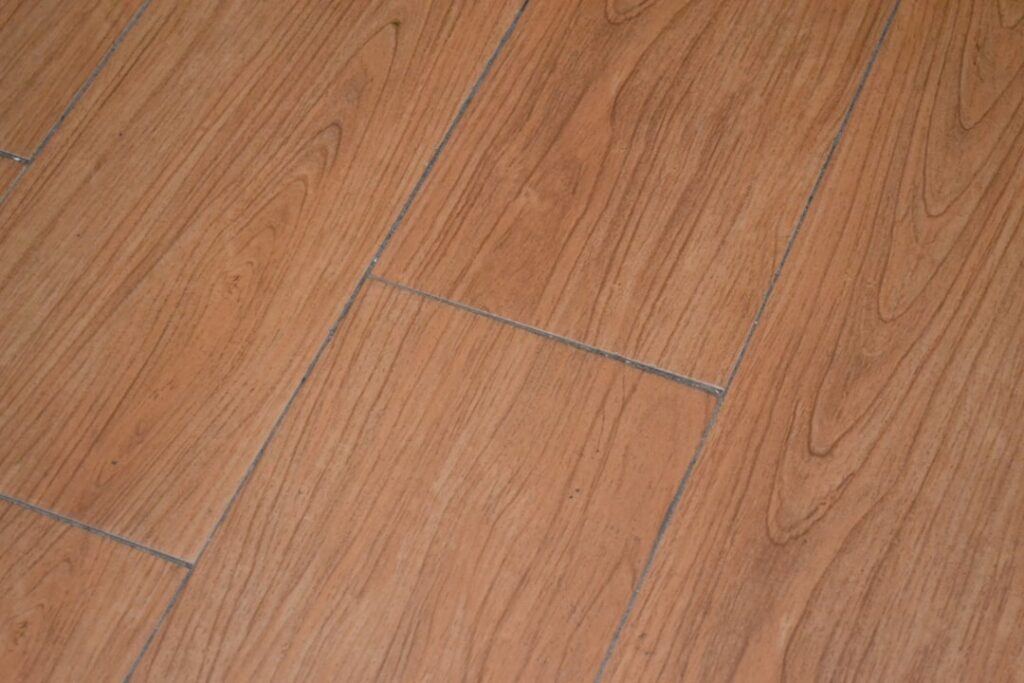
Cherry is prized for its smooth, closed grain and its distinctive reddish-brown color that seems to glow under warm light. Real cherry hardwood famously ambers and darkens as it ages, deepening from a soft pinkish-tan into a saturated russet over several years of light exposure. Manufacturers capture that mature, lived-in tone right out of the box, so your floor looks like decades-old cherry on day one and, unlike the real thing, it will not keep shifting color unevenly under a rug or a coffee table.
You will generally find two color families in this style. American cherry leans toward a medium reddish-brown with subtle grain and a satiny character that suits classic and formal rooms. Brazilian cherry, also sold as jatoba, is bolder: a deep, almost crimson-brown with dramatic dark streaking that makes a strong statement in a larger space. Plank sizes typically run 6 to 9 inches wide and 48 to 60 inches long, and the best products use multiple print variations so the same board pattern does not repeat every few rows.
Why Choose Vinyl Over Real Cherry Hardwood
Solid cherry hardwood is beautiful but demanding. It dents relatively easily for a hardwood, it cannot go below grade or into damp rooms, and it needs periodic refinishing to stay presentable. Luxury vinyl sidesteps nearly all of those headaches while keeping the visual payoff.
- Cost: Real cherry hardwood commonly runs $6 to $12 per square foot for material alone, before installation. Cherry-look vinyl delivers a similar aesthetic for a fraction of that.
- Water and scratch resistance: A quality wear layer resists everyday scuffs, and rigid-core vinyl is waterproof, so kitchen splashes and mopping are non-issues.
- Pets and kids: Dog nails and dropped toys that would scar soft cherry hardwood barely register on a 20-mil wear layer.
- No refinishing, no color drift: You never sand or reseal vinyl, and UV-stable printing means the floor by the patio door stays the same shade as the floor under the sofa.
How Much Does Cherry Wood Vinyl Flooring Cost?
Pricing depends mostly on core type, wear-layer thickness, and brand, but the ranges are predictable.
Material Costs
- Budget peel-and-stick or thin glue-down: $1.50 to $2.50 per square foot, usually with a 6- to 12-mil wear layer.
- Mid-range SPC or WPC click planks: $2.50 to $4 per square foot with a 12- to 20-mil wear layer and attached underlayment.
- Premium rigid-core with realistic embossing: $4 to $5 per square foot and up.
Installed Costs
With professional labor, expect roughly $3 to $7 per square foot installed. Floating click-lock floors run at the lower end because they go down fast over most existing subfloors, while glue-down and extensive subfloor prep push you toward the top of the range. For a 300-square-foot living room, that lands most homeowners between about $900 and $2,100 all in, compared with $2,500 or more for genuine cherry hardwood.
Where Cherry Vinyl Works Best
The warmth of cherry pays off in the rooms where you actually relax. It anchors a traditional living room or dining room beautifully, and because the vinyl is waterproof, you can carry that same rich tone straight into the kitchen without worrying about splashes at the sink. Rigid-core cherry vinyl is also one of the few ways to get a convincing dark-wood look in a basement, where real hardwood should never go because of moisture and below-grade conditions. It performs well in hallways and home offices too. The one place to think twice is a bright, south-facing sunroom with intense all-day heat, where any floating floor benefits from managed temperature swings.
Designing and Decorating Around It
Cherry is a warm, assertive color, so it does its best work with a supporting cast that lets it shine. Pair it with warm neutrals such as cream, greige, soft camel, and warm whites on the walls, and it feels rich rather than heavy. Traditional and transitional interiors are the natural fit: think shaker cabinetry, brass or oil-rubbed bronze hardware, and layered textiles.
Because the floor already carries strong red undertones, avoid competing red-toned finishes elsewhere; cool contrasts like navy, forest green, or slate work as accent colors to keep a room from feeling one-note. In smaller rooms, a wider plank and a lighter wall color prevent the deep tone from closing in the space. Area rugs in muted patterns break up large expanses and add softness underfoot without hiding the wood look you paid for.
How to Shop: What Separates Convincing From Cheap
The difference between cherry vinyl that fools guests and cherry vinyl that screams plastic comes down to a handful of specs. Use this as your quick reference at the store or online.
Key specs to check
- Wear layer: Look for 12 mil for light residential traffic and 20 mil for busy households with pets. Anything thinner than 12 mil is fine only for low-use rooms.
- Core type: SPC (stone plastic composite) is denser, more dent-resistant, and better over imperfect subfloors; WPC (wood plastic composite) is a touch softer and warmer underfoot. Both are waterproof.
- Total thickness: Rigid-core planks of 5mm to 8mm feel solid and click together cleanly. Very thin 2mm to 4mm products telegraph subfloor flaws.
- Embossing: Choose embossed-in-register (EIR) texture, where the surface grain lines up with the printed grain. Running your hand over it should feel like real wood pores.
- Sheen: Matte or low-sheen finishes read as authentic cherry. Skip anything glossy, because high shine is the fastest giveaway of a fake wood look.
Always order a physical sample and view it in your own light at different times of day before committing to a whole room. A tone that looks perfect in a showroom can shift under your home’s bulbs.
Pros and Cons at a Glance
Pros
- Rich cherry warmth at roughly half to a third the cost of hardwood
- Waterproof and suitable for kitchens and basements
- Excellent scratch and dent resistance with a 20-mil wear layer
- No refinishing, no sanding, no uneven fading over time
- DIY-friendly click-lock installation
Cons
- Does not add the resale premium of genuine hardwood
- Cannot be sanded and refinished if the wear layer is eventually worn through
- Cheaper products can look glossy or repeat the same plank pattern
- Deep tones show dust and dry footprints more readily than mid tones
Maintenance and Care
One of the biggest advantages of cherry wood vinyl flooring is how little it asks of you. Sweep or dust-mop regularly to keep grit from dulling the finish, and damp-mop with a pH-neutral vinyl cleaner as needed. Skip steam mops, wax, and oil soaps, all of which can damage the wear layer or leave residue. Use felt pads under furniture legs, place a mat at exterior doors to catch grit, and lift, rather than drag, heavy items. With that routine, a good cherry vinyl floor holds its warm glow for 15 to 25 years.
Buying Checklist
- Confirm wear layer is at least 12 mil, or 20 mil for pets and heavy traffic
- Choose SPC for durability or WPC for comfort underfoot
- Verify the plank is rigid-core and waterproof for kitchens and basements
- Insist on embossed-in-register texture and a matte or low-sheen finish
- Order samples and view them in your home’s lighting
- Check that the pattern uses many plank variations to avoid repeats
- Budget $1.50 to $5 per square foot for material and $3 to $7 installed
- Ask about the residential wear warranty, ideally 15 years or longer
Handled well, cherry-look vinyl gives you the timeless, heirloom warmth of a classic hardwood species with none of its fragility. Match the right specs to the right room, keep the sheen low and the texture real, and you get a floor that looks like a lifetime of aged cherry, ready to walk on the day it is installed.
Prefer to explore on your own?
See how new flooring looks in your actual room in seconds — free, no signup.
Try the free Floor Studio →