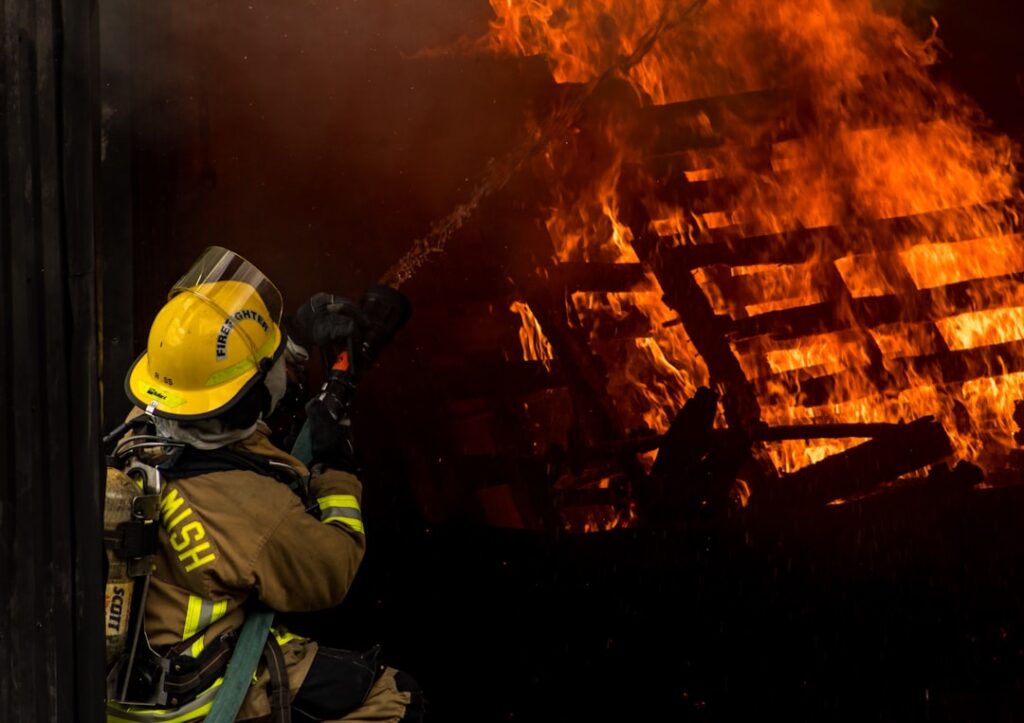
When embers rain down during a wildfire, the roof is the biggest ember trap on the house — which is why insurers and fire codes obsess over it. A Class A fire rated roof is the highest rating a roof covering can earn, meaning the assembly resisted the most severe standardized fire exposure without igniting the deck, spreading flame more than 6 feet, or producing burning brands that could ignite the neighbors. Post-fire surveys after California’s worst fires consistently show homes with Class A roofs surviving at far higher rates. Here’s what the rating actually tests, which materials qualify, and the fine print — like “by assembly” ratings — that catches homeowners off guard.
- How Roof Fire Ratings Are Tested
- Class A by Material vs. Class A by Assembly
- Which Roofing Materials Qualify
- Asphalt shingles
- Concrete and clay tile
- Metal roofing
- Slate and synthetic slate
- Wood shakes
- Low-slope membranes
- Where Class A Is Required
- The Roof Is an Assembly: Details That Undo the Rating
- Cost and Practical Advice
- How to Verify What You Have
How Roof Fire Ratings Are Tested
Ratings come from ASTM E108 (equivalently UL 790), which subjects a sloped test deck to three separate torture tests:
- Burning brand test: a wooden crib is ignited and placed on the roof surface. For Class A, it’s a 2,000-gram, 12×12-inch brand — a small bonfire — that must burn out without igniting the deck below.
- Spread of flame test: a gas flame plays on the surface in a 12 mph wind; flame spread must not exceed 6 feet for Class A.
- Intermittent flame test: the flame cycles on and off to simulate wind-blown fire exposure; the deck must not ignite and no flaming material may fall off the underside.
Class B uses a smaller 500-gram brand and allows 8 feet of flame spread; Class C uses a 9-gram brand and allows 13 feet. Anything that can’t pass Class C — untreated wood shakes being the classic example — is unrated and effectively banned in fire hazard zones.
Class A by Material vs. Class A by Assembly
This distinction matters more than the letter grade. Some coverings are standalone Class A: the covering alone, over standard decking, passes the tests. Others are Class A by assembly: the covering only achieves the rating when installed over a specific underlayment or barrier listed in the test report.
Standalone Class A materials include asphalt fiberglass shingles, concrete and clay tile, slate, and fibrous cement. Class A by assembly covers most metal roofing, aluminum, and pressure-treated fire-retardant wood shakes — a steel panel roof, for instance, typically earns Class A only when installed over a 72-pound cap sheet, gypsum board, or a specific fire-rated synthetic underlayment such as DensDeck or a listed barrier. Skip the listed barrier and that same metal roof may only rate Class C, because the test brand’s heat conducts through thin metal and can ignite the deck. Always match the installed stack-up to the manufacturer’s listed assembly, and keep the paperwork for your insurer.
Which Roofing Materials Qualify
Asphalt shingles
Virtually every fiberglass-mat asphalt shingle sold in the US today — from a $95-per-square 3-tab to designer laminates — carries a standalone Class A rating. The fiberglass mat is the reason; older organic-mat shingles rated Class C and are no longer produced.
Concrete and clay tile
Inherently noncombustible and standalone Class A. One caveat: open ends at eaves and hips must be bird-stopped or mortared, because embers entering the airspace beneath tiles can ignite underlayment and battens. WUI codes require these openings closed.
Metal roofing
Steel, aluminum, and stone-coated steel are noncombustible surfaces but usually rate Class A by assembly, as described above. Copper and zinc follow the same logic.
Slate and synthetic slate
Natural slate is standalone Class A. Polymer composite slates and shakes vary — many premium lines (DaVinci, for example) achieve Class A as tested assemblies; verify the specific product listing rather than assuming.
Wood shakes
Untreated shakes are the worst roofing material ever devised for fire country. Pressure-impregnated fire-retardant shakes (Class B, or Class A with an underlying barrier) exist, but many WUI jurisdictions and insurers refuse them regardless; the treatment’s long-term durability is the concern.
Low-slope membranes
TPO, PVC, and modified bitumen carry class ratings that depend on membrane thickness, surfacing, and slope — most common commercial assemblies are listed Class A up to specific slopes.
Where Class A Is Required
Building codes set roof classification by fire risk. California’s Chapter 7A requires Class A roof assemblies in designated Very High Fire Hazard Severity Zones and across much of the Wildland-Urban Interface; many cities (Los Angeles, San Diego, Oakland among them) require Class A citywide. Colorado, Oregon, Washington, Utah, Nevada, and Texas hill country jurisdictions have adopted similar WUI provisions, and the trend after each fire season runs one direction. Outside mandated zones, the IBC/IRC generally require a minimum of Class C on most dwellings — but since standard asphalt shingles are already Class A, meeting the top rating usually costs nothing on a conventional reroof.
Insurance is the other enforcement arm. In wildfire states, carriers increasingly require Class A roofs to write or renew policies in high-risk zip codes, and programs like California’s Safer from Wildfires offer premium credits for a Class A roof paired with ember-resistant vents and defensible space.
The Roof Is an Assembly: Details That Undo the Rating
A Class A surface with ember-catching details still loses houses. Field research from IBHS and Cal Fire points to the same failure spots:
- Vents: embers enter attic vents and ignite the house from inside. Use ember-resistant vents (1/8-inch metal mesh minimum; listed WUI vents like Vulcan or Brandguard are better, at $30 to $80 each).
- Debris in valleys and gutters: dry needles and leaves ignite on top of a Class A roof and burn long enough to find an edge. Metal gutter guards and seasonal cleaning are fire-protection measures, not just maintenance.
- Roof edges and fascia: combustible fascia and exposed rafter tails ignite from gutter fires; metal drip edge and enclosed soffits harden them.
- Skylights: plastic-domed units can melt and admit embers; tempered-glass flat skylights are the WUI-compliant choice.
- Roof-wall intersections: where a roof meets a sidewall, embers pile up; noncombustible flashing and siding in that zone matter.
Cost and Practical Advice
Upgrading fire performance is one of the cheaper safety wins in roofing. Class A architectural asphalt shingles run $4.50 to $7.50 per square foot installed — no premium over standard, because they are the standard. Concrete tile installs at $8 to $15, standing seam steel with a fire-rated underlayment at $9 to $16; the listed underlayment itself adds only $0.30 to $0.80 per square foot. If you’re in a WUI zone, ask your roofer for the specific listed assembly documentation at contract time, add ember-resistant vents while the crew is up there, and photograph the underlayment installation before panels cover it. A Class A fire rated roof won’t make a house fireproof — but combined with hardened vents and clean gutters, it removes the single largest way houses ignite when the embers start flying.
How to Verify What You Have
Most homeowners don’t actually know their roof’s classification, and guessing from appearance fails often enough to matter. Start with paperwork: the shingle wrapper, the roofing contract, or the manufacturer’s product page for your specific shingle line will state the ASTM E108/UL 790 class. If the roof predates your ownership, look in the attic for a bundle label stapled to the framing (a surprisingly common installer habit) or check the permit file at your building department, which usually names the product. For metal roofs, classification lives in the assembly listing, so you need to know what underlayment went down — the permit or the installing contractor’s records are the source.
When documentation is gone, a roofing contractor or home inspector can identify most products visually, and insurers in wildfire states increasingly send their own inspectors to do exactly that. Two practical notes from those inspections: a Class A roof loses credibility with adjusters when it’s visibly buried in needles and moss, so photograph the roof clean; and layered roofs — new shingles installed over an old wood shake layer — are a special problem, because the combustible layer underneath can disqualify the assembly regardless of the top surface. California’s code addresses this directly, and several carriers now refuse roofs with shake underlayers entirely. If a tear-off reveals old shakes under your existing roof, budget for full removal down to the deck at the next reroof; it typically adds $1,500 to $3,500 but converts the house from uninsurable to standard-market eligible in high-risk zones, which is worth far more than the disposal fee.