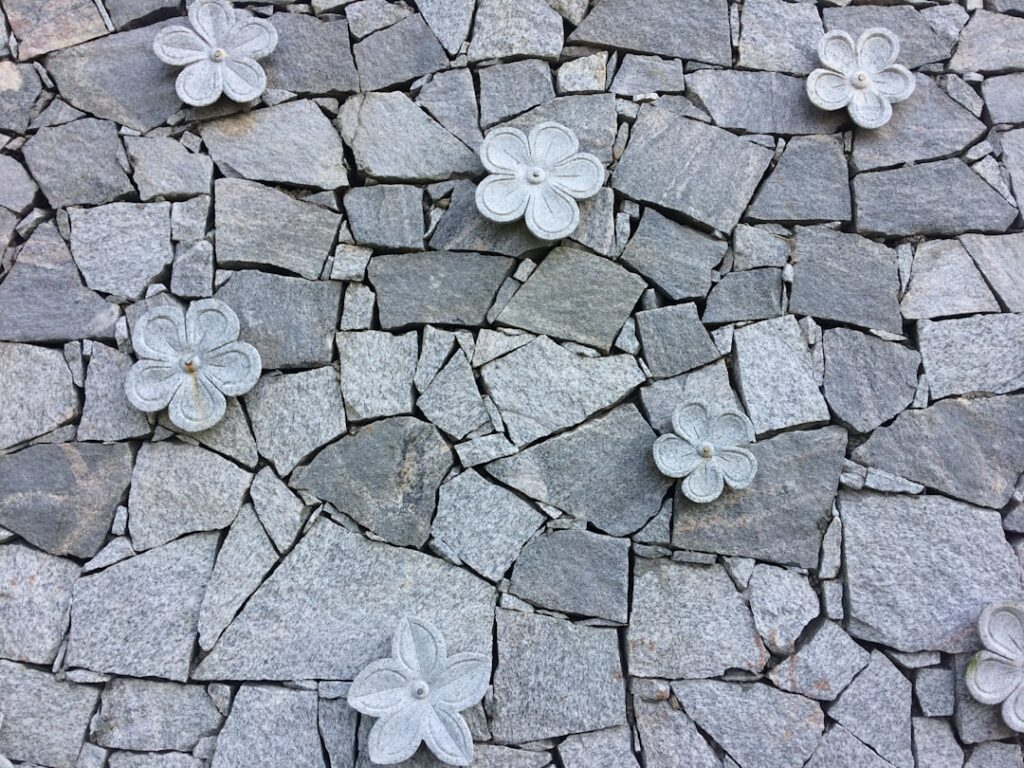
Stone underfoot used to mean a barn, a wine cellar, or a European street — never the foyer of a modern home. That has changed. Cobblestone interior flooring now shows up in mudrooms, entryways, sunrooms, and even kitchens, where its weathered texture grounds otherwise sleek interiors. Done right, it is one of the most durable finishes you can install. Done wrong, it traps grit, telegraphs every spill, and chews up vacuum brushes.
What Counts as Cobblestone Indoors
Traditional cobblestone is hand-split granite or basalt, roughly 4 by 4 by 4 inches, set on a sand bed with mortared joints. Indoors, you will see three variants: full-thickness setts dropped on a reinforced slab, sliced cobble veneers between 1 and 1.5 inches thick mounted on mesh sheets, and porcelain or concrete tiles printed to mimic the look. Sliced veneer is the most common for residential interiors because it cuts weight roughly in half while keeping the chunky surface relief homeowners want.
Expect raw stone in earth tones — charcoal, oatmeal, rust, mossy green. Imported European setts from Belgium and Portugal command $18 to $32 per square foot at the wholesaler, while domestic granite cobbles run $12 to $22.
Real-World Pros
Almost nothing kills granite cobble. Janka-style hardness numbers do not apply, but Mohs ratings sit around 6 to 7, which means dropped cast-iron skillets bounce off without a chip. The textured surface delivers excellent slip resistance — DCOF values well above the ANSI 0.42 wet threshold, which makes it a safer pick than polished porcelain in entryways.
Maintenance is straightforward once sealed. A penetrating siloxane sealer applied every three to five years repels deicing salt, mud, and red wine alike. The mottled color hides scuff marks that would scream on a quarter-sawn white oak floor.
Real-World Cons
The same texture that hides dirt also collects it. Standard upright vacuums skip across the high points; you need a canister with a hose or a wet-dry shop vac to pull debris out of the joints. Bare feet feel every ridge, so warm rooms or radiant heat are wise additions. Cobblestone is also brutally cold without underfloor heat — surface temperatures in an unheated mudroom can sit 8 to 12°F below ambient.
Weight is a structural concern. Full setts add 35 to 50 pounds per square foot once mortared. On a wood-framed second floor, you almost certainly need a structural engineer to sign off, or you need to commit to thin veneer products under 15 pounds per square foot.
Subfloor and Install Requirements
Concrete slabs are the easy substrate. ASTM F1869 calcium chloride testing should read under 5 pounds per 1,000 square feet per 24 hours, and ASTM F2170 relative humidity readings should be below 80 percent before you set anything. Crack-isolation membranes like Schluter DITRA or Laticrete Strata Mat protect against telegraphing shrinkage cracks.
On wood subfloors, install two layers of 5/8-inch plywood with staggered joints, screw every 6 inches, and add a 1/4-inch cement backer board with thinset under the cobble. Use a medium-bed mortar — Laticrete 255 or Custom MegaLite — rated for tiles up to 3/4 inch thick. Joint widths run 3/8 to 1 inch, packed with a non-sagging sanded grout.
Brand Spotlight: Stone Sources Worth Knowing
Stone Farm Living and Cobblestones of New England ship reclaimed European setts directly to homeowners; lead times run 6 to 14 weeks. Realstone Systems sells mesh-mounted sliced cobble panels in 12-by-12-inch sheets for around $14 to $18 per square foot — a much faster install. For porcelain look-alikes, Mediterranea Boldstone, MSI Trento, and Daltile Cumberland deliver convincing relief at $4 to $7 per square foot. Pair these with epoxy grout in a charcoal tone to mute the visible joints.
Cost Breakdown for a 200 Square Foot Foyer
Plan around four cost buckets. Material at $16 per square foot averages $3,200. Mortar, backer board, sealer, and crack membrane run roughly $4 to $6 per square foot, adding $1,000. Labor for a stone-experienced tile setter ranges from $9 to $18 per square foot — call it $2,700 mid-range. Add $500 for transition pieces and threshold work. Realistic turnkey cost: $7,400, or about $37 per square foot installed. Porcelain look-alikes bring that figure down to roughly $18 to $22 per square foot.
Care and Long-Term Performance
Dry sweep with a stiff broom, then damp mop with a neutral pH cleaner like Aqua Mix Concentrated Stone and Tile Cleaner. Skip vinegar and any acidic product — they etch limestone and dissolve cement grout. Reseal when water stops beading on the surface, usually every 36 to 60 months. Expect a properly installed cobblestone interior floor to outlive the house. Granite has been documented in cathedrals after 800 years of foot traffic; your kitchen will not stress it.
Design Pairings That Actually Work
Cobblestone pulls visual weight, so the rest of the room needs to either complement or step back. Hand-troweled plaster walls, exposed beam ceilings, and reclaimed wood furniture all work with rather than against the texture. Modern minimalist interiors often clash — clean white-painted drywall can read sterile against the rough stone, leaving the floor stranded as an unintentional focal point.
Lighting matters. Cobblestone reads dramatically different under warm 2700K bulbs versus cool 4000K bulbs. Test with sample stones in the actual room before committing — what looks like rich Tuscan amber under incandescent can read as muddy gray under modern LED.
Is Cobblestone Right for Your Project
If your priorities are visual character, near-indestructible service, and a floor that improves with patina, real cobblestone earns its place. If you want soft underfoot comfort, low maintenance, or a quick weekend install, look at textured luxury vinyl planks with stone-print embossing instead. The decision is rarely about budget — it is about whether you want a floor that demands attention or one that disappears.
Prefer to explore on your own?
See how new flooring looks in your actual room in seconds — free, no signup.
Try the free Floor Studio →