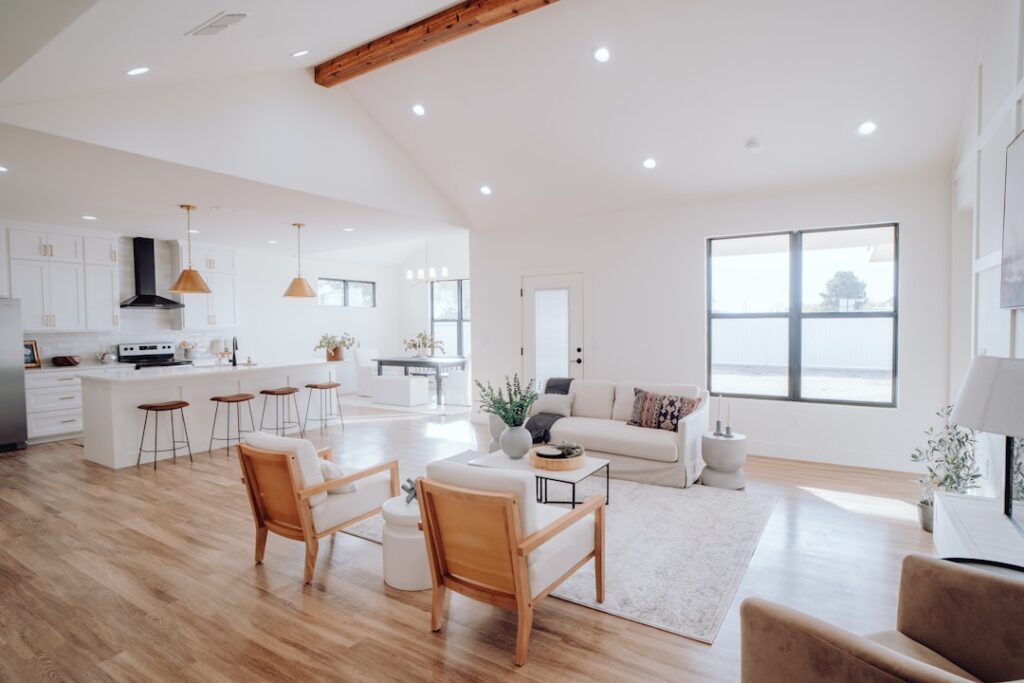
Family-owned flooring contractors named after a family surname dominate small-town and suburban markets, often delivering install quality that out-paces national chains at competitive prices. Hernandez Flooring is one of countless dealer-installer combos serving regional markets, and the same buying playbook applies whether you are vetting Hernandez, Jimenez, Garcia, or any local family operator. Twenty years of watching projects go right and wrong has taught me that the make-or-break factors come down to installer certifications, written scope, and how the contractor handles surprises during demo.
Why Family-Owned Dealers Often Outperform Chains
Three structural advantages explain why a well-run family flooring company beats the big-box experience.
First, accountability is concentrated. The owner is usually on site at least once per project, often daily on larger jobs. When issues arise, decisions get made on the spot rather than escalated through three levels of regional managers.
Second, install crews are stable. A family-run operation typically retains the same 2-6 installers for 5-15 years, which builds skill and consistency. Big-box subcontractors rotate aggressively, and the crew installing your floor may be on their first week with the franchise.
Third, post-sale service has personal stakes. The owner of a local company will run into you at the grocery store. National-chain customer service has no such friction.
What to Verify Before Hiring
Reputation alone is not enough. Five concrete verifications separate trustworthy operators from gamble-with-your-floor outfits.
- State contractor license: Required in most states for projects over $500-$1,000. Check the state contractor board website for active status and any open complaints.
- Liability insurance and workers compensation: Request a certificate of insurance naming you as additionally insured. Coverage should be at least $1 million in general liability.
- NWFA certifications: The National Wood Flooring Association certifies installers in sand-and-finish and prefinished installation. A CFI (Certified Flooring Installer) credential on the team is the gold standard for hardwood and engineered work.
- Manufacturer training certificates: Shaw, Mohawk, Mannington, and COREtec all offer installer training. Trained installers preserve manufacturer warranties; untrained installers void them.
- References for projects 2-5 years old: New jobs always look great. Older jobs reveal whether the install held up.
Fair Price Benchmarks
Use these per-square-foot ranges to evaluate any quote.
Luxury vinyl plank installation: $4-$8 per square foot installed for builder-grade SPC ($2-$3 material, $2-$5 labor). Premium LVP like COREtec Plus 5-inch or Karndean Korlok runs $9-$14 installed.
Laminate installation: $4-$7 per square foot installed for AC4-rated planks from Pergo or Mohawk RevWood. Premium AC5 laminate hits $7-$10 installed.
Engineered hardwood: $9-$16 per square foot installed depending on wear-layer thickness. 3 mm wear layer engineered runs $9-$12 installed; 6 mm wear layer for refinishability hits $13-$18.
Solid 3/4-inch hardwood: $10-$18 per square foot installed for #1 common red or white oak, more for exotic species like Brazilian cherry or hickory.
Ceramic and porcelain tile: $9-$18 per square foot installed including thinset and grout. Natural stone $14-$25 installed.
Carpet: $3-$8 per square foot installed for residential cut-pile from Shaw or Mohawk including 6-pound pad.
Any quote 30 percent above or below these ranges deserves additional scrutiny. Lowball quotes typically omit subfloor prep, transitions, or stair work that comes back as change orders.
Common Pros
Local family operators win on flexibility. They will schedule one room one weekend and the next room three weeks later if your life requires it. Big-box installers want the whole job in one block.
They also handle awkward layouts better. Old houses with out-of-square rooms, transitions across multiple flooring types, and irregular thresholds need an installer with judgment, not someone running a click-lock plank job by the book. Experienced family-shop installers see these conditions weekly.
Negotiation room is usually built into family-shop pricing. A 5-10 percent discount for cash, off-season scheduling, or referring a neighbor is common.
Common Cons
Smaller operators have weaker showrooms. A national chain like Floor & Decor stocks 600+ tile SKUs on the sales floor. A family dealer may stock 60 and order the rest. Plan for sample lead times of 5-14 days for special-order products.
Financing is often limited or absent. Many family shops accept cash, check, or credit card but do not offer in-house promotional financing. If you need 18 months at zero percent, this could be a deal-breaker.
Capacity constraints during peak season (April-June and September-October) push timelines out. A small crew with three jobs ahead of yours means you may wait 4-6 weeks for an install slot.
Red Flags During the Sales Visit
Walk away from any contractor who exhibits the following.
Demands large up-front deposits exceeding 30-50 percent of contract value. Industry standard is 30 percent at signing, balance on completion. Some states cap deposits by law.
Cannot produce a sample of the actual product (not a picture, not a brochure, but a physical plank or tile). Reputable dealers carry samples or can order one in 5-7 days.
Refuses to put the scope, product SKU, color, and timeline in writing. Verbal agreements are unenforceable when an installer disputes the spec.
Uses unmarked vehicles and unbranded uniforms. Legitimate operators have signage, business cards, and a fixed address.
Pressures you with “this price is good today only.” Real flooring quotes hold for 14-30 days because product pricing from manufacturers is contractually stable.
What a Good Contract Includes
The contract should list these items explicitly.
- Full name of the company, license number, address, and phone
- Detailed product SKU, color, brand, and dimensions per room
- Quantity (square feet) per room with a 7-10 percent waste factor
- Underlayment brand and specification (e.g., MP Global Quietwalk Plus, 3 mm)
- Subfloor prep allowance and per-square-foot price if extra leveling is required
- Old floor removal and disposal terms
- Furniture moving terms (typically extra at $50-$150 per room)
- Transition strips and stair-nose counts and finish
- Total price broken into materials and labor
- Payment schedule
- Workmanship warranty length (1 year minimum)
- Change-order procedure requiring written approval
Managing the Install Process
Two homeowner habits prevent most problems.
Inspect every box of material before install day. Manufacturers ship the occasional damaged carton or wrong dye lot. Catching this before the installer cuts the first plank prevents a delay during the install.
Walk the job at the end of each day with the lead installer. Note any concerns in writing and email them within 24 hours. Issues raised in real time get resolved cheaply; issues raised three weeks after completion become disputes.
Bottom Line
Hernandez Flooring and similar family-operated regional flooring companies deliver consistent value when properly vetted. Verify license, insurance, manufacturer training, and old-job references before signing. Use the price benchmarks above to evaluate fairness, insist on a detailed written contract, and stay engaged during install. Done right, a local family flooring contractor outperforms big-box installation on both quality and total satisfaction, often at lower total cost.
Prefer to explore on your own?
See how new flooring looks in your actual room in seconds — free, no signup.
Try the free Floor Studio →