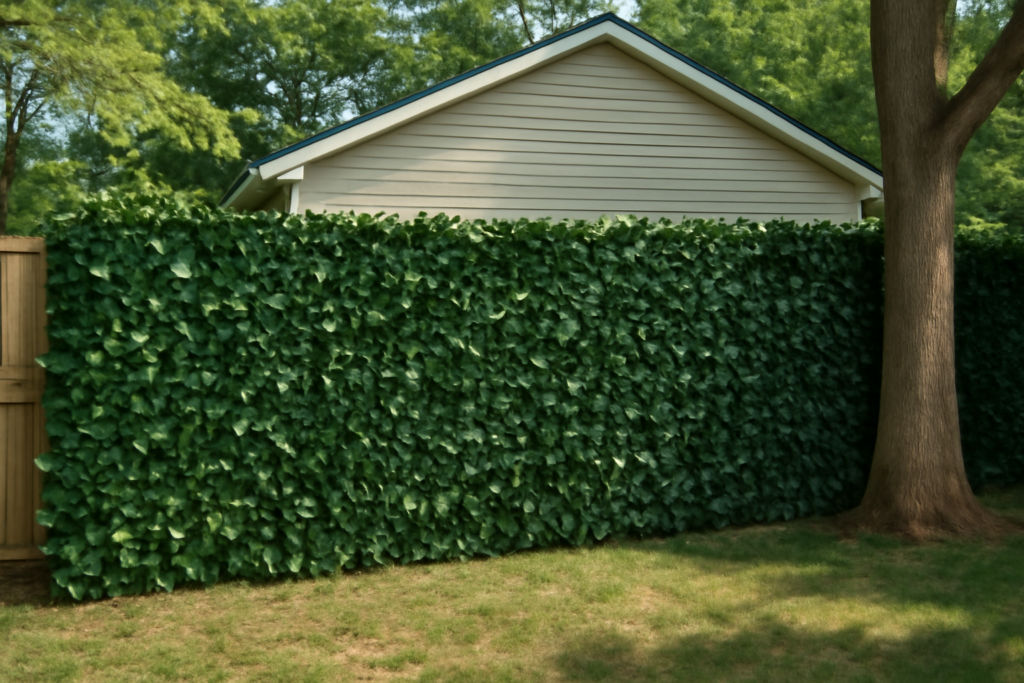
When you want instant greenery and privacy without waiting three years for real vines to grow in, the ColourTree artificial ivy privacy fence panel is one of the most popular ways to get there. It is a faux-ivy screen made of plastic leaves attached to a flexible mesh backing, sold in expandable panels or rolls that zip-tie onto an existing chain link, wood, or metal fence. In an afternoon it turns a bare chain link fence or a dull balcony rail into a lush green wall. It is decorative screening, not a security barrier, but for softening a fence and blocking sightlines it does the job cheaply. Here is the review after using this kind of product on real fences.
What It Is
ColourTree is a brand known for artificial hedge and ivy screening. The privacy panel is a grid of realistic-looking plastic ivy leaves molded onto a mesh backing that flexes and, on many versions, expands accordion-style to cover more area. It is designed to attach to an existing structure rather than stand on its own, so you are dressing up a fence you already have. The leaves are UV-treated plastic meant to hold their green color outdoors without the watering, trimming, or dead patches of live ivy.
Key Specifications
The details to check before buying:
- Material: UV-protected plastic leaves on a flexible mesh backing
- Panel size: commonly sold around 3 by 3 feet expandable or in larger roll dimensions
- Expandable design: many panels stretch accordion-style to cover a wider area
- UV rating: UV-treated to resist fading, though rated life varies by climate and sun exposure
- Mounting: zip-ties or cable ties onto chain link, wood lattice, or metal fencing
- Coverage: panels interlock or overlap to build a continuous green wall
Installation
This is about as easy as fence products get, which is much of the appeal. The basic process:
- Clean the existing fence surface where the panels will attach.
- Hold the first panel against the fence and expand it to size if it is the accordion type.
- Fasten it at the corners and along the edges with zip-ties threaded through the mesh and around the fence wire or rail.
- Overlap the next panel’s edge slightly with the first so there is no visible gap or seam.
- Continue across the fence, trimming panels with scissors or snips where they meet a post or end.
- Add extra ties in the field so wind cannot lift or flap the panels.
A whole chain link run can be covered in an afternoon with nothing more than a bag of zip-ties and a pair of snips. Overlapping the seams is the trick to making it look like continuous foliage rather than tiled squares.
Pros
The strengths are instant results and zero maintenance. You get a full, green privacy wall the day you install it, with no waiting for plants to grow and no watering, fertilizing, or trimming ever. It softens the hard look of chain link dramatically and blocks sightlines for privacy. Installation is genuinely easy and requires no tools beyond snips and ties. It is inexpensive relative to building a solid privacy fence, and the panels are lightweight and easy to reposition or remove.
Cons
Faux ivy has honest limitations. It is decorative screening only; the plastic leaves and mesh add no security and tear if someone pushes through hard. UV resistance helps, but in intense, all-day sun the green will fade over a few years and the plastic can grow brittle, so lifespan depends heavily on your climate. Up close it reads as artificial, more so than from a distance. In high wind, panels can flap or lift if under-secured, so they need plenty of ties. And it collects dust, leaves, and cobwebs that occasionally need a rinse with a hose.
How Realistic Is It
From across a yard or the street, artificial ivy screening reads convincingly as a real hedge, especially when you overlap the seams and vary the panel placement so the leaf pattern does not repeat obviously. Up close, the plastic is apparent, as it is with any faux foliage. Mixing the panels with a few real potted climbers at the base, or layering them a little unevenly, sells the effect better than a perfectly uniform grid. For its price and the instant coverage, most people find the look more than acceptable.
Price and Value
ColourTree ivy panels are budget-friendly, typically sold in multi-packs that bring the cost per square foot well below building a real privacy fence or planting live hedges. Covering a chain link fence with faux ivy is one of the cheapest privacy upgrades available, and the value is in the instant, no-maintenance result. Just remember the tradeoff is lifespan; in harsh sun you may replace panels in a handful of years, where a real fence lasts decades.
Who It Is Best For
The ColourTree artificial ivy privacy fence panel is best for renters and homeowners who want instant privacy and greenery on an existing chain link, balcony, or patio without construction, waiting, or upkeep. It is ideal for softening an ugly chain link fence, screening a balcony or deck, or creating a quick green backdrop for events and outdoor spaces. It is the wrong choice if you need real security, a permanent decades-long solution, or a look that holds up to close inspection. For fast, cheap, low-effort privacy and curb appeal, though, it delivers a green wall in an afternoon that would take live ivy years to match.
Faux Ivy Versus Real Climbing Plants
It is worth weighing artificial ivy against the living alternative it imitates. Real climbing plants like English ivy, clematis, or a flowering vine give you genuine texture, seasonal change, and a look no plastic can match, and they last indefinitely once established. The catch is time and work: real vines take one to three years to fully cover a fence, need watering and periodic trimming, can damage some surfaces as they cling, and go dormant or bare in winter in cold climates. Faux ivy trades that living authenticity for instant, permanent, no-care coverage that looks the same in January as in July. Many people split the difference, planting a few real climbers at the base while faux panels handle the immediate privacy, letting the living plants fill in over the seasons.
Wind, Weather, and Securing the Panels
The most common complaint with any faux-ivy screen is wind, because the panels act like small sails on a fence. In an exposed location, use far more zip-ties than you think you need, fastening every panel at close intervals along the top and sides so wind cannot lift or peel it. Overlap panels generously so a gust cannot catch an edge. In areas with severe storms, consider that a fully covered chain link fence catches much more wind load than bare mesh, which can stress the fence posts themselves, so make sure your fence is sound before covering it. Rain and snow are not a problem for the plastic, but heavy snow load can weigh down and stretch a panel, so brush accumulation off in winter.
Cleaning and Extending Its Life
A little care stretches how long faux ivy looks good. Every few months, hose the panels down to wash off dust, pollen, and cobwebs that dull the green and make the plastic look tired. In shaded, damp spots, a mildew film can form, which a soft brush and mild soapy water removes. The biggest enemy is UV exposure, so in an intensely sunny location the panels will fade faster; there is little you can do to stop it beyond buying UV-treated product and accepting a replacement every few years. Store panels out of the sun if you take them down seasonally, which preserves the color. Treated as the affordable, replaceable screening it is, faux ivy delivers years of instant privacy for a fraction of the cost and effort of any living or built alternative.