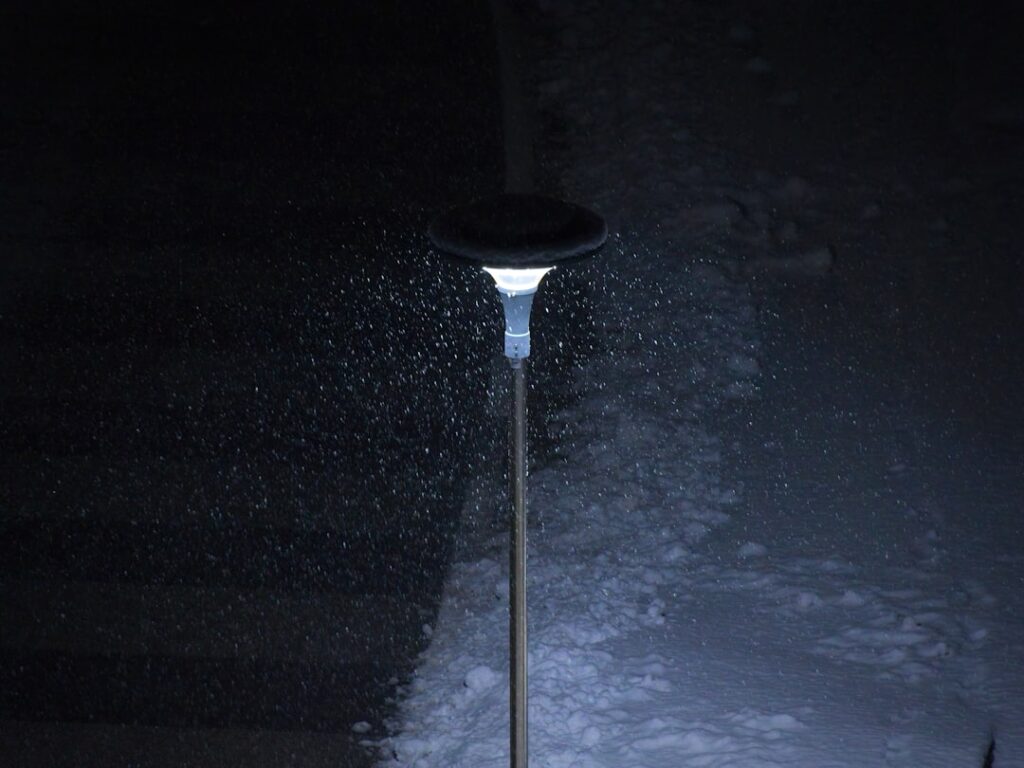
A quality set of led solar lights outdoor can run for six to ten hours on a single day of charging, and the better units now push 200 lumens or more from a fixture no larger than your palm. That is bright enough to mark a walkway, wash a fence, or light a patio without a single foot of buried wire. At D and G Flooring we field constant questions about outdoor lighting because it ties directly into how a deck, paver path, or porch floor actually gets used after dark. This guide walks through what to look for, how to place fixtures, and how to keep them performing season after season.
Part of our Windows & Doors guide — explore the full guide →
- How Solar LED Lights Actually Work
- Understanding Lumens and Brightness
- Battery Types and What They Mean for You
- Placement for Maximum Charge
- Winter and Cloudy Weather Performance
- Materials and Durability
- Common Types of Outdoor Solar Lights
- Installation Tips That Save Headaches
- Maintenance for Long Life
- What to Budget
- Final Thoughts
How Solar LED Lights Actually Work
Every solar light is built from four parts: a photovoltaic panel, a rechargeable battery, an LED, and a small circuit that manages charging and a dusk-to-dawn sensor. During the day the panel converts sunlight into electricity and stores it in the battery. When the light sensor detects darkness, the circuit switches the LED on and draws from that stored charge. There is no connection to your home’s electrical system, which is what makes installation so simple and operating cost effectively zero.
The weak link in this chain is almost always the battery, not the panel or the LED. Modern LEDs last 20,000 hours or more, and panels degrade slowly over many years. Batteries, by contrast, lose capacity after a few hundred charge cycles. When a solar light that used to glow all night starts dimming by midnight, the battery is usually the culprit, and on many models it can be swapped.
Understanding Lumens and Brightness
Lumens measure the total light a fixture emits, and this is the single most useful spec when comparing products. Decorative accent lights often produce just 5 to 20 lumens, which is plenty for a soft glow along a border but useless for safety. Pathway lights typically land in the 20 to 80 lumen range. Security and flood-style solar lights can reach 500 to 2,000 lumens, bright enough to trigger a noticeable pool of light across a driveway.
Match the output to the job:
- Accent and ambiance: 5 to 20 lumens for string lights, deck post caps, and garden borders.
- Pathways and steps: 30 to 100 lumens to define edges and prevent trips.
- Patios and seating areas: 100 to 300 lumens for usable task and gathering light.
- Security and entry: 500 lumens and up, ideally with motion activation.
Color temperature matters too. Warm white around 2,700K to 3,000K feels inviting and works well near a home’s exterior. Cool white at 5,000K and above reads as brighter and is better suited to security applications where visibility outranks atmosphere.
Battery Types and What They Mean for You
Older and budget solar lights often use Ni-MH (nickel-metal hydride) batteries. They are inexpensive but hold less energy and fade faster in cold weather. Mid-range and premium fixtures increasingly use lithium-ion or lithium iron phosphate cells, which store more energy, survive more charge cycles, and tolerate temperature swings better. If you live somewhere with real winters, lithium chemistry is worth paying for.
Check whether the battery is replaceable before you buy. Many low-cost lights are sealed, so when the battery dies in two or three years the whole fixture becomes waste. A model that takes a standard replaceable cell can keep working for a decade with a five-dollar swap.
Placement for Maximum Charge
The most common reason solar lights underperform is poor panel placement. The panel needs direct, unobstructed sun for as much of the day as possible, ideally six hours or more. A light tucked under a tree, against a north-facing wall, or shaded by the house will never charge fully no matter how good its specs are.
A few practical placement rules help:
- Point fixed panels toward the south in the Northern Hemisphere for the longest daily exposure.
- Keep panels clear of overhanging branches that leaf out and create summer shade.
- Choose models with a separate, cable-connected panel when the light itself must sit in shade. You mount the panel in the sun and run a thin wire to the fixture.
- Watch for reflected light pollution. A panel near a bright porch light may never register full darkness and can flicker on and off.
Winter and Cloudy Weather Performance
Solar lights still charge on overcast days, just at a reduced rate, often 10 to 25 percent of full sun output. Short winter days compound the problem because there are simply fewer daylight hours to collect energy. Cold also temporarily lowers battery capacity. The result is that a light running ten hours in July might only manage four or five hours in late December.
You can manage this by oversizing. If you want reliable winter performance, buy fixtures rated for longer runtimes than you strictly need in summer, and favor larger panels and lithium batteries. Wiping snow and frost off the panels after a storm makes a real difference, since even a thin layer blocks most of the incoming light.
Materials and Durability
Outdoor lights live a hard life. Look for an IP rating of at least IP44 for splash resistance, and IP65 or higher if fixtures sit where sprinklers or heavy rain will hit them directly. Housings made of die-cast aluminum, stainless steel, or UV-stabilized polycarbonate hold up far better than thin painted metal or untreated plastic, which fades and cracks within a couple of seasons.
Pay attention to the panel cover as well. A tempered glass panel resists scratching and clouding better than a cheap plastic film, and a clear panel collects more light than one that has yellowed. These small material differences separate a light that looks good for a decade from one that looks tired by its second summer.
Common Types of Outdoor Solar Lights
The category has expanded well beyond simple stake lights. Today you can choose from path and bollard lights, deck and step lights that mount flush to surfaces, wall-mounted sconces, hanging lanterns, string and fairy lights, floodlights with motion sensors, and decorative figures. Step and deck lights deserve special mention for anyone with raised outdoor flooring, because they improve safety on stairs and transitions while drawing zero power from the home.
Motion-activated models save battery by staying dim or off until someone approaches, then jumping to full brightness. Many offer adjustable sensitivity and a timed shutoff so they are not triggered by every passing animal. For driveways and side yards this combination of long standby and bright bursts is ideal.
Installation Tips That Save Headaches
Most solar lights install in minutes, but a few habits prevent frustration. Before placing anything permanently, charge the units fully for one to two sunny days with the panel exposed. Many ship with a pull tab or shipping switch that must be removed or toggled before the battery will charge at all, and skipping that step leads people to assume a perfectly good light is defective.
For staked lights, loosen the soil first so the stake seats fully and the fixture stands straight. For wall and deck mounts, use corrosion-resistant stainless hardware and pre-drill into solid framing rather than thin trim. Space pathway lights roughly six to eight feet apart for an even wash; closer for a continuous ribbon of light, farther for occasional accents.
Maintenance for Long Life
Solar lights are low maintenance, not no maintenance. Wipe the panels clean every month or two, more often under trees or near dusty roads, because grime steadily cuts charging. Once a year, check that the dusk sensor is not clouded and that the battery still delivers a full night. If runtime has dropped sharply, replace the battery before assuming the fixture has failed.
In regions with harsh winters, some homeowners bring decorative and string lights indoors during the darkest months when they would barely charge anyway, then redeploy them in spring. This extends the life of both the batteries and the housings.
What to Budget
Pricing spans a wide range in the US market. Basic decorative stake lights sell in multipacks for a few dollars each. Solid mid-range path and deck lights generally run roughly $15 to $40 per fixture, and high-output motion floodlights or premium architectural fixtures can reach $50 to $150 each. Spending a bit more on lithium batteries, replaceable cells, and quality housings usually pays off in years of added service. Decide how many fixtures you need first, then choose a tier you can afford to buy consistently so your lighting looks intentional rather than mismatched.
Final Thoughts
Outdoor solar LED lighting has matured into a genuinely practical option, not just a novelty. By matching lumens to the task, prioritizing sun exposure and lithium batteries, and choosing durable housings, you can light paths, decks, and entries reliably without trenching or wiring. Thoughtful placement and a few minutes of seasonal cleaning will keep your fixtures bright for years, making your outdoor floors safer and your evenings more usable.