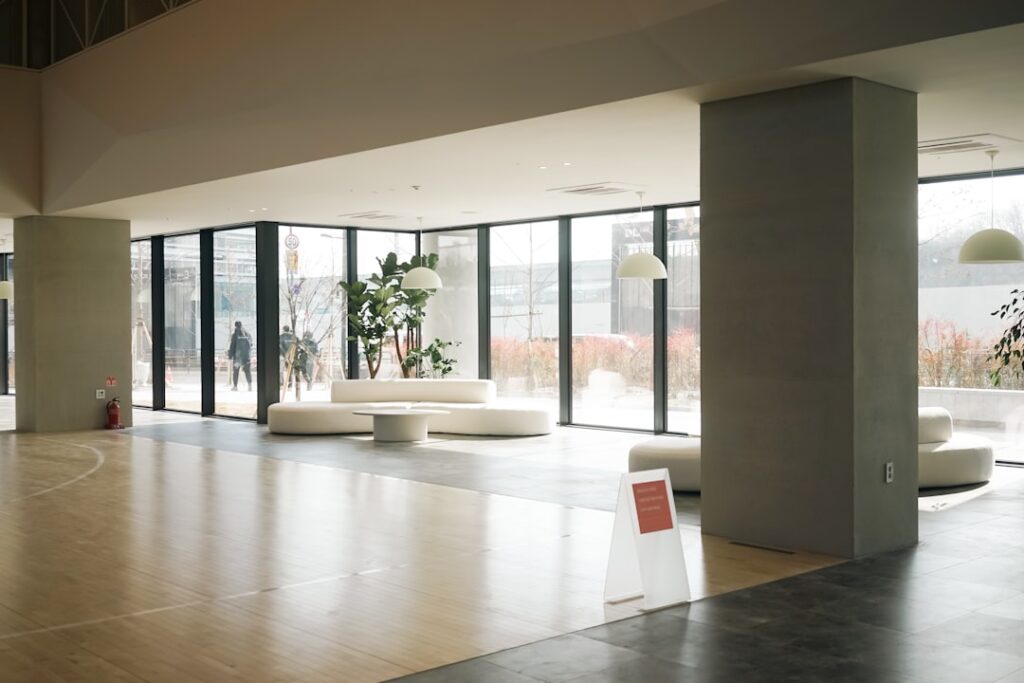
Commercial vinyl flooring has become the go-to choice for businesses, healthcare facilities, schools, and retail spaces that demand durability, aesthetics, and easy maintenance. In 2026, advances in manufacturing technology have produced commercial vinyl products that realistically replicate natural materials while withstanding foot traffic levels that would destroy traditional flooring in a fraction of the time.
This guide covers every aspect of commercial vinyl flooring, from product types and performance ratings to installation methods and lifecycle costs, so you can make a confident purchasing decision for your next project.
- Types of Commercial Vinyl Flooring
- Understanding Wear Layers & Ratings
- Benefits for Commercial Spaces
- Best Applications by Industry
- Installation Methods
- Cost Breakdown
- Maintenance & Cleaning
- Top Brands for 2026
- Sustainability & Environmental Impact
- Commercial Vinyl vs. Other Flooring Options
- Frequently Asked Questions
- How long does commercial vinyl flooring last?
- Is commercial vinyl flooring waterproof?
- Can commercial vinyl flooring be installed over existing flooring?
- Is commercial vinyl flooring slippery?
- What is the difference between commercial and residential vinyl flooring?
- Can commercial vinyl flooring be refinished?
Types of Commercial Vinyl Flooring
Commercial vinyl flooring comes in several formats, each designed for specific performance requirements and aesthetic goals.
| Type | Format | Thickness | Best For | Price per Sq Ft |
|---|---|---|---|---|
| Luxury Vinyl Tile (LVT) | Tiles (12×12, 18×18, 24×24) | 2.5 – 5 mm | Offices, retail, lobbies | $3 – $8 |
| Luxury Vinyl Plank (LVP) | Planks (6×36, 7×48, 9×60) | 3 – 8 mm | Restaurants, boutiques | $3 – $9 |
| Sheet Vinyl | Rolls (6 ft or 12 ft wide) | 1.5 – 3 mm | Healthcare, labs, kitchens | $2 – $5 |
| Vinyl Composition Tile (VCT) | Tiles (12×12) | 1/8 inch | Schools, grocery stores | $1 – $3 |
| Rigid Core Vinyl (SPC/WPC) | Planks or tiles | 4 – 8 mm | High-traffic commercial | $4 – $10 |
Understanding Wear Layers & Ratings
The wear layer is the transparent top coating that protects the printed design layer from scratches, scuffs, and stains. Wear layer thickness is the single most important factor in determining how long commercial vinyl flooring will last under heavy traffic.
| Wear Layer Thickness | Traffic Rating | Expected Lifespan | Recommended Use |
|---|---|---|---|
| 6 – 12 mil | Light residential | 5 – 10 years | Not suitable for commercial |
| 12 – 20 mil | Light commercial | 10 – 15 years | Small offices, boutiques |
| 20 – 28 mil | Commercial | 15 – 20 years | Retail, restaurants, schools |
| 28 – 40 mil | Heavy commercial | 20 – 30 years | Hospitals, airports, warehouses |
For any commercial application, choose a product with at least a 20-mil wear layer. High-traffic environments like healthcare facilities and retail stores should opt for 28 mil or higher to maximize the flooring’s service life.
Also look for products that meet ASTM F1700 standards for solid vinyl tile and ASTM F1861 for resilient wall base. These certifications verify that the product has been tested for dimensional stability, flexibility, and resistance to chemicals and staining.
Benefits for Commercial Spaces
Commercial vinyl flooring offers a unique combination of advantages that few other materials can match.
- Durability: Commercial-grade vinyl withstands rolling loads, heavy foot traffic, and furniture movement without showing wear.
- Water resistance: Vinyl is inherently waterproof at the surface level, making it ideal for kitchens, bathrooms, and entryways where spills are common.
- Design versatility: Modern printing technology creates remarkably realistic wood, stone, concrete, and abstract patterns that elevate any commercial interior.
- Comfort underfoot: Vinyl provides more cushion and warmth than ceramic tile or polished concrete, reducing fatigue for employees who stand for long periods.
- Sound absorption: Vinyl flooring dampens impact noise by up to 20 decibels compared to hard surfaces, a significant benefit in open-plan offices and healthcare settings.
- Easy maintenance: Regular sweeping and damp mopping keep commercial vinyl looking new, with no need for waxing, sealing, or specialized cleaning equipment.
- Cost efficiency: Lower material and installation costs compared to hardwood or natural stone, with a competitive lifecycle cost when factoring in maintenance savings.
Best Applications by Industry
Healthcare: Sheet vinyl is the preferred choice for hospitals and clinics because it can be heat-welded at the seams to create a monolithic, bacteria-resistant surface. Look for products with antimicrobial treatments and FloorScore certification for indoor air quality.
Education: VCT remains popular in schools because of its low upfront cost and the ability to buff and refinish the surface repeatedly. Many districts are transitioning to LVT for reduced long-term maintenance costs.
Retail: LVT and LVP in wood-look designs create an inviting shopping atmosphere. Choose products with at least a 28-mil wear layer to handle shopping cart traffic and high customer volume.
Hospitality: Hotels and restaurants benefit from luxury vinyl’s design range and quick installation. Many hospitality-grade products feature enhanced slip resistance for wet areas like lobbies and dining rooms.
Office: SPC rigid core vinyl is increasingly replacing carpet tile in office environments. It handles rolling office chair traffic without indenting and is easier to clean, contributing to healthier indoor air quality.
Installation Methods
The right installation method depends on the subfloor condition, product type, and operational requirements of the space.
| Method | Best For | Pros | Cons |
|---|---|---|---|
| Glue-down | LVT, sheet vinyl | Most secure; no movement | Longer install time; harder to remove |
| Click-lock floating | LVP, SPC, WPC | Fast installation; no adhesive | May shift in large open areas |
| Loose lay | LVT with friction backing | Fastest install; easy replacement | Requires flat subfloor; may shift at edges |
| Self-adhesive (peel & stick) | VCT, budget LVT | Simple DIY installation | Weakest bond; not for heavy commercial |
For most commercial projects, glue-down installation provides the best long-term performance. Use a commercial-grade pressure-sensitive or wet-set adhesive recommended by the flooring manufacturer. Always follow the manufacturer’s subfloor preparation requirements, including moisture testing with a calcium chloride kit or relative humidity probe.
Cost Breakdown
Understanding the total cost of ownership helps you compare commercial vinyl flooring against other options on an equal footing.
| Cost Component | Low End | Mid Range | High End |
|---|---|---|---|
| Material (per sq ft) | $1.50 | $4.50 | $10.00 |
| Subfloor preparation | $0.50 | $1.00 | $2.50 |
| Professional installation | $1.50 | $3.00 | $5.00 |
| Adhesive & supplies | $0.30 | $0.50 | $1.00 |
| Transition strips & trim | $0.10 | $0.25 | $0.50 |
| Total installed cost | $3.90 | $9.25 | $19.00 |
For a 5,000-square-foot commercial space, expect to invest between $19,500 and $95,000 for a complete commercial vinyl installation in 2026, depending on the product quality and subfloor condition.
Maintenance & Cleaning
One of the biggest advantages of commercial vinyl flooring is its low maintenance requirements compared to hardwood or natural stone.
Daily:
- Dust mop or vacuum with a soft brush attachment to remove grit and debris.
- Spot-clean spills immediately to prevent staining.
Weekly:
- Damp mop with a neutral pH cleaner diluted according to manufacturer specifications.
- Avoid harsh chemicals, ammonia, and abrasive cleaners that can dull the wear layer.
Monthly:
- Use an auto-scrubber with a red or white pad for larger commercial spaces.
- Inspect seams, transitions, and high-traffic areas for signs of wear.
Annually:
- Apply a commercial-grade floor finish or polish if recommended by the manufacturer (some modern LVT products require no finish).
- Deep clean with a professional-grade vinyl floor cleaner and rinse thoroughly.
Top Brands for 2026
- Shaw Contract: Offers a wide range of LVT and rigid core products with industry-leading sustainability certifications.
- Armstrong Flooring: Known for sheet vinyl and VCT products that dominate healthcare and education markets.
- Mohawk Group: Their Aladdin Commercial line offers competitive pricing without sacrificing quality.
- Tarkett: European innovation with a strong focus on circular economy principles and cradle-to-cradle design.
- Mannington Commercial: Premium LVT and sheet vinyl with exceptional design realism and color consistency.
- Interface: Known primarily for carpet tile, their LVT lines are gaining market share in mixed-material commercial designs.
Sustainability & Environmental Impact
Environmental considerations are increasingly important in commercial flooring decisions for 2026. Here is what to look for:
- FloorScore certification: Verifies that the product meets strict indoor air quality standards for VOC emissions.
- Recycled content: Many commercial vinyl products now contain 20% to 40% pre-consumer or post-consumer recycled content.
- Take-back programs: Leading manufacturers offer end-of-life recycling programs that divert old flooring from landfills.
- Phthalate-free formulations: Modern commercial vinyl increasingly uses alternative plasticizers that are safer for occupants and the environment.
- EPD (Environmental Product Declaration): Third-party verified documents that transparently report the environmental impact of a product across its lifecycle.
Commercial Vinyl vs. Other Flooring Options
| Factor | Commercial Vinyl | Ceramic Tile | Hardwood | Carpet Tile | Polished Concrete |
|---|---|---|---|---|---|
| Installed cost / sq ft | $4 – $19 | $8 – $25 | $12 – $30 | $3 – $12 | $3 – $15 |
| Lifespan | 15 – 30 years | 25 – 50 years | 20 – 100 years | 10 – 15 years | 20+ years |
| Water resistance | Excellent | Excellent | Poor | Poor | Good |
| Maintenance level | Low | Low – Medium | High | Medium | Low |
| Comfort underfoot | Good | Poor | Good | Excellent | Poor |
| Design options | Extensive | Extensive | Limited to wood | Extensive | Limited |
| Noise reduction | Good | Poor | Moderate | Excellent | Poor |
Frequently Asked Questions
How long does commercial vinyl flooring last?
With proper maintenance, commercial vinyl flooring lasts 15 to 30 years depending on the wear layer thickness and traffic volume. Products with 28-mil or thicker wear layers routinely exceed 20 years in moderate commercial environments.
Is commercial vinyl flooring waterproof?
The vinyl surface itself is waterproof, but seams and edges can allow water penetration. Sheet vinyl with heat-welded seams provides the best waterproof performance. Click-lock LVP and LVT products are water-resistant but not fully waterproof at the joints.
Can commercial vinyl flooring be installed over existing flooring?
In many cases, yes. Commercial vinyl can be installed over existing vinyl, well-bonded VCT, and smooth concrete. The existing surface must be clean, flat, and in good condition. It cannot be installed over carpet or cushioned flooring.
Is commercial vinyl flooring slippery?
Most commercial vinyl products are designed with slip-resistant surfaces that meet ADA requirements. Look for products with a coefficient of friction (COF) rating of 0.50 or higher for dry conditions and 0.60 or higher for wet areas.
What is the difference between commercial and residential vinyl flooring?
Commercial vinyl has a thicker wear layer (20+ mil vs. 6-12 mil), meets stricter fire and slip resistance ratings, and is manufactured to withstand higher traffic volumes. It also typically carries commercial warranties covering heavy use environments.
Can commercial vinyl flooring be refinished?
VCT can be stripped, buffed, and refinished multiple times. LVT and LVP cannot be refinished in the traditional sense, but their thick wear layers are designed to maintain appearance without refinishing for the product’s entire lifespan.
Last updated: March 2026
Prefer to explore on your own?
See how new flooring looks in your actual room in seconds — free, no signup.
Try the free Floor Studio →