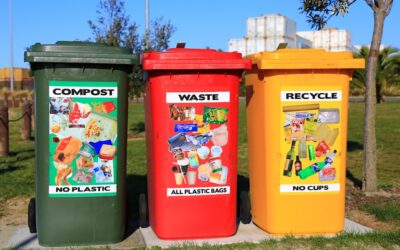
The average American household throws away 219 pounds of food waste per year, and nearly all of it could become nutrient-rich compost instead of landfill methane. Choosing the right compost bins depends on how much waste you generate, how much outdoor space you have, and how involved you want to be in the process. Some bins produce finished compost in three weeks while others take six months, so matching the system to your lifestyle matters.
Types of Compost Bins Explained
Composting systems fall into four main categories, each with distinct advantages. Stationary bins sit in one spot and rely on natural decomposition with occasional turning. Tumbler bins rotate on a frame, speeding up the process through frequent aeration. Worm bins (vermicomposters) use red wiggler worms to process food scraps indoors or in sheltered outdoor spaces. Countertop collectors hold a few days of scraps before you transfer them to a larger system.
Your choice depends on volume and timeline. A family of four generating 5 to 10 pounds of food scraps per week does well with a tumbler or mid-size stationary bin. Single-person apartments work best with a worm bin or electric countertop composter. Yard waste from a suburban lot with trees and gardens may require a large stationary bin or a three-bin system that handles leaves, grass, and food scraps in separate stages.
Best Tumbler Compost Bins
The FCMP Outdoor IM4000 ($90 to $110) is the best-selling dual-chamber tumbler for good reason. Two 18.5-gallon chambers let you fill one side while the other finishes composting. The black plastic absorbs solar heat, and the internal mixing fins break up clumps as you spin the barrel. Expect finished compost in 4 to 6 weeks with proper carbon-to-nitrogen ratios.
For larger households, the Jora JK270 ($300 to $350) holds 70 gallons across two chambers and features insulated walls that maintain decomposition temperatures even in winter. Its galvanized steel construction resists rodents, which is a genuine concern with cheaper plastic models. Turn it five to ten times every two to three days for fastest results.
Best Stationary Outdoor Bins
Stationary bins cost less and hold more than tumblers, but they require manual turning with a pitchfork every week or two. The Geobin Composting System ($30 to $40) is a flexible mesh cylinder that expands from 3 to 4 feet in diameter and holds up to 216 gallons. It is the most affordable option for yard waste composting and collapses flat for storage.
The Aerobin 400 ($150 to $180) is a more engineered approach. Its internal aeration lung channels air through the pile without turning, and a leachate tank at the bottom collects compost tea you can use as liquid fertilizer. This bin works well for homeowners who want a set-it-and-mostly-forget-it system. Add scraps to the top, and finished compost collects at the bottom access door in 3 to 6 months.
Indoor and Apartment Composting
Worm bins transform food scraps into vermicompost, one of the most nutrient-dense soil amendments available. The Worm Factory 360 ($100 to $130) stacks multiple trays vertically, so worms migrate upward to fresh food while finished castings accumulate below. Start with 1 pound of red wiggler worms ($30 to $40 online) and they will process 3 to 4 pounds of scraps per week once established.
If worms are not your thing, electric countertop composters like the Lomi ($400 to $500) and Vitamix FoodCycler ($250 to $350) grind and dehydrate food waste into a dry, odorless soil amendment in 4 to 8 hours. These are not true compost since the material has not been biologically decomposed, but they reduce waste volume by 80% to 90% and the output works well as a garden amendment when mixed into soil.
What to Compost and What to Avoid
Successful composting requires a balance of carbon-rich “browns” and nitrogen-rich “greens” at roughly a 30:1 carbon-to-nitrogen ratio by weight. In practice, this means adding about three parts brown materials to one part green materials by volume.
- Greens (nitrogen): Fruit and vegetable scraps, coffee grounds, fresh grass clippings, plant trimmings
- Browns (carbon): Dry leaves, cardboard, newspaper, sawdust, straw, dried grass
- Avoid: Meat, dairy, oils, pet waste, diseased plants, treated wood, and anything with pesticide residue
Chop or shred materials into 1-to-2-inch pieces before adding them. Smaller pieces decompose faster because they expose more surface area to microorganisms. A dedicated compost thermometer ($10 to $15) helps you monitor the pile; active decomposition occurs between 120 and 160 degrees Fahrenheit.
Troubleshooting Common Compost Problems
A smelly bin almost always means too much nitrogen (greens) and not enough oxygen. Add a thick layer of shredded cardboard or dry leaves and turn the pile to introduce air. Ammonia odors specifically indicate excess nitrogen. A rotten-egg smell points to anaerobic conditions from too much moisture; mix in dry browns and turn more frequently.
Fruit flies congregate when food scraps sit exposed on the surface. Always bury fresh additions under 2 to 3 inches of brown material. A piece of cardboard laid over the top of the pile blocks flies while still allowing airflow. If your compost bins attract rodents, switch to a sealed tumbler or add a hardware cloth liner (quarter-inch mesh) to the bottom of your stationary bin.
Using Finished Compost
Finished compost looks like dark, crumbly soil and smells earthy, not sour. Mix it into garden beds at a rate of 1 to 3 inches per season, work it into potting soil at a 25% ratio, or spread it as a thin top-dressing on lawns. Compost improves soil structure in both sandy and clay soils, increases water retention, and provides slow-release nutrients that feed plants for months.
Screen your finished compost through half-inch hardware cloth to remove chunks that have not fully broken down. Toss those pieces back into the active pile. A single compost bin processing household scraps and yard waste typically produces 100 to 200 pounds of finished compost per year, enough to amend several garden beds and save $50 to $150 on bagged compost and fertilizer annually.