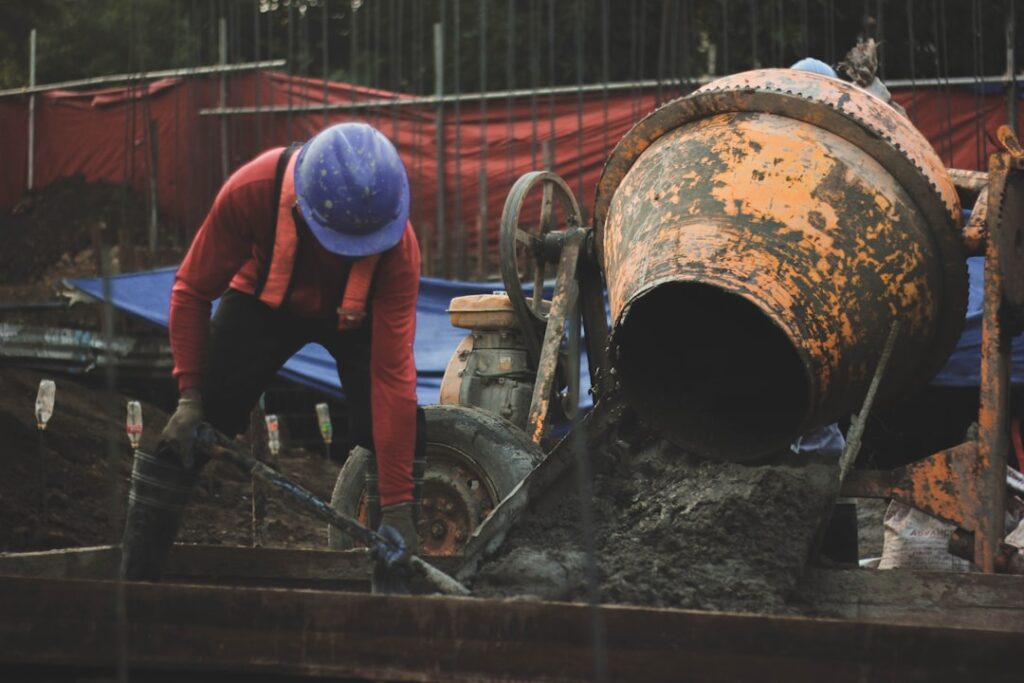
For every drum mixer rented in America, hundreds of bags of concrete get mixed the old way — in a plastic tub on the ground with a hoe. A concrete mixing tub is the $15-$40 tool that handles the fence post, the mailbox footing, the repair patch, and the six-bag shed pad without a rental counter or a 200-lb machine. But there is real technique to tub mixing: the right tub size for the batch, the dry-well method that prevents pockets of unmixed powder, and water discipline that keeps your 4,000-PSI bag mix from becoming 2,500-PSI soup. Here is the complete manual — sizes, bag counts, hoe and paddle technique, ratios, cleanup, and the honest math on when a tub beats a mixer.
Tub Sizes and What They Hold
Mixing tubs are low, rectangular HDPE or structural-foam pans with sloped ends built for hoe strokes. The common sizes:
- 2 cu ft (about 24 x 20 x 8 in, $10-$15): One 60-lb or 80-lb bag comfortably. The mortar-and-patch tub.
- 3 cu ft (about 33 x 24 x 8.5 in, $15-$25): The standard. Mixes one 80-lb bag with room to work, or two 60-lb bags if you keep the batch tight.
- 3.5 cu ft heavy-duty (about 36 x 24 x 10 in, $25-$45): Two 80-lb bags for an experienced mixer. Thicker walls survive shovel edges and being dragged loaded.
The counterintuitive rule: never fill a tub to its rated volume. An 80-lb bag yields only 0.6 cu ft of concrete, yet it deserves the 3 cu ft tub — mixing needs empty space for the material to roll. One bag per small tub, two bags maximum in the biggest, ever. Overloading is the root cause of the classic tub failure: dry pockets in the corners that show up later as crumbly spots in your footing. Buy the heavy-wall version if you will use it more than twice; bargain tubs crack at the corners the first time you fold stiff 80-lb-bag concrete in 40°F weather. A tub, a mortar hoe, and a bucket run about $50 total — Marshalltown, Kobalt, and the orange-store house brands are all serviceable.
How Many Bags for the Job
Quick reference for planning tub sessions — an 80-lb bag yields 0.60 cu ft, a 60-lb bag 0.45 cu ft:
- Fence post (8-in hole, 2 ft deep, 4×4 post): about 1.5 bags of 80-lb.
- Deck footing tube (10-in x 36-in): about 3.3 bags of 80-lb — two tub batches.
- Mailbox post: one 60-lb bag, usually.
- 4-in slab: one 80-lb bag covers 1.8 sq ft, so a 4×8 ft pad needs about 18 bags. That is nine or more tub batches — read the mixer section below before committing.
Hoe Technique: The Dry-Well Method
- Stage on level ground close to the pour — a loaded tub is a 100+ lb sled. A scrap of plywood under it saves your lawn and gives a clean drag surface.
- Dump the full bag and dry-spread it, then pull the powder toward one end, leaving a well at the other.
- Add most — not all — of the water to the well. For an 80-lb bag start with about 2.5 quarts of a roughly 3-quart total (label rates: 60-lb bags take about 2-2.5 quarts). Holding back the last pint is the whole secret of water control.
- Chop and pull. Work the hoe with short chopping strokes, pulling dry material into the water and then folding the wet mass back over itself, walking the mix from one end of the tub to the other. A mortar hoe — the one with two holes in the blade — shears the mix through the holes and cuts the effort noticeably versus a garden hoe.
- Make three full passes end-to-end, scraping the corners and floor each pass; corners hide dry powder. Total honest effort: 3-5 minutes per bag.
- Adjust with the reserved water a splash at a time. Correct concrete consistency is peanut-butter stiff: a hoe furrow holds its shape, the surface glistens slightly, and a handful squeezed stays in a ball without dripping. Pourable-pancake consistency means you have already sacrificed strength.
- Use it within 30-45 minutes (less in heat). Remix briefly before placing; never re-temper stiffened concrete with extra water.
The Drill-Paddle Alternative
A 1/2-inch drill with a mixing paddle splits the difference between hoe and machine. Use a low-RPM, high-torque drill or dedicated mixer (a paddle stalls light drills and burns them out — this is the classic homeowner-drill killer) with an egg-beater or helical paddle, and mix half-bag batches in a 5-gallon bucket or single bags in the tub, keeping the paddle moving along the bottom and corners for 2-3 minutes. Paddles shine on sand mixes, mortar, thinset, and self-leveler; they are adequate for standard concrete but struggle with gravel-heavy 80-lb bags in deep buckets, where aggregate packs below the paddle. For repeated small batches — say, twelve post holes over a weekend — a $60 corded mixing drill plus the tub is the sweet spot before true mixer territory.
Water Ratios and Why Restraint Wins
Bagged mix is engineered to hit its rated strength at the label’s water quantity — typically a 0.45-0.50 water-cement ratio. Every extra quart per 80-lb bag drops final strength by several hundred PSI, increases shrinkage cracking, and weakens the surface. Cold water and cold powder slow setting; in hot weather, mix smaller batches and shade the tub. If the mix is genuinely too stiff to work, add water a splash at a time with full remixing — but if you constantly fight stiffness, the fix is technique (better chopping) or a wetter-tolerant product (crack-resistant or fiber mixes), not habitual over-watering. For post-setting with fast products like Quikrete Fast-Setting (the red bag), skip the tub entirely — those are designed to be poured dry into the hole and watered in place.
Cleanup: The Ten-Minute Rule
Rinse the tub, hoe, and paddle within ten minutes of the last batch — cured concrete bonds to tools permanently, while fresh paste hoses off in seconds. Dump rinse water on gravel or a corner of the yard, never down a storm drain or sink (cement wash is high-pH and it hardens in traps). The professional trick for missed cleanup: let the residue cure fully, then flex the tub’s walls — HDPE releases cured concrete in satisfying sheets, which is itself a reason to buy plastic over steel. A stiff brush and a splash of vinegar handle the haze. Store the tub flat or on edge out of the sun; UV embrittles cheap tubs in a couple of seasons.
When a Tub Beats a Mixer — and When It Doesn’t
The tub wins below about 6-8 bags per session: zero rental cost versus $60-$100 per day for a drum mixer, no towing or lifting a 200-lb machine, no machine cleanup, and total control over small batches. It also doubles as a job-site utility — mortar for a repair course, a soaking tray for pavers, a mixing station for self-leveler — which no rented drum does. It also wins on scattered work — three post holes today, two next weekend — where a rental never pencils. The mixer wins past 8-10 bags: hoe-mixing a 20-bag slab means an hour-plus of hard labor and, worse, cold joints between batches placed too far apart. For anything with a finished surface (slabs, countertops) batch-to-batch consistency matters too, and a mixer holds water ratios steadier than tired arms do at bag fifteen. Past 25-30 bags (about two-thirds of a yard), stop bag math entirely and call the ready-mix short-load truck. The tub is not the lesser tool — it is the right tool for the 80% of home concrete jobs that are small, and the discipline it teaches about water is worth more than the tub costs.