Concrete nails are hardened steel fasteners designed to penetrate concrete, masonry, and other hard surfaces without bending or breaking. Whether you are securing a bottom plate to a garage floor, attaching furring strips to a basement wall, or anchoring flooring transitions, these specialized nails make the job possible without drilling and plugging. This guide covers every type, size, and technique you need to master in 2026.
What Are Concrete Nails?
Concrete nails differ from standard wire nails in several important ways. They are made from hardened or tempered steel that resists bending when struck against hard surfaces. The shanks are typically thicker than common nails and may feature fluted, spiral, or smooth profiles to improve holding power in masonry substrates.
These nails work by displacing concrete particles as they are driven in, creating friction that holds them in place. Unlike expansion anchors that rely on outward pressure, concrete nails depend on the compressive grip of the surrounding material. This makes them fast to install but somewhat limited in pull-out strength compared to mechanical anchors.
Types of Concrete Nails
There are several varieties of concrete nails, each designed for specific applications:
Cut Masonry Nails
These are flat, tapered nails stamped from hardened steel plate. They have a rectangular cross-section that reduces the risk of cracking brittle concrete. Cut masonry nails are the traditional choice for fastening to mortar joints and older concrete.
Fluted Concrete Nails
The most common type in 2026, fluted nails have longitudinal grooves running down the shank. These grooves increase surface area and improve grip in cured concrete. They are round in cross-section and easier to drive than cut nails.
Spiral Shank Concrete Nails
Spiral or twisted shanks spin slightly as they are driven, creating a thread-like channel in the concrete. This provides the highest holding power among nail-type fasteners and resists pull-out forces better than smooth or fluted designs.
Powder-Actuated Pins
Technically not nails in the traditional sense, these hardened steel pins are fired into concrete using a powder-actuated tool (PAT). They are used in commercial construction for securing steel track to concrete floors and ceiling decks.
| Type | Shank Profile | Holding Power | Best Application | Difficulty |
|---|---|---|---|---|
| Cut Masonry | Rectangular, smooth | Moderate | Mortar joints, older concrete | Moderate |
| Fluted | Round, grooved | Good | General concrete fastening | Easy |
| Spiral Shank | Round, twisted | Excellent | High-load applications | Moderate |
| Powder-Actuated | Round, smooth | Excellent | Steel-to-concrete connections | Requires PAT tool |
Sizes & Specifications
Concrete nails come in a range of sizes to suit different material thicknesses and applications:
| Length | Gauge | Common Uses |
|---|---|---|
| 3/4″ | 9 – 10 | Electrical clips, light trim |
| 1″ | 9 – 10 | Furring strips, conduit clamps |
| 1-1/2″ | 8 – 9 | Bottom plates on slabs, flooring transitions |
| 2″ | 8 – 9 | Framing on concrete, thicker lumber |
| 2-1/2″ | 7 – 8 | Heavy framing, structural attachments |
| 3″ | 7 – 8 | Securing sleepers, heavy-duty fastening |
As a general rule, the nail should penetrate the concrete by at least 3/4 inch after passing through the material being fastened. For a 3/4-inch-thick furring strip, a 1-1/2-inch nail provides the right depth.
Concrete Nails vs. Other Fasteners
Choosing between concrete nails and other concrete fasteners depends on the load, permanence, and substrate condition:
| Fastener | Installation Speed | Holding Strength | Removable? | Cost per Unit |
|---|---|---|---|---|
| Concrete nails | Fast | Moderate | Difficult | $0.05 – $0.15 |
| Tapcon screws | Moderate | High | Yes | $0.25 – $0.50 |
| Expansion anchors | Slow | Very high | No | $0.50 – $2.00 |
| Adhesive anchors | Slow (cure time) | Very high | No | $1.00 – $5.00 |
| Powder-actuated pins | Very fast | High | No | $0.10 – $0.30 |
For light-duty tasks like attaching furring strips, conduit clips, or laminate flooring transitions, concrete nails are the fastest and most economical option. For heavy loads like ledger boards or equipment mounts, Tapcon screws or expansion anchors are safer choices.
How to Drive Concrete Nails
Driving concrete nails by hand requires technique and the right tools. Follow these steps for a successful installation:
- Mark your position: Use a pencil or marker to identify exactly where the nail needs to go. Avoid placement within two inches of a concrete edge to prevent chipping.
- Wear safety gear: Put on safety glasses and hearing protection. Concrete chips can fly at high speed.
- Hold the nail with pliers: Never hold a concrete nail with your fingers while striking. Use locking pliers or a nail-holding tool.
- Start with light taps: Set the nail with several light hammer blows to establish a grip point in the concrete.
- Drive with firm strikes: Once set, swing with authority. Hesitant, glancing blows are more likely to bend the nail.
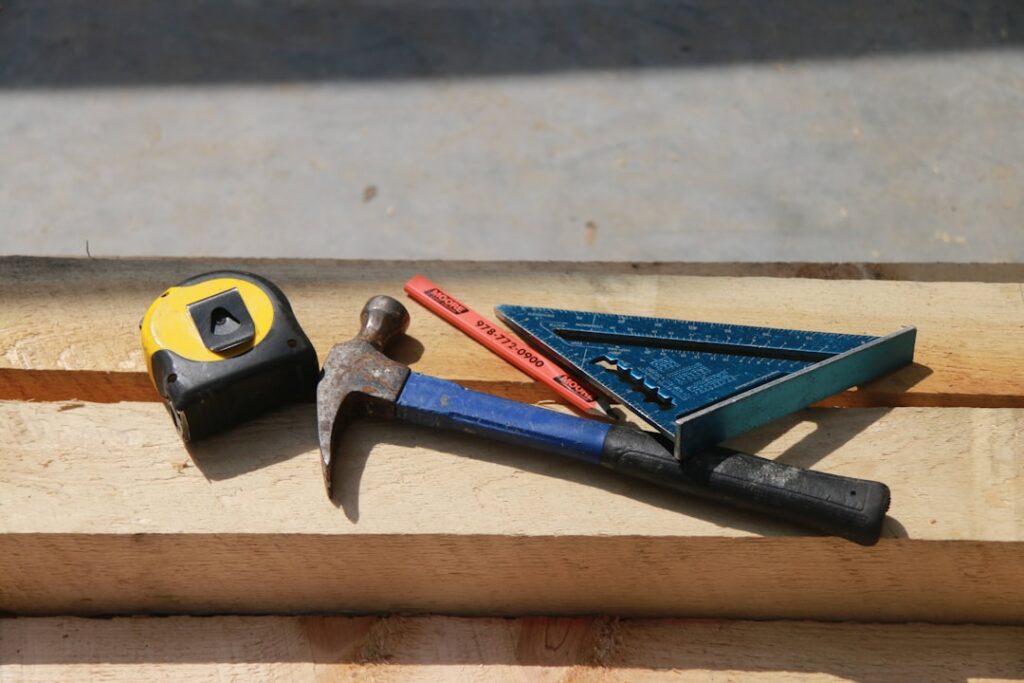
- Use a heavy hammer: A 20-ounce or heavier framing hammer provides the mass needed. A lightweight finish hammer will not work.
Tools You Need
The right tools make working with concrete nails faster and safer:
- Framing hammer (20-28 oz): The extra weight drives nails with fewer strikes
- Hand-held sledge (2-3 lb): Best for larger nails in hard concrete
- Locking pliers or nail holder: Keeps fingers safely away from the strike zone
- Safety glasses: Non-negotiable when striking hardened steel on concrete
- Hearing protection: The impact is louder than driving nails into wood
- Powder-actuated tool: For high-volume commercial work, a PAT tool drives pins in seconds
Concrete Nails in Flooring Projects
Concrete nails play a key role in several flooring installation scenarios:
Securing Sleepers for Hardwood Floors
When installing hardwood flooring over a concrete slab, pressure-treated sleepers (2x4s laid flat) are fastened to the slab with concrete nails spaced every 16 inches. This creates a nailing surface for the hardwood planks above.
Attaching Transition Strips
Metal or wood transition strips between rooms often require fastening to concrete at doorways. A concrete nail through a pre-drilled hole in the transition strip secures it quickly without adhesive.
Tack Strips for Carpet
Carpet installation over concrete requires tack strips nailed around the room perimeter. These strips have pre-installed concrete nails that are driven into the slab with a hammer or knee kicker.
Baseboard & Shoe Molding
In basements with concrete walls, baseboards can be attached with small concrete nails rather than adhesive. Pre-drill the baseboard to prevent splitting, then drive 1-inch fluted nails through the wood and into the concrete.
Safety Precautions
Working with concrete nails carries risks that standard nailing does not. Follow these precautions:
- Always wear safety glasses: Hardened steel nails can shatter on impact, sending metal fragments at high velocity
- Never reuse bent nails: A bent concrete nail has been compromised and may shatter on the next strike
- Avoid striking near edges: Stay at least two inches from any concrete edge to prevent blowout
- Check for embedded utilities: Scan the concrete for electrical conduit or plumbing before driving nails
- Do not drive into cracked concrete: Cracks indicate weakness, and nails may cause further fracturing
- Use hearing protection: Repeated hammer strikes on concrete generate noise levels above 100 decibels
Buying Guide & Cost
Here is what to expect when purchasing concrete nails in 2026:
| Brand | Type | Quantity | Price Range |
|---|---|---|---|
| Grip-Rite | Fluted, 1-1/2″ | 1 lb (approx. 50) | $4 – $6 |
| Hillman | Cut masonry, 2″ | 1 lb (approx. 30) | $5 – $8 |
| Simpson Strong-Tie | Spiral shank, 1-1/2″ | 100-count box | $8 – $12 |
| Ramset | Powder-actuated pins, 1″ | 100-count | $12 – $18 |
| Pro-Fit | Fluted, assorted lengths | 1 lb assortment | $5 – $7 |
Concrete nails are sold at every major hardware store including Home Depot, Lowe’s, and Menards. For large projects, buying in bulk (5-pound or 25-pound boxes) reduces the per-nail cost significantly.
Frequently Asked Questions
Can I use regular nails in concrete?
No. Standard wire nails are made from soft steel that bends or breaks when struck against concrete. Only use hardened or tempered steel nails specifically designed for masonry and concrete applications.
Do concrete nails work in brick?
Yes, but drive them into the mortar joints rather than the brick face. Bricks can crack when nails are driven directly into them. Mortar is softer and provides adequate holding power for light loads.
How deep should concrete nails penetrate?
A minimum of 3/4 inch into the concrete is recommended for adequate holding power. For heavier loads, aim for 1 to 1-1/2 inches of penetration depth.
Can I remove concrete nails?
Removing concrete nails is difficult. Use a cat’s paw or flat bar to pry them out, but expect the surrounding concrete to chip. If the nail breaks off flush, grind it down with an angle grinder.
Are concrete nails the same as masonry nails?
The terms are often used interchangeably, but masonry nails is a broader category that includes nails for brick, block, and stone in addition to concrete. Concrete nails are a subset of masonry nails specifically optimized for poured concrete.
Should I pre-drill holes for concrete nails?
Pre-drilling is not typically necessary for concrete nails, as they are designed to be driven directly. However, pre-drilling a pilot hole with a masonry bit can help in very hard or aged concrete, and it is always a good idea to pre-drill the material being fastened to prevent splitting.
Last updated: March 2026