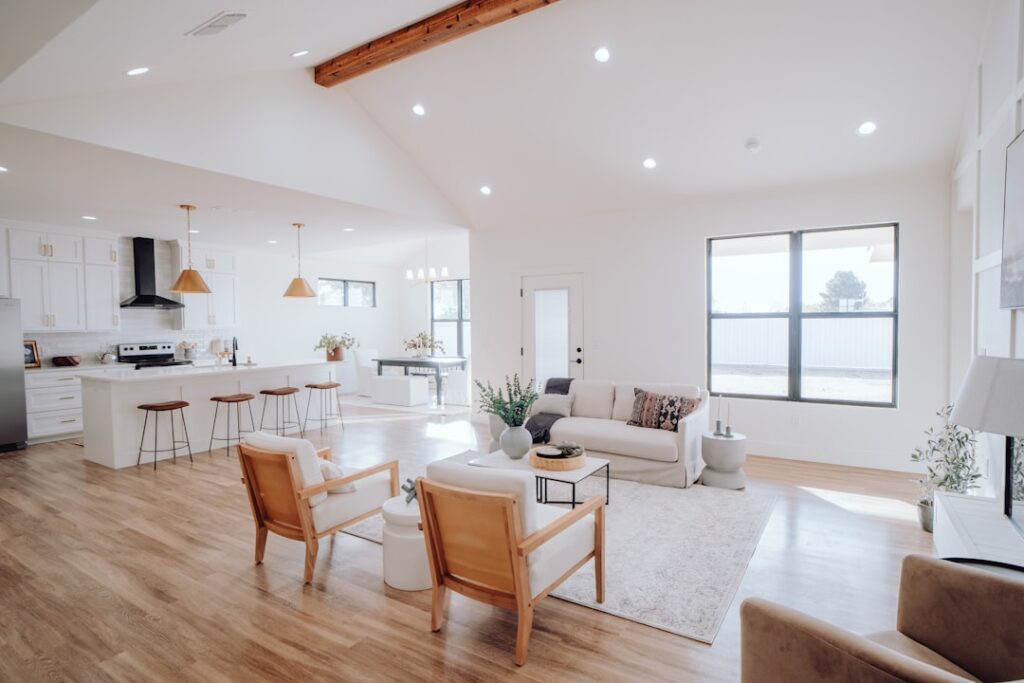
Walk through a modern open-plan home and you will often notice that the kitchen, hallway, and living room share one uninterrupted surface with no thresholds breaking up the view. That seamless approach is called continuous flooring, and it covers both the design idea of running one material through multiple rooms and the literal use of seamless surfaces like sheet vinyl, epoxy, or poured resin. This guide explains what the term means, which materials achieve it, and how to weigh the pros, cons, and costs before committing.
What Continuous Flooring Actually Means
The phrase gets used two ways, and it helps to separate them. The first meaning is a design choice: you install the same flooring product, in the same direction and color, across every connected room so the eye reads the whole space as one. You can do this with plank, tile, or any material as long as you avoid transition strips at the doorways.
The second meaning is a physically seamless surface, where the floor itself has no joints, grout lines, or board edges. Sheet vinyl, epoxy coatings, poured polyurethane, microcement, and large-format runs all fall here. These create a monolithic surface that is easy to clean and visually quiet. Most buyers want some blend of both: a single material flowing room to room, and ideally one with few or no visible seams.
Common Continuous Flooring Materials
Different products achieve continuity in different ways, and each has a distinct look and price.
- Sheet vinyl: Sold in rolls 6 to 12 feet wide, sheet vinyl covers small and mid-size rooms with no seams at all, and larger rooms with just one or two heat-welded joints. It is the most budget-friendly seamless option, often running about $2 to $7 per square foot installed.
- Epoxy and poured resin: Applied as a liquid that cures into a single hard skin, epoxy is popular in garages, basements, and modern interiors. Decorative metallic and flake systems land roughly in the $5 to $12 per square foot range, with high-end designer pours costing more.
- Microcement and polished concrete: These give a continuous industrial or minimalist look. Microcement can go over existing floors at a few millimeters thick; polished concrete uses the slab itself as the finished surface.
- Large-format luxury vinyl plank or tile: Not truly seamless, but wide planks and big tiles minimize visible joints and, run in one direction across rooms, read as continuous.
The Case for Going Continuous
The visual payoff is the headline benefit. A single unbroken floor makes a home feel larger and calmer because the eye is not chopped up by thresholds and color changes at every doorway. In smaller homes and apartments, this can add a real sense of square footage without moving a wall.
Seamless surfaces also win on hygiene and maintenance. With no grout, no board gaps, and no transition strips collecting grime, there is simply less for dirt, moisture, and allergens to hide in. That makes products like sheet vinyl and epoxy strong choices for kitchens, mudrooms, healthcare settings, and homes with pets or allergy concerns. Many of these surfaces are also genuinely waterproof, since a sheet or poured floor has no joints for spills to penetrate.
The Drawbacks to Weigh
Continuous flooring is not automatically the right call, and a few trade-offs deserve honest attention.
Repairs can be harder. When one plank in a click-together floor gets damaged, you can often swap that single board. With a heat-welded sheet or a poured epoxy floor, a deep gouge may require patching a whole section, and matching the patch perfectly can be difficult. Seamless surfaces reward you with easy cleaning but can punish you on isolated repairs.
Subfloor prep also becomes more demanding. Because there are no boards or grout lines to hide imperfections, every dip, hump, and bump telegraphs through a thin seamless surface. Self-leveling compound and careful prep are often non-negotiable, which adds labor cost. And running one material across a large footprint means any installation error, like a color mismatch between rolls or a flooring direction that fights the room, shows everywhere at once.
Transitions, Moisture, and Movement
Even a continuous floor sometimes has to meet a different surface, such as carpet in a bedroom or tile in a bath. Plan those edges in advance. A clean transition strip or a flush threshold keeps the line intentional rather than accidental. Where you genuinely want zero transitions across a big open area, confirm your material can handle the run.
Moisture and slab movement matter too. Concrete slabs expand, contract, and can wick moisture, so seamless products applied directly to concrete usually need a moisture test and sometimes a vapor barrier or primer. Epoxy in particular can blister and peel if applied over a damp slab, so testing the slab’s moisture content first is essential rather than optional. In large continuous runs, allow for the expansion gaps the product specifies, even if they are hidden under the baseboard.
Cost Considerations and Budgeting
Material price is only part of the picture with continuous flooring. Three other line items often move the budget more than the product itself:
- Subfloor preparation: Grinding, patching, and self-leveling to get a flat, clean substrate can add $1 to $3 per square foot, sometimes more on rough slabs.
- Installation skill: Heat-welding sheet vinyl seams and pouring epoxy are specialized jobs. Hiring an experienced installer costs more than a basic plank install but protects you from the failures that seamless surfaces expose.
- Waste and continuity: Buying enough material from a single dye lot to cover every connected room at once avoids visible color shifts, but it can mean ordering extra to be safe.
Add it up and a quality continuous floor often costs a bit more per square foot than a comparable jointed product once prep and skilled labor are included. For many homeowners the seamless look, easy cleaning, and water resistance justify it. To decide, match the material to the room’s moisture and traffic, budget realistically for prep, and get quotes from installers who do seamless work regularly rather than occasionally.
Prefer to explore on your own?
See how new flooring looks in your actual room in seconds — free, no signup.
Try the free Floor Studio →