The single fastest way to ruin a rigid-core floor is to “deep clean” it with the wrong product. Proper COREtec flooring cleaning is almost embarrassingly simple — yet I see homeowners reach for wax, oil soaps, steam mops, and bleach-based sprays that slowly cloud the wear layer and void the warranty. COREtec, made by Shaw, is a rigid-core luxury vinyl with an attached cork or foam backing and a tough urethane-coated wear layer. It is waterproof, but waterproof does not mean it tolerates harsh chemicals or abrasives.
This guide covers the daily routine, the right cleaners, the things you must never do, and how to handle the stubborn messes that real life throws at a floor.
The Everyday Cleaning Routine
Most of COREtec’s longevity comes from simple, consistent maintenance rather than occasional heavy scrubbing. Grit is the real enemy — fine sand tracked in on shoes acts like sandpaper underfoot and dulls the finish over time.
- Daily or every few days: dry sweep with a soft broom or run a vacuum on the hard-floor (no beater bar) setting to lift grit.
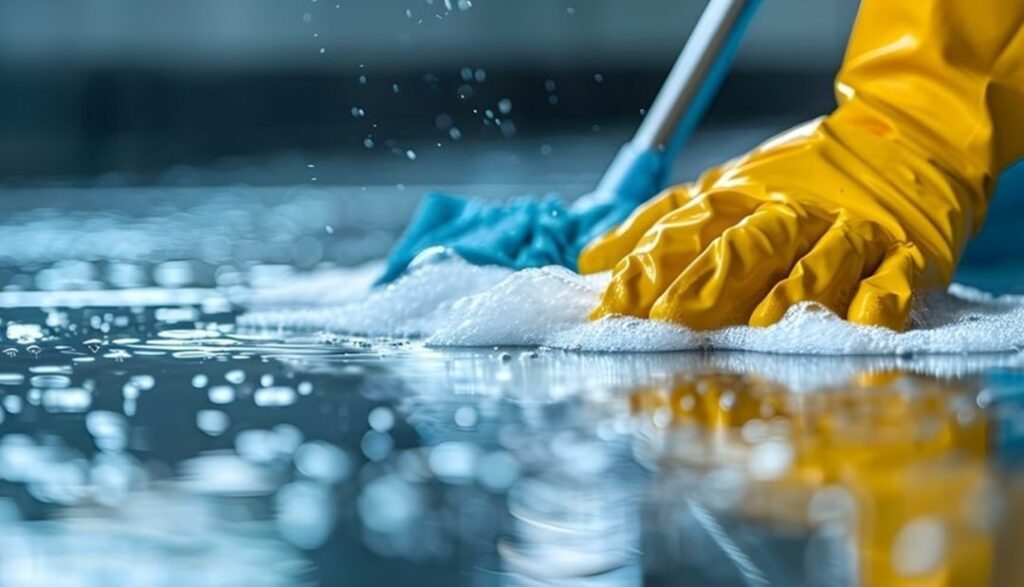
- Weekly: damp-mop with a well-wrung microfiber mop and a pH-neutral cleaner.
- As needed: spot-wipe spills immediately with a damp cloth.
A barrier mat at each exterior door captures the majority of abrasive grit before it ever reaches the planks. That one habit does more to preserve the finish than any cleaning product.
The Right Cleaners to Use
Reach for a pH-neutral, no-residue floor cleaner — the same category recommended for luxury vinyl plank generally. Shaw markets a COREtec-approved cleaner, and any quality LVP-safe, pH-neutral formula will do the job. If you want a homemade option, a few drops of dish soap in a gallon of warm water works for light cleaning, though it can leave a faint film if you use too much, so wring the mop well and follow with a clean-water pass.
The mop matters as much as the solution. A flat microfiber mop holds just enough moisture to clean without flooding the seams. Spray the cleaner lightly onto the floor or the pad rather than soaking the surface, then glide it across in the direction of the planks.
Water quality is a small but real factor too. In areas with very hard water, mopping with plain tap water can leave a cloudy mineral film on the satin finish over time. If you notice a dull haze building up, switch to distilled water for your final pass, or add the manufacturer-approved cleaner which is formulated to rinse clean. A streaky floor is almost always a sign of too much product or too much water, not a dirty floor — so dial both back before assuming the cleaner is at fault.
What You Must Never Do
This is the section that saves floors. Avoid every one of the following on COREtec:
- No wax or polish. COREtec has a permanent factory finish. Wax and “restorer” products build up, yellow, and trap dirt — they cannot be properly removed and ruin the look.
- No steam mops. Heat and pressurized steam can force moisture into the locking seams and damage the wear layer and adhesive. Steam voids most rigid-core warranties.
- No abrasive pads or powders. Scouring pads, steel wool, and gritty cleansers scratch the finish permanently.
- No bleach, ammonia, or pine-oil soaps. Harsh chemicals and oil soaps degrade or coat the surface.
- No flooding the floor. Waterproof refers to the core, not the seams — standing water can still seep into joints over time.
Handling Tough Spots and Stains
Even a forgiving floor meets the occasional crayon, scuff, or dried spill. Work from gentlest to strongest, and always test in a closet first.
- Scuffs and heel marks: rub gently with a clean tennis ball or a barely damp microfiber cloth.
- Sticky residue (juice, syrup): warm damp cloth, let it sit a minute to soften, then wipe.
- Crayon, lipstick, ink: a small amount of isopropyl alcohol on a cloth, dabbed not scrubbed.
- Grease: a drop of dish soap in warm water, then rinse with clean water.
Never use a knife or scraper to chip off dried gunk — softening it with moisture first protects the wear layer. After any spot treatment, do a quick clean-water wipe so no cleaner residue is left behind.
Protecting the Floor Long Term
Cleaning is only half the equation; the other half is preventing damage before it happens. Stick felt pads on every chair and table leg, and use wide, non-staining caster cups under heavy furniture. Rubber-backed mats and some latex rug pads can react with vinyl and leave yellow stains, so choose pads labeled vinyl-safe or use a breathable woven underlay.
COREtec is more dimensionally stable than glue-down vinyl, but direct, intense sun through a south-facing window can still fade dark colors over years — sheer shades help. And while the floor handles dropped pots better than tile, sharp dragged objects can gouge it, so lift heavy items rather than sliding them.
A Simple Weekly Schedule
If you want a routine you will actually follow, keep it minimal. Sweep or dust-mop high-traffic paths every couple of days, do one proper damp-mop with a pH-neutral cleaner each week, and wipe spills the moment they happen. Twice a year, pull the rugs, check the felt pads, and give the whole floor a careful clean-water rinse pass to remove any cleaner film.
That is genuinely all it takes. Effective COREtec flooring cleaning is about doing the simple things consistently and resisting the urge to “upgrade” your routine with wax, steam, or strong chemicals. Treat the wear layer gently, keep grit off the surface, and a COREtec floor will look new for well over a decade.
Seasonal and High-Traffic Considerations
Real life puts extra demands on a floor at certain times of year, and a few seasonal habits pay off. In winter, salt and slush tracked in on boots are abrasive and can leave a white residue, so increase your sweeping frequency and keep an absorbent mat at every entry. In spring and summer, pollen and yard grit ride in on bare feet and pets, which again comes back to grit control as the single most important preventive step.
High-traffic lanes — the path from the garage to the kitchen, or the strip in front of the sink — wear faster simply because they see more footsteps and more grit. A washable runner or low-profile rug on a vinyl-safe pad in these zones takes the brunt of the abrasion and is far cheaper to replace than the floor. Rotate it occasionally so any minor sheen difference underneath evens out, and your COREtec planks will age uniformly across the whole room.
Prefer to explore on your own?
See how new flooring looks in your actual room in seconds — free, no signup.
Try the free Floor Studio →