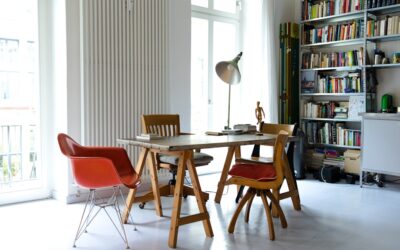
Cork has quietly become one of the fastest-growing flooring categories in Australia, driven by sustainability-conscious buyers and the renewed popularity of mid-century interiors. Yet many homeowners still picture the dull beige tiles of 1970s rec rooms when they hear cork flooring Australia, missing how dramatically the product has evolved. Today’s printed and engineered cork rivals timber in appearance while delivering warmth and acoustics no hardwood can match.
- What Modern Cork Flooring Actually Is
- Pricing Across Australian Markets
- Climate Performance Across Australian Zones
- Pros of Cork in Australian Homes
- Cons and Trade-Offs
- Where to Buy in Australia
- Installation Considerations
- Long-Term Care
- Comparing Cork to Other Australian Floors
- Health and Indoor Air Quality
- Resale and Renovation Value
What Modern Cork Flooring Actually Is
Cork flooring comes in two forms. Traditional glue-down tiles, typically 300mm by 600mm and 4mm to 6mm thick, are still used in commercial fitouts. The bigger Australian residential category is engineered floating cork: a 3mm cork wear layer over an HDF core, finished with click-lock edges and a polyurethane or ceramic-acrylic topcoat. Brands like Wicanders, Amorim, and Premium Floors dominate this segment locally.
Pricing Across Australian Markets
Expect to pay AUD $75 to $145 per square meter for quality cork flooring in Australia, before installation. Glue-down tiles sit at the lower end. Premium printed engineered cork that mimics oak or walnut grain runs at the upper end. Installation adds another AUD $35 to $55 per square meter for floating systems, and AUD $55 to $75 per square meter for full glue-down with a sealed urethane topcoat.
- Wicanders Wood Essence range: AUD $89 to $115/m2
- Amorim Wise Hydrocork: AUD $95 to $135/m2 (waterproof core)
- Premium Floors Cork Naturals: AUD $79 to $99/m2
- Generic glue-down tiles: AUD $45 to $70/m2
Climate Performance Across Australian Zones
Cork is dimensionally more stable than most timbers, which makes it well-suited to Australia’s wide climate variation. In Brisbane and Townsville’s humid subtropics, cork resists the cupping that plagues solid oak. In Melbourne’s variable shoulder seasons, cork’s natural compressibility absorbs minor subfloor movement. In Adelaide and Perth’s dry summers, cork avoids the gapping common in wide-plank hardwood.
The exception is wet rooms. Standard cork is not waterproof. Use Amorim Wise Hydrocork or a competitor’s SPC-core cork hybrid if you want to run the floor through laundries, powder rooms, or kitchens with island sinks.
Pros of Cork in Australian Homes
- R-value around 0.20 to 0.25 per inch, warm underfoot in cool Tasmanian and Victorian winters
- Reduces impact noise by 14 to 18 decibels, ideal for apartments
- Natural antimicrobial suberin compound resists mold and mildew
- Renewable resource harvested from Portuguese oak bark every 9 years
- Forgiving underfoot on knees, hips, and dropped glassware
The acoustic point matters more than buyers realize. Body corporates in Sydney and Melbourne apartment buildings frequently require an LnT,w rating of 50 or lower for hard flooring. Premium engineered cork hits that spec without an additional underlay, where laminate or vinyl typically needs an upgraded acoustic mat.
Cons and Trade-Offs
Cork has real weaknesses. Heavy furniture without proper coasters will dent the surface permanently, particularly upright pianos and tall bookcases with point-load legs. UV exposure through Australia’s intense sun will fade unsealed cork within 3 to 5 years, so factory-finished UV-cured topcoats are mandatory in north-facing rooms. Pet claws from larger dogs will scratch a polyurethane-finished cork floor within 12 months unless you choose a ceramic-acrylic topcoat like Wicanders’ WRT.
Refinishing is also harder than with timber. Cork can be sanded, but the wear layer is only 3mm to 6mm, leaving room for one refinish at most over the floor’s lifetime.
Where to Buy in Australia
National chains like Carpet Court, Choices Flooring, and Andersens carry one or two cork ranges, often Amorim or Premium Floors. For wider selection, specialist retailers like Cork Floors Australia (online with showrooms in Sydney and Melbourne), Eco Flooring Systems (Brisbane), and Living Eco Floors (Perth) stock the full Wicanders range plus imported European brands.
Always ask for an FSC certification document and the manufacturer’s E0 or E1 formaldehyde rating. Some cheaper imports from non-Portuguese sources use binder resins that fail Australian indoor air quality standards.
Installation Considerations
Floating click-lock cork is well within DIY range for confident renovators. Allow the boards to acclimate in the room for 48 to 72 hours before laying, use a 10mm expansion gap around all walls, and never install over carpet or cushioned underlay. Glue-down installation should be left to professionals; the moisture content of the slab needs to be tested with a hygrometer reading below 75 percent relative humidity, and the adhesive open time is unforgiving in warm Australian conditions.
Long-Term Care
Sweep regularly with a soft broom. Damp-mop weekly with a pH-neutral cleaner; Bona Premium Spray Mop for Cork is widely available at Bunnings for around AUD $42. Avoid vinegar, ammonia, and any abrasive cleaners. Recoat the topcoat every 7 to 10 years to extend the floor’s working life beyond the 25 to 30 years most manufacturers warrant.
Comparing Cork to Other Australian Floors
Buyers in Australia regularly compare cork against engineered timber, hybrid vinyl, and bamboo. Cork’s advantages over timber are warmth, sound dampening, and dimensional stability across humid coastal climates. Its advantages over hybrid SPC vinyl are renewability, indoor-air quality, and a softer underfoot feel. Its biggest disadvantage compared to both alternatives is the dent risk under heavy point loads.
For homes with young children and elderly residents, the safety case for cork is genuinely strong. Falls onto cork cause meaningfully fewer injuries than falls onto tile or timber, and the impact-absorbing layer cushions dropped glassware in ways no other hard surface can.
Health and Indoor Air Quality
Cork is naturally hypoallergenic. It does not host dust mites, mold, or bacteria as readily as carpet, and the natural suberin compound inhibits microbial growth. For Australian families managing asthma or allergic rhinitis, the swap from carpet to cork is one of the highest-impact indoor-air interventions in the home.
Verify formaldehyde compliance regardless of brand. The Australian E0 standard limits emissions to under 0.5 mg/L, and any reputable supplier will provide the test certificate on request. Cheap imports occasionally arrive at E2 levels, three to four times higher, which can trigger respiratory symptoms in sensitive household members.
Resale and Renovation Value
Cork flooring’s resale story has improved sharply since 2020. Where the material was once dismissed as a 1970s relic, buyers in Sydney’s Inner West, Melbourne’s Fitzroy and Carlton, and Brisbane’s New Farm now actively seek it out for sustainability credentials and acoustic performance. Real estate agents in these neighborhoods price homes with quality cork floors comparably to engineered timber, and sometimes higher for apartments where acoustic ratings matter to the body corporate. Treated well, cork flooring in Australia rewards the investment with comfort, quiet, and a look that ages gracefully.
Prefer to explore on your own?
See how new flooring looks in your actual room in seconds — free, no signup.
Try the free Floor Studio →