Cork is the original quiet floor, and the visual range available today is wider than most homeowners realize. Beyond the burlap-brown click-lock plank that dominated the 2010s, modern cork flooring patterns include herringbone, parquet, glue-down mosaic, leather-look blends, and bleached white finishes that pass for marble at three feet. The pattern decision changes the visual energy of the room as much as the color choice, and some pattern options carry pricing premiums of 40 to 80 percent over standard plank.
- Why Pattern Matters for Cork
- Plank Pattern: The Workhorse Format
- Herringbone Cork
- Parquet and Mosaic Tile Format
- Color Blends and Custom Patterns
- Installation Method by Pattern
- Acoustic and Thermal Performance
- Dent and Wear Resistance
- Sealing and Finish Maintenance
- Picking the Right Pattern for Your Room
- Budget for a Full Cork Install
Why Pattern Matters for Cork
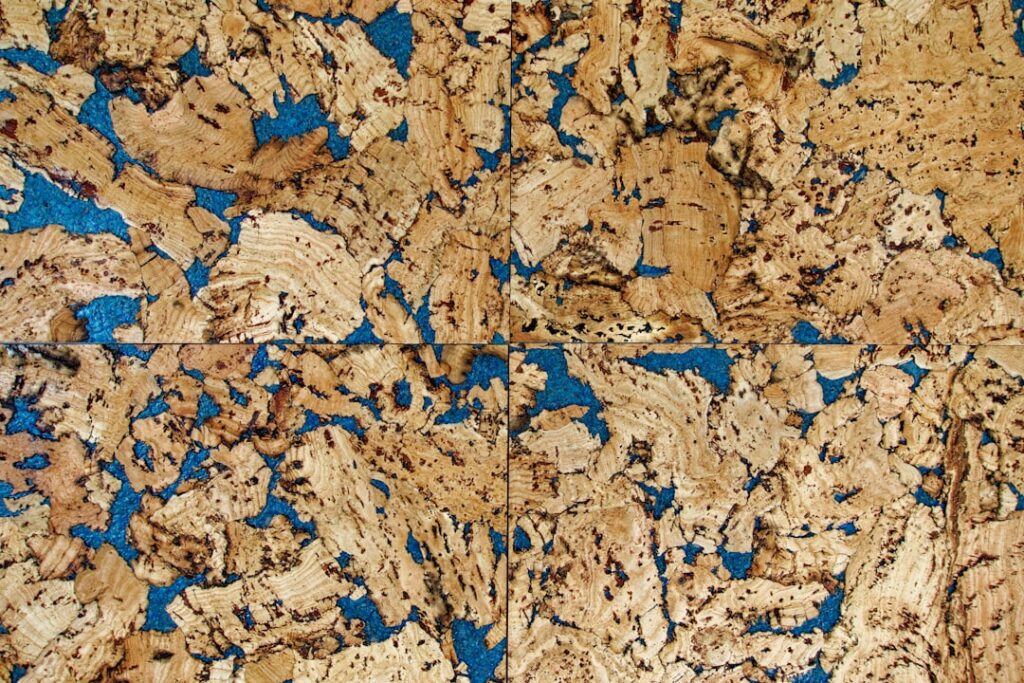
Cork is naturally heterogeneous. Every plank is a composite of cork granules pressed into a binder, and the granule size determines visual texture. Small granules (1 to 2 mm) read as a fine speckled field. Large granules (4 to 8 mm) read as bold mosaic. Layered patterns and inlays multiply that visual difference. The pattern you pick is doing as much design work as the wall color.
Plank Pattern: The Workhorse Format
Standard cork planks run 5 to 7 inches wide and 36 to 48 inches long, click-locked for floating install. Wicanders Original Series, APC Cork, and US Floors Almada all run plank format in the $4.50 to $6.50 per sq ft range. Plank lays straight or in a stretched stagger and reads as a wood-floor alternative with cork’s signature softness underfoot. This is the right pick for living rooms, bedrooms, and home offices where the cork’s acoustic and thermal properties matter more than dramatic visual.
Herringbone Cork
Herringbone cork came back into showrooms around 2022 and has built a steady following in transitional and traditional design. Planks at 4 by 16 inches install at a 90-degree angle to each other in classic herringbone or a 45-degree rotation against the wall for double herringbone. Wicanders Originals Herringbone runs $6.50 to $8.50 per sq ft, roughly 30 to 40 percent more than straight-plank pricing because the smaller plank size doubles install time.
The pattern reads strongly. A 200 sq ft entryway in herringbone cork in a natural champagne tone makes the room read as designed rather than spec-built.
Parquet and Mosaic Tile Format
Older European cork installations used 12 by 12 inch parquet tiles in 3-by-3 finger blocks. The look is making a return through brands like Globus Cork and Jelinek Cork, which offer custom-pressed mosaic tiles in 12 by 12 and 24 by 24 inch formats. Patterns include basketweave, pinwheel, and the original 3-by-3 finger parquet.
Mosaic cork is glue-down only over a flat subfloor. Expect $6 to $11 per sq ft on the tile and $5 to $8 per sq ft installed labor because pattern matching is meticulous. The result is a one-of-a-kind floor that competes visually with marble parquet at one-third the cost.
Color Blends and Custom Patterns
Beyond format, cork manufacturers blend granules of different colors to create visual patterns within the field. Three blends dominate:
- Natural champagne: untreated cork granules, warm honey-tan with subtle striation
- Charcoal black: dyed granules pressed into deep gray-black, reads as slate or rubber
- White-wash: bleached granules pressed into bone or alabaster, reads as light stone
Custom color is available through Globus Cork and Jelinek Cork for projects above 500 sq ft. Lead times run 8 to 12 weeks and pricing adds 25 to 40 percent over standard SKUs.
Installation Method by Pattern
Click-lock floating cork installs over an underlayment in plank or wide-format tile. Glue-down cork goes onto a flat, primed subfloor and is required for herringbone, parquet, and mosaic patterns where the small format would shift in a floating install. Trowel a urethane-based adhesive like Bostik’s Best at 4 to 5 gallons per 100 sq ft and roll the floor with a 100-pound roller within 30 minutes of placement.
Subfloor flatness matters more for cork than for click laminate. The spec calls for 1/8 inch deviation over 6 feet for glue-down installs, and 3/16 inch over 10 feet for floating.
Acoustic and Thermal Performance
Cork is a natural sound absorber. A 1/2 inch click-lock cork plank delivers IIC 55 and STC 53 as a complete assembly, which is meeting the bar for most urban condo HOAs without a separate underlayment. The thermal resistance is R-1.5 to R-2.0 per inch, which is roughly double hardwood and triple ceramic tile, so the floor reads as warm underfoot in winter.
That acoustic and thermal advantage holds across all pattern formats. Choose the visual you want; the performance comes along for free.
Dent and Wear Resistance
Cork is soft, around 200 to 400 Janka equivalent. High heels, chair legs without pads, and dropped cans of soup all leave marks. The good news: cork rebounds from minor compression over 24 to 48 hours. A 1/8 inch dent from a chair leg disappears overnight. A deep gash from a dropped knife is permanent and requires a plank replacement.
Felt furniture pads, area rugs in high-traffic zones, and a no-shoes household policy extend cork’s life from 15 years to 30-plus. Kitchen installs should add a runner mat under the sink to absorb water droplets that would otherwise wick into the joints.
Sealing and Finish Maintenance
Most prefinished cork ships with a factory UV-cured polyurethane wear layer that lasts 8 to 12 years before needing recoat. Bona Mega Clear or Bona Traffic HD applies as a topical refinish that restores sheen and water resistance. Glue-down cork mosaic and parquet are sometimes sold unfinished and require three coats of penetrating cork-specific sealer like APC Original Sealer before going into service.
Avoid wax on any cork floor. Wax builds up in the granule texture and creates a yellow, sticky film within two years.
Picking the Right Pattern for Your Room
Small rooms (under 150 sq ft) benefit from larger format patterns like 18 by 18 inch tiles or wide plank because tight patterns make the space feel busy. Open-concept rooms can carry herringbone or mosaic because the surface area lets the pattern develop. Pair light cork patterns with dark cabinetry and dark cork patterns with bright walls to avoid the floor flattening visually against the rest of the room.
Budget for a Full Cork Install
For a 250 sq ft room, expect $1,500 to $2,200 for a standard plank install, $2,200 to $3,200 for herringbone, and $2,800 to $4,500 for mosaic parquet. Across cork flooring patterns at every price point, the floor delivers a unique combination of warmth, quiet, and visual character that hardwood and LVP cannot match. Specify the pattern as carefully as the species and the room will reward you for two decades or more.
Prefer to explore on your own?
See how new flooring looks in your actual room in seconds — free, no signup.
Try the free Floor Studio →