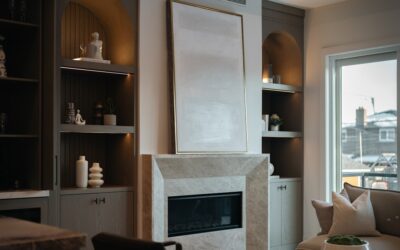
Empty corners are the most overlooked design real estate in any home. Smart corner wall decor ideas turn those awkward dead zones into focal points that pull a room together, add storage, or showcase personality. After designing dozens of rooms, I have learned that the trick is matching the corner treatment to the room’s purpose, ceiling height, and existing furniture layout.
Here are the ten approaches that work most reliably, with the materials and dimensions to make them happen.
- 1. Corner Floating Shelves
- 2. Layered Art Cluster
- 3. Tall Indoor Tree or Plant
- 4. Corner Bookshelf
- 5. Floor Mirror
- 6. Corner Accent Lighting
- 7. Built-In Window Seat
- 8. Macrame or Woven Wall Hangings
- 9. Corner Desk or Workstation
- 10. Curtain or Drapery Treatment
- Styling Tips for Any Corner
- Common Mistakes to Avoid
1. Corner Floating Shelves
L-shaped floating corner shelves are a classic for good reason. They use the corner geometry to create surfaces that feel substantial without protruding far into the room. A three-tier set of 12-inch shelves from IKEA Lack or Wallniture costs $40 to $80 and installs in under an hour with proper drywall anchors.
Style each shelf with a mix of heights: a small framed photo, a 6-inch plant, and a horizontal book or two. The 60-30-10 rule works well: 60 percent of the items in a neutral tone, 30 percent in an accent color, and 10 percent in a metallic or contrast.
2. Layered Art Cluster
A salon-style gallery wall extended into the corner reads as intentional and high-end. Stagger frames around the corner so some pieces sit fully on one wall while two or three bridge the corner edge. Use consistent frame finishes (all black, all brass, or all natural wood) to unify mismatched art.
The trick is treating both walls as one composition. Lay out the arrangement on the floor first, then transfer to the wall using painter’s tape and a level. Hang the largest piece first, usually 60 to 66 inches from the floor to its center.
3. Tall Indoor Tree or Plant
A 6 to 8-foot fiddle leaf fig, bird of paradise, or olive tree fills a corner with vertical drama for $50 to $200 depending on size. The vertical line draws the eye up, which makes ceilings feel taller and the whole room feel larger.
Use a planter wide enough that the tree does not look top-heavy. A 14 to 16-inch diameter planter on a small rolling base lets you move the plant for cleaning and gives it the visual weight to anchor the corner. Fake silk trees from Nearly Natural look surprisingly real and start at $80 for 6-foot specimens.
4. Corner Bookshelf
A floor-to-ceiling corner bookshelf turns an empty corner into a library. Five-tier corner shelves from Sauder or Prepac measure about 18 inches on each side and stand 60 to 72 inches tall for $80 to $200. Style with a mix of vertically and horizontally stacked books, framed photos, and small sculptures.
For more substantial storage, custom-built corner bookcases run $400 to $1,200 in materials for a DIY build or $1,500 to $3,500 installed. The custom option fits the exact corner angle and ceiling height, which dramatically improves the finished look.
5. Floor Mirror
A leaning floor mirror in a corner doubles the apparent room size by reflecting light from windows and overhead fixtures. Look for mirrors between 24 and 36 inches wide and 65 to 72 inches tall. The West Elm Metal Frame Floor Mirror at $400 and the IKEA Hovet at $130 are both popular options.
Angle the mirror slightly toward the room rather than pointing it directly back into the wall. The slight tilt prevents catching unflattering ceiling reflections and visually opens the space.
6. Corner Accent Lighting
A floor lamp with a horizontal arc or tripod base lights and decorates an otherwise dark corner. The IKEA Foto pendant style and the Brightech Sparq arc lamp both deliver dramatic light from above with footprint placement that fits tight corners.
Layer in additional warmth with a small table lamp on an adjacent surface. Two light sources at different heights create depth and balance that single overhead lighting cannot match.
7. Built-In Window Seat
For corners that meet a window, a built-in bench seat with storage underneath turns dead space into functional seating. Use stock kitchen base cabinets (24 inches deep, 24 to 36 inches wide) as the foundation, then cap with a custom seat cushion and back pillows.
The total cost runs $400 to $1,200 in materials. Pair with a small side table and reading lamp on the adjacent wall to create a corner reading nook that adds real value to bedrooms and dens.
8. Macrame or Woven Wall Hangings
A large macrame wall hanging or woven tapestry adds texture and softens hard corner edges. Sizes between 30 and 48 inches wide work for most rooms. Hang the piece directly in the corner so it wraps slightly around both walls, or center it on one wall just to the side of the corner.
For modern looks, a single circular brass wall hoop or a geometric metal sculpture from West Elm or CB2 ($60 to $180) reads as art rather than craft and pairs well with leather, velvet, and dark woods.
9. Corner Desk or Workstation
A corner desk turns wasted square footage into productive space. L-shaped desks fit naturally into 90-degree corners and provide 30 to 40 percent more surface area than a similar-footprint rectangular desk. The Bush Business Furniture Cabot L-Desk at $300 and the IKEA Bekant at $280 both deliver strong value.
Add a wall-mounted shelf or pegboard above the desk to keep the work surface clear. Mount the shelf 24 to 30 inches above the desk top for the right height balance.
10. Curtain or Drapery Treatment
Hanging floor-to-ceiling curtains across a blank corner adds softness and disguises odd-angled walls. Use a curved corner rod from Umbra or order a custom bent rod from a local drapery shop. The fabric softens the geometry of an otherwise stark corner.
This works particularly well behind a bed in primary bedrooms, where the curtains read as an elegant headboard backdrop. Choose light-blocking fabrics in linen, velvet, or heavy cotton for the best drape and acoustic dampening.
Styling Tips for Any Corner
Regardless of which approach you choose, follow these principles for a polished result:
- Vary heights between objects so no two adjacent items match exactly
- Use the rule of thirds when placing focal pieces, especially art and mirrors
- Add a textile element (rug, throw, fabric panel) to soften hard corner geometry
- Keep one corner accent color consistent with the rest of the room
- Lighting at multiple heights prevents corners from reading as dark holes
Common Mistakes to Avoid
The biggest mistake is overcrowding the corner. A corner needs room to breathe just like the rest of the wall. If you find yourself stacking three pieces of furniture plus art plus plants, edit down to two anchor pieces and one accent.
The second mistake is matching the corner decor too closely to the wall paint. A high-contrast piece pulls the eye and makes the corner read as a feature, while a matchy beige sculpture against a beige wall disappears completely.
Pick one or two corners per room as focal points. Treat the rest more simply with a single plant or floor lamp. Visual rest is just as important as visual interest in good design.