
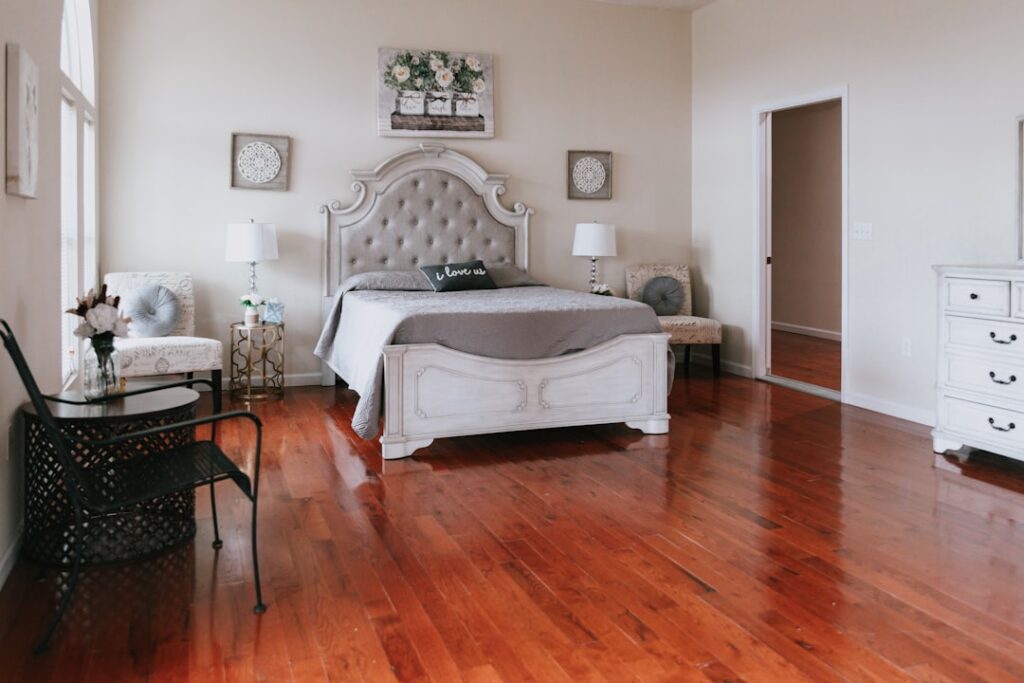
Engineered hardwood now outsells solid hardwood in the United States, largely because it delivers the same real-wood surface for less money and fewer installation restrictions. The cost to install engineered hardwood typically lands between $7 and $20 per square foot all-in, with most homeowners paying $10 to $14 per square foot for mid-grade material professionally installed. That spread is wide because three variables move the number: the flooring itself ($3 to $13 per sq ft), the installation method (floating, glue-down, or nail-down), and what your existing floor requires before the first plank goes down. This guide breaks the budget into its real parts so the contractor’s quote makes sense line by line.
The Quick Numbers
For planning purposes, here is the realistic 2026 range for a professionally installed job:
- Budget tier: $7 to $9 per sq ft installed — thin-veneer planks (1-2 mm wear layer), floating installation, simple rectangular rooms
- Mid tier: $10 to $14 per sq ft installed — 3-4 mm wear layer, quality click or glue-down install, minor prep
- Premium tier: $15 to $20+ per sq ft installed — 4-6 mm sawn-face veneer, wide planks (7 inches and up), glue-down over prepped concrete, patterns or stairs
Translated to whole projects: a 500 sq ft living area runs roughly $3,500 to $7,000 at typical grades, a 1,000 sq ft main level $10,000 to $14,000, and a 2,000 sq ft whole home $16,000 to $30,000 depending on material and prep. Regional labor differences swing totals 15 to 25 percent, with coastal metros at the high end and much of the Midwest and South below national averages.
Material Costs: What the Wear Layer Buys You
Engineered planks are a hardwood veneer over a plywood or HDF core, and the veneer thickness is the honest measure of quality. Products with a 1 to 2 mm wear layer cost $3 to $5 per sq ft but can never be refinished; you replace them when they wear. A 3 mm layer ($5 to $8) survives one careful refinish; 4 to 6 mm ($8 to $13) handles two or three, approaching solid hardwood’s lifespan. Species and width move prices too: oak dominates the value range, while hickory, walnut, and white oak in 7 to 9 inch widths command the premium tier. Buy 8 to 10 percent extra for cuts and waste, 12 to 15 percent for diagonal layouts or rooms with many angles, and check that the product carries a wear warranty of 25 years or more, which loosely correlates with finish quality.
Labor: The Three Installation Methods
Installation method is the biggest labor variable, and your subfloor usually dictates it. Floating installation, where click-lock planks connect to each other over a foam or cork underlayment, is the fastest and cheapest at $2 to $4 per sq ft of labor; it suits DIYers and works over most flat subfloors including concrete. Glue-down runs $4 to $7 per sq ft in labor plus $0.50 to $1 per sq ft in adhesive; it feels the most solid underfoot, eliminates the hollow sound floating floors can have, and is standard over concrete slabs in higher-end work. Nail- or staple-down, at $3 to $5 per sq ft, requires a wood subfloor and suits thicker engineered products. Stairs are always extra, $40 to $100 per tread, and rip-out of existing flooring adds $1 to $2 per sq ft including disposal.
The Line Items That Surprise People
Quotes grow between the ballpark and the contract because of prep and finish details:
- Subfloor leveling: engineered floors need flatness within roughly 3/16 inch over 10 feet; grinding high spots or pouring self-leveler runs $1 to $3 per sq ft where needed
- Moisture mitigation on concrete: a vapor barrier or epoxy moisture seal adds $0.50 to $2 per sq ft, and skipping it on a damp slab is how floors fail
- Underlayment: $0.30 to $0.80 per sq ft for floating installs; acoustic upgrades for condos cost more and are often HOA-mandated
- Transitions, thresholds, and shoe molding: $150 to $500 per project in trim pieces and labor
- Furniture moving and appliance disconnects: $100 to $500 if the crew handles it
- Baseboard removal and reinstall or replacement: $1 to $3 per linear foot
Ask every bidder to itemize these. A $9.50 per sq ft quote with prep included routinely beats an $8 quote that bills leveling by the hour once the old carpet comes up.
Engineered vs. the Alternatives on Price
Context makes the numbers meaningful. Solid hardwood installed runs $8 to $25 per sq ft, sitting a step above engineered at equivalent species, and it cannot go below grade or over most slabs. Luxury vinyl plank installs at $4 to $9 per sq ft, cheaper and fully waterproof, but it is plastic and appraisers treat it that way. Laminate lands at $4 to $8 installed. Engineered hardwood’s pitch is real wood at the resale desk with slab-friendly installation; in most markets it appraises and lists as hardwood, which laminate and vinyl do not, and that difference funds part of its premium when you sell.
Where to Save and Where Not To
Sensible savings: install during contractor slow seasons (mid-winter in most regions) when labor discounts of 5 to 15 percent appear, choose a 5 inch oak instead of a 9 inch white oak (the look is 90 percent similar and the material 40 percent cheaper), do your own demolition and furniture moving, and buy material during big-box holiday sales, which routinely knock 15 to 25 percent off. Bad savings: skipping moisture testing on concrete, hiring the low bid that will not itemize prep, buying 1 mm wear-layer product for a busy family kitchen, and floating wide planks over an unflat slab, which produces the bouncy, clicky floor that generates most engineered-flooring complaints. Get three itemized bids, confirm licensing and a workmanship warranty of at least one year, and hold 10 percent of payment until the punch list clears.
DIY: What You Actually Save
Floating click-lock engineered floors are among the most DIY-friendly wood products, and self-installing saves the $2 to $4 per sq ft labor line, roughly $1,000 to $2,000 on a 500 sq ft project. Budget $150 to $300 for tools (tapping block, pull bar, spacers, jigsaw or miter saw rental) and a full weekend per 400 to 500 sq ft for a first-timer. Glue-down and nail-down installs are a different story; adhesive open times, flatness tolerances, and nailer technique punish inexperience, and a botched glue-down cannot be taken apart to fix. The sensible split: DIY a floating floor in bedrooms and offices, hire out slabs, patterns, and stairs.
Bottom Line
Budget $10 to $14 per square foot installed for a quality mid-grade engineered floor, more for wide-plank premium looks, and treat subfloor prep and moisture protection as non-negotiable line items rather than upsells. The material’s wear layer determines how long the investment lasts, and the installer’s prep work determines whether it performs. Spend on those two things first; every dollar after that is aesthetics.
Prefer to explore on your own?
See how new flooring looks in your actual room in seconds — free, no signup.
Try the free Floor Studio →

