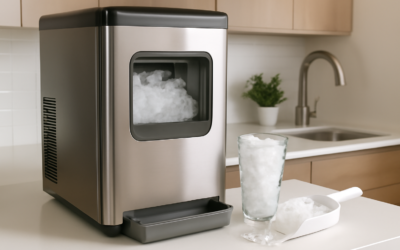
A countertop icemaker is the appliance that finally fixes the eternal shortage of ice on game day, at a backyard party, or in a kitchen whose fridge dispenser cannot keep up. These compact machines sit on your counter, need no plumbing, and produce a batch of ice in minutes rather than hours. If you are tired of buying bags or waiting on a slow freezer tray, here is everything to weigh before you buy one.
Part of our Countertops guide — explore the full guide →
How a Countertop Icemaker Works
Unlike a built-in fridge icemaker that freezes water slowly in a tray, a countertop unit makes ice fast using a different method. You pour water into a reservoir, the machine pumps it over chilled metal prongs, and ice forms around them in just six to fifteen minutes per batch. The finished ice drops into a holding basket, and the machine recirculates any unfrozen water for the next batch. Because the basket is not refrigerated, ice slowly melts back into the reservoir to be refrozen, so nothing is wasted.
The key thing to understand is that these are ice makers, not ice storage. The ice will not stay frozen indefinitely in the basket. For events, you make ice and move it to a cooler or freezer to stockpile.
Types of Ice
The shape of ice a machine makes affects both its use and its feel:
- Bullet ice: Hollow, cylindrical cubes that most portable countertop machines produce. Fast to make and great for chilling drinks quickly.
- Nugget ice: Soft, chewable pellets, the popular “good ice” found at restaurants. Made by specialized, pricier nugget machines.
- Clear cube ice: Slower-forming, dense, slow-melting cubes for cocktails, produced by higher-end clear-ice machines.
Bullet ice is the most common and affordable; nugget and clear-ice machines cost more but deliver a more premium result.
Capacity and Output
Two numbers matter when comparing machines: daily production and basket capacity. Most countertop units make between 26 and 44 pounds of ice per day, producing small batches of nine to fourteen cubes every several minutes. The internal basket usually holds only a few pounds at a time, which is plenty for daily drinks but means you will be transferring ice to a cooler for a party. Match the daily output to your household, and remember that ambient temperature and water temperature affect real-world speed.
Features Worth Looking For
Beyond basic ice production, a few features add real convenience:
- Two cube sizes: Choose small for fast chilling or large for slower melting.
- Self-cleaning cycle: Simplifies the regular maintenance these machines need.
- Indicator lights: Alert you when the basket is full or the reservoir is low.
- Clear window or viewing lid: Lets you check ice levels at a glance.
- Drain plug: Makes emptying and cleaning the reservoir easy.
Consider the footprint too. These machines are compact but need clearance around the vents to release heat, so measure your counter space and leave a few inches of breathing room.
What a Countertop Icemaker Costs
Standard bullet-ice countertop machines typically run $90 to $200. Models with larger output, dual sizes, or self-cleaning features land in the $150 to $300 range. Nugget ice machines, prized for their chewable pellets, commonly cost $300 to $600 or more, and clear-cube machines fall into a similar premium bracket. For most homeowners who just want plenty of cold ice quickly, a $100 to $200 bullet-ice unit does the job well.
Countertop Versus Built-In and Freezer Ice
It is worth knowing where a countertop unit fits among your options. A built-in undercounter ice maker produces and stores large quantities and keeps the ice frozen, but it requires plumbing, a dedicated spot, and a much bigger budget. Your refrigerator’s ice maker is convenient but often slow and limited in volume. A countertop machine splits the difference: no installation, no plumbing, fast production, and full portability, at the cost of not keeping the ice frozen long term. For renters, small kitchens, RVs, offices, and party hosts, that portability and low cost make a countertop unit the practical winner.
Care and Maintenance
Ice machines need regular cleaning to keep the ice tasting fresh and the components free of scale and mold. Empty and refill the reservoir with fresh water often rather than letting it sit. Every couple of weeks, run a cleaning cycle using a solution of water and white vinegar or a manufacturer-approved cleaner, then rinse thoroughly. Wipe the interior and basket dry when storing the machine, and use filtered water if your tap water is hard, which slows mineral buildup and improves taste.
If the ice starts coming out cloudy, small, or off-tasting, the cause is almost always mineral scale or stale water rather than a failing machine. A thorough descaling cycle with vinegar usually restores normal performance. When you plan to store the unit for a while, drain it completely through the drain plug, leave the lid open so the interior dries fully, and store it somewhere clean and dry so it is ready to go next time. Treated this way, a countertop ice maker runs reliably for years.
Final Thoughts
Tips for Getting the Most From Your Machine
A few habits help a countertop ice maker keep up with demand. Use cold, filtered water, which freezes faster and tastes cleaner than warm tap water heavy with minerals. Keep the machine out of direct sun and away from heat sources like the oven, since a cooler room means quicker ice and less melt in the basket. If you are prepping for a party, start the machine well ahead of time and transfer each batch to a cooler or your freezer, so you build up a large stockpile rather than relying on the small internal basket. And remember to refill the reservoir before it runs dry to avoid interrupting the cycle.
Pay attention to the cube-size setting if your model offers one. Smaller cubes chill drinks faster and are ready sooner, which is ideal for a busy gathering, while larger cubes melt slower and are better for sipping drinks. Matching the setting to the occasion gets you the best results from the same machine.
A countertop icemaker is a genuinely useful appliance for anyone who entertains or simply goes through a lot of ice. It needs no plumbing, produces a fresh batch in minutes, and fits on a counter. Decide which ice type you want, match the daily output to your needs, leave room for ventilation, and keep up with regular vinegar cleanings. Do that, and you will never run out of ice at the wrong moment again.