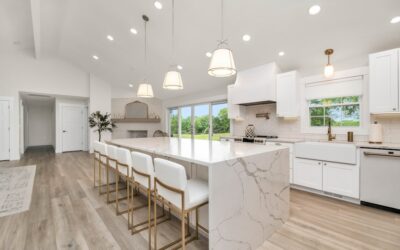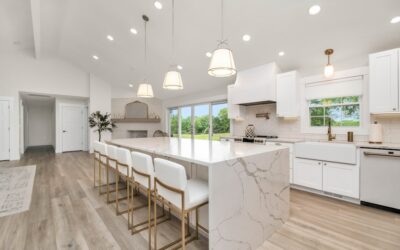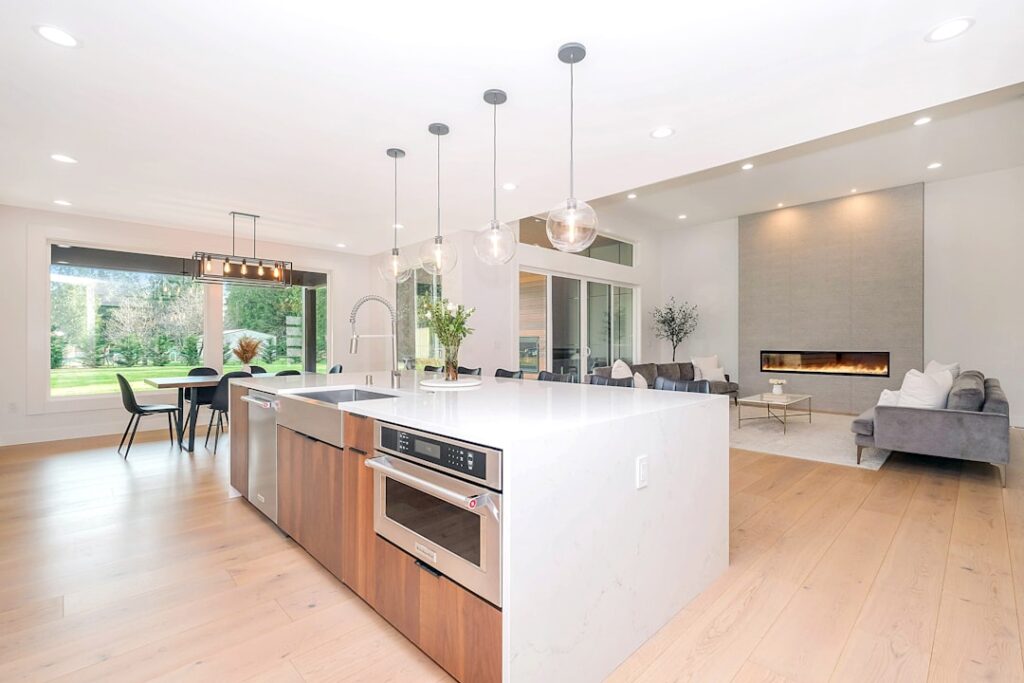
Pairing cream cabinets with a true white countertop is one of the trickiest combinations in kitchen design because the two surfaces have to relate to each other without competing. Get the undertones wrong and the cabinets look dirty, the counter looks plastic, and the entire kitchen reads dated within six months. Cream cabinets with white countertops done well, though, deliver a warm, timeless look that survives trend cycles and pairs with any backsplash from subway tile to natural marble. The secret is reading the warmth of both surfaces under your actual kitchen lighting before you commit.
Cream Has a Yellow, Pink, or Green Undertone
Cream is not a single color. It is a warm white with a small drop of pigment, and that pigment direction determines what countertop will harmonize. Hold the cabinet door against a sheet of printer paper in your kitchen at 2 p.m. and the cast becomes obvious.
- Yellow-cream: Reads butter or vanilla. Common in maple and alder doors with a warm stain.
- Pink-cream: Has a faint blush. Often seen in older oak cabinets that have been re-glazed.
- Green-cream: Subtle olive bias, sometimes in custom painted cabinets with a slight bronze tint.
- True ivory: Almost neutral with the faintest warm cast.
Each undertone wants a different white countertop. A cool, blue-white quartz against a yellow-cream cabinet creates an obvious dirty-tooth effect where the cabinet suddenly looks aged.
Best Quartz Matches by Cabinet Undertone
Engineered quartz is the easiest material to pair because the manufacturers offer dozens of white variations with clear undertone labeling on their websites. Pricing runs $55 to $110 per square foot installed for major brands.
- Cambria Whitney: Warm white with delicate grey veining. Works beautifully with yellow-cream and ivory cabinets. About $85 to $100 per square foot installed.
- Silestone Eternal Statuario: Cool white background with bold grey-gold veining. Best paired with true ivory.
- Caesarstone London Grey: Light grey with a warm cast, technically not white but reads as a soft alternative.
- MSI Calacatta Laza: Warm white with dramatic veining, around $60 to $75 per square foot. Great with yellow-cream.
- LG Viatera Minuet: Crisp white with subtle veining, balanced undertone, around $70 per square foot installed.
Always order a 12-by-12 inch sample, not a 2-inch chip, and view it in the kitchen at three times of day. Quartz slabs from the same line vary batch to batch, so confirm the actual slab at the fabricator before cutting.
Marble and Quartzite for Higher Budgets
Natural Carrara marble runs $55 to $90 per square foot installed and has a cool grey-white background that pairs better with ivory than with butter-cream. Calacatta Gold marble has a warm white field with golden veining that flatters yellow-cream cabinets and runs $90 to $200 per square foot.
Quartzite like Taj Mahal or White Macaubas gives you the look of marble with the durability closer to granite. Pricing typically lands at $90 to $150 per square foot installed. NSF/ANSI 51 certification for food contact is standard on these stones, and an annual application of Miracle Sealant 511 Impregnator ($35 per pint at Home Depot) keeps them stain-resistant.
Hardware Bridges the Two Surfaces
Brass and aged bronze warm the relationship between cream and white. Polished chrome and brushed nickel can make the cabinets look yellow by comparison. Top Knobs and Emtek both offer brass cup pulls and knobs at $12 to $30 per piece. A 25-cabinet kitchen will need $300 to $700 in hardware, which is a small line item that punches above its weight.
Backsplash Strategy
Three approaches work consistently. A warm white subway tile from Daltile in Arctic White ($3 per square foot) creates continuity with the countertop. A natural Calacatta marble subway tile from MSI ($15 per square foot) repeats the counter’s veining. A handmade zellige tile in cream from Cle Tile ($30 per square foot) intensifies the warmth and pulls everything together. Avoid stark white penny tile from a builder-grade collection — the contrast against cream cabinets looks accidental rather than intentional.
Lighting Is Make-Or-Break
Cool LED bulbs at 4000K or 5000K kill cream cabinets and make white countertops look blue. Replace overhead bulbs with 2700K to 3000K warm white LEDs from Cree or Philips Hue. Undercabinet lighting from Kichler 12V tape or Wac Lighting at 2700K runs $80 to $300 per run and softens shadows on the counter. Daylight from a south-facing window will shift the relationship between cream and white throughout the day, which is normal.
Common Mistakes to Avoid
Painting the kitchen walls bright white next to cream cabinets makes the cabinets look stained. Use Sherwin-Williams Alabaster (SW 7008) or Benjamin Moore White Dove (OC-17) on walls and ceiling for a warm wrap that flatters cream. Pure white ceilings amplify the contrast in the wrong direction.
Floor color also matters. Wide-plank white oak with a natural oil finish or a warm porcelain tile that mimics travertine grounds the warmth. Cool grey wood-look LVP from a builder-grade line clashes with cream cabinets and amplifies any color mismatch with the countertop.
Edge Profiles That Flatter the Combo
The edge profile of the countertop changes how the white reads against cream cabinets. A 1.5-inch mitered edge looks contemporary and emphasizes thickness, while an eased edge or quarter-round looks classic and softens the line. Avoid ogee edges with cream cabinets — the formal profile fights the warmth of cream and reads dated. A standard 3 cm slab thickness with an eased edge runs no upcharge from most fabricators. Mitered edges add $25 to $40 per linear foot. Bullnose edges, common in 1990s installs, look heavy and reduce the visual lightness that cream and white pairings deliver.
Final Look
The right pairing of cream cabinets with white countertops requires testing slabs in your kitchen, matching warmth to warmth, and using brass or bronze hardware to bridge the two surfaces. Spend $200 on samples and 60 minutes observing them at morning, noon, and evening. The investment saves $5,000 in regret, and the end result is a kitchen that reads timeless rather than indecisive.