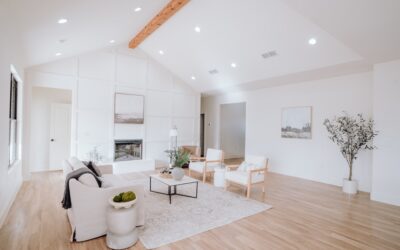
Cream is the color most homeowners default to without realizing how many cream undertones exist. A pure white-cream reads cold and modern, while a yellow-leaning cream reads vintage and warm — and choosing the wrong one against your wall paint creates a clash that paint can’t fix. Cream vinyl flooring covers everything from buttery oak-look LVP to bone-white limestone-look SPC, and the right pick depends as much on your fixed elements (cabinets, countertops, trim) as on personal taste. This guide breaks down the spectrum and tells you what to spend.
Why Cream Has Stayed Popular
Cream-toned floors brighten interiors by reflecting 60-75% of incident light versus 20-35% for mid-tone wood floors. In rooms with limited natural light, that reflection makes the space feel a full size larger. Cream also pairs with virtually any wall color and any furniture style, which is why builders default to it in spec homes.
The aesthetic risks are real too. Cream shows pet hair, dust, and food spills more obviously than darker tones, and certain undertones date themselves to specific design eras within a decade.
Understanding Cream Undertones
Hold a cream LVP plank against a sheet of pure printer paper and you’ll see one of three undertones — yellow, pink, or gray. Each suits different design styles.
- Yellow-cream — warm, traditional, pairs with honey oak cabinets
- Pink-cream — classic, fits cottage and shabby-chic styles
- Gray-cream (greige) — modern, pairs with cool whites and stainless
- Beige-cream — neutral middle ground, the safest choice
Material Construction Options
Luxury Vinyl Plank (LVP)
Most cream-toned vinyl is wood-look LVP printed to mimic limed oak, white-washed pine, or aged maple. Wear layers from 12-30 mil. Pricing runs $2.50-$6 per square foot for material plus $1.50-$3 per square foot for installation.
Stone Plastic Composite (SPC)
Rigid-core SPC in cream tones often mimics travertine, limestone, or marble. The mineral-loaded core is denser and more dimensionally stable than WPC, which matters for sun-exposed rooms. $4-$8 per square foot material.
Sheet Vinyl
For laundry rooms, mudrooms, and bathrooms, cream sheet vinyl handles 100% waterproof needs without seams. Modern sheet vinyl from Armstrong, Mannington, and Tarkett delivers realistic visuals at $1.50-$4 per square foot.
Style Pairings
Cream floors look intentional with warm wood cabinets in honey oak, walnut, or cherry — all four warm tones reinforce each other. Against bright white shaker cabinets, cream floors create a soft, casual cottage palette. Against gray cabinets, choose a greige cream to avoid the yellow-vs-gray fight.
Avoid pairing pure pink-cream floors with stainless appliances and gray subway tile — the warm-cool mismatch makes the floor look dated. Either commit to warm throughout or swap to a greige floor.
Where Cream Works (and Doesn’t)
Cream excels in low-traffic adult zones (primary bedrooms, formal living rooms, home offices), small rooms needing visual expansion (powder baths, breakfast nooks), and homes with lots of natural light (south-facing great rooms, sunrooms).
It struggles in high-traffic zones with kids and pets, mudrooms in northern climates with rock-salt boots, and dark north-facing rooms where the cream reads dingy without sufficient ambient light.
Maintenance for Light-Colored Vinyl
Sweep or vacuum every other day to lift dust and pet hair before it embeds. Damp mop weekly with a pH-neutral vinyl cleaner like Bona for Vinyl or the manufacturer-specified product. Avoid bleach, ammonia, and vinegar — all three either yellow the surface or strip the wear-layer finish.
For shoe scuff marks (which show worst on cream), use a Magic Eraser sparingly. Pressing too hard burnishes the surface and creates a permanent shine spot.
Best Brands for Cream Vinyl
- COREtec Plus — Cottage Coast and Driftwood collections
- Karndean Korlok — White Painted Pine and Country Oak Bleached
- Mannington Adura Max — Cottage Cream and Heritage
- Shaw Floorte — Driftwood and Riverstone collections
- MSI Andover — Whitfield Gray and Roeting
Cost Snapshot for a 400 Sq Ft Room
- Builder-grade LVP, DIY: $1,000-$1,800 material
- Mid-range SPC with attached pad, professional install: $2,400-$3,800 turnkey
- Premium WPC with hand-scraped texture: $3,200-$5,200 turnkey
- Sheet vinyl, professional install: $1,200-$2,400 turnkey
Subfloor and Installation Notes
Light vinyl shows every subfloor imperfection because the high reflectance amplifies shadows. Skim-coat the substrate to 1/8 inch flatness over 10 feet, fill all nail pops, and patch any seam ridges before installation. Skipping this step means every flaw telegraphs through within months.
For click-lock products, allow 48 hours of acclimation at the room’s actual operating temperature. Maintain a 3/8 inch expansion gap at all walls and vertical surfaces.
Frequently Asked Questions
Does cream vinyl flooring show dirt easily?
Yes, more than mid-tone or dark floors. Plan on sweeping every 2-3 days and damp mopping weekly. Adding entry mats and area rugs in pinch-point zones (sofa fronts, kitchen sinks) reduces visible dust accumulation significantly.
Will cream vinyl yellow over time?
Quality cream vinyl flooring with UV-stabilized wear layers won’t yellow noticeably for 15-20 years in normal indirect light. Direct south-facing sun can cause modest yellowing in 5-8 years on lower-grade products. Use UV-blocking window film if exposure is heavy.
What wall color works best with cream floors?
Soft whites, warm greiges, and pale sage all coordinate beautifully. Avoid stark cool whites against yellow-cream floors and pure warm yellows against pink-cream floors — both pairings amplify the floor’s undertone unflatteringly.
Is cream vinyl good for kitchens?
Yes for adult-only homes. Choose an SPC product with at least a 22 mil wear layer, a textured embossed surface (which hides crumbs and fingerprints), and a slightly varied plank color so spilled coffee isn’t dramatically visible against a uniform cream background.
Prefer to explore on your own?
See how new flooring looks in your actual room in seconds — free, no signup.
Try the free Floor Studio →