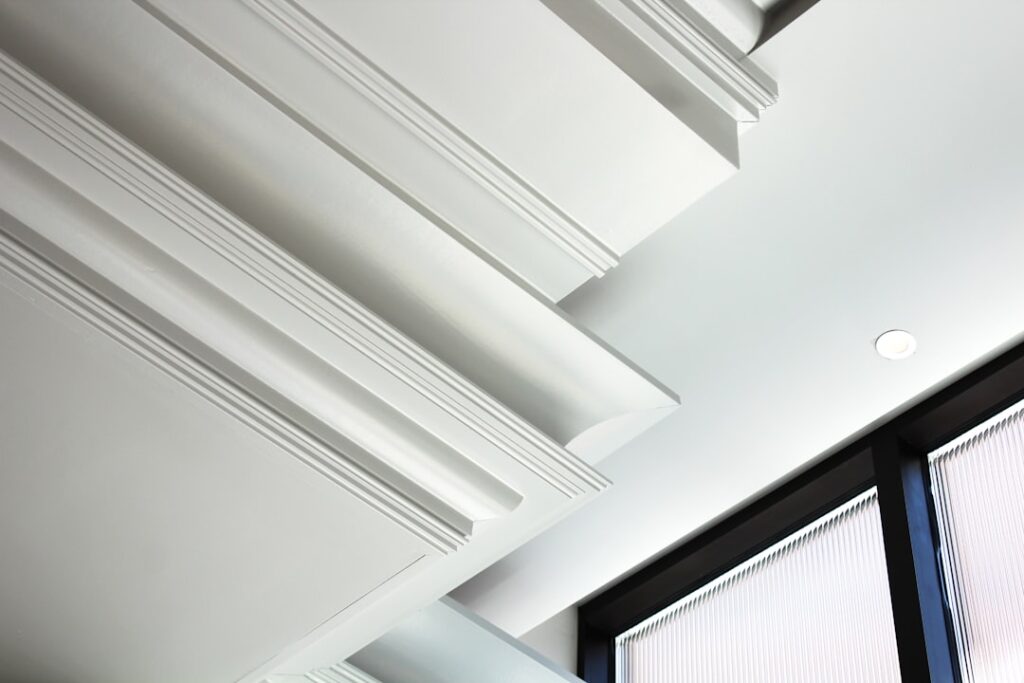
The right crown molding styles can transform a room from plain to polished in a way that few other finishing details can match. As a flooring and home improvement company with over 30 years of experience, we install crown molding alongside flooring projects regularly, and we have seen how the right (or wrong) molding choice affects the overall feel of a room. This guide breaks down every major crown molding style, compares materials and costs, and helps you select the profile that suits your home’s architecture and your budget.
What Is Crown Molding?
Crown molding is a decorative trim installed at the junction where walls meet the ceiling. It bridges the sharp 90-degree angle between the wall and ceiling with a profiled piece of material that adds visual interest, architectural character, and a sense of completeness to a room. Crown molding has been used in architecture for centuries, from ancient Greek temples to Victorian mansions to modern homes.
Beyond aesthetics, crown molding serves practical purposes. It hides the often-imperfect joint between drywall walls and ceiling panels, covers gaps that develop as a house settles, and creates a visual frame that makes rooms feel more finished and intentional. Homes with crown molding consistently appraise higher than comparable homes without it, making it one of the better returns on investment for a finishing detail.
Crown molding styles vary enormously in profile complexity, size, material, and cost. Understanding your options helps you make a choice that enhances your home rather than clashing with its existing character.
Traditional Crown Molding Styles
Traditional crown molding styles feature ornate profiles with multiple curves, steps, and details that create shadow lines and visual depth. These styles are rooted in classical architecture and work best in homes with formal design elements.
Cove molding is one of the simplest traditional profiles, featuring a concave (inward-curving) face that creates a smooth, elegant transition from wall to ceiling. Cove crown molding works in both traditional and transitional homes and is one of the most versatile crown molding styles available. It is also one of the easiest profiles to install because the simple curve is forgiving at corners.
Ogee molding features an S-shaped curve, combining a concave and convex arc in a single profile. This creates more visual interest than a simple cove and is the most common profile in traditional American homes built from the 1950s onward. If you picture “standard” crown molding, you are probably imagining an ogee profile.
Dentil molding incorporates a row of small, evenly spaced rectangular blocks (dentils) along the bottom edge of the crown profile. This style originates from Greek and Roman architecture and adds significant visual weight and formality. Dentil crown molding is best suited for formal dining rooms, entryways, and living rooms in Colonial, Georgian, or Federal-style homes.
Egg-and-dart molding features a repeating pattern of oval (egg) and pointed (dart) shapes carved into the molding face. This is an ornamental classical motif that adds richness and detail. It is typically used in high-end traditional homes and is almost always made from wood or plaster, as the detail is difficult to reproduce in synthetic materials.
Built-up crown molding combines multiple pieces of trim layered together to create a large, complex profile. A common approach stacks a base piece of flat stock, a bed molding, a standard crown, and a small cap molding to create a 6 to 12-inch tall crown assembly. Built-up crown molding is how you achieve the grand, elaborate trim seen in upscale traditional homes without the cost of custom-milled single-piece profiles.
Modern Crown Molding Styles
Modern and contemporary homes require crown molding styles that complement clean lines and minimal ornamentation. Heavy, ornate profiles look out of place in modern interiors. Instead, these profiles work:
Flat stock or square-edge molding is the most modern approach to crown. A simple flat board (typically 3 to 5 inches tall) installed at the ceiling line creates a clean, geometric transition. No curves, no profiles, just a crisp line. This style works particularly well in mid-century modern, contemporary, and minimalist homes.
Simple cove with a minimal, shallow curve provides a subtle transition without adding traditional character. A small cove (2 to 3 inches) in a modern home softens the wall-ceiling junction without drawing attention to itself. This is a good choice if you want some crown detail but do not want it to be a focal point.
LED cove or indirect lighting crown is a modern innovation where the crown molding includes a channel for LED strip lighting. The lights illuminate the ceiling indirectly, creating a floating or glowing effect. This style is popular in contemporary homes, home theaters, and commercial spaces. The molding itself is typically a simple profile with a flat top ledge that conceals the LED strips.
No crown molding is also a valid modern choice. Many contemporary architects intentionally omit crown molding to maintain the sharpest possible wall-ceiling line. If your home has clean drywall joints and no visible gaps at the ceiling, leaving the transition unadorned is a perfectly acceptable modern design decision.
Craftsman and Transitional Styles
Craftsman-style homes and transitional interiors need crown molding styles that bridge the gap between traditional ornamentation and modern simplicity.
Craftsman crown features a simple, somewhat blocky profile with straight lines and minimal curves. The profile often includes a small cove or ogee at the bottom but keeps the overall shape restrained and geometric. Craftsman crown is typically made from stain-grade wood (often oak or Douglas fir) and left unstained or finished with a natural wood stain rather than painted white.
Shaker-style crown is similar to craftsman but even more minimal. It uses flat stock with very subtle easing on the edges, creating a clean profile that adds architectural definition without ornament. Shaker crown is appropriate for farmhouse, cottage, and casual traditional interiors.
Transitional crown borrows from both traditional and modern influences. A common transitional approach uses a medium-sized (4 to 5 inch) crown with a simple ogee or cove profile and a clean, unadorned finish. The profile has enough detail to feel finished but not enough to read as overtly traditional. This is the most popular approach for new construction homes in 2026, which tend to blend traditional warmth with contemporary cleanliness.
Crown Molding Materials Compared
The material you choose affects the cost, appearance, workability, and longevity of your crown molding. Here is a comparison of every major option:
Solid wood (pine, poplar, oak) is the traditional material for crown molding. Pine and poplar are the most common for painted molding, as they are relatively affordable and take paint well. Oak, cherry, and walnut are used for stain-grade applications where the natural wood grain is visible. Solid wood crown molding costs $1 to $7 per linear foot for material, depending on species, profile, and size. Wood is easy to cut and nail, takes paint and stain beautifully, and lasts indefinitely when properly maintained.
MDF (medium-density fiberboard) is the most popular material for painted crown molding in new construction. MDF is cheaper than solid wood ($0.70 to $3 per linear foot), has a perfectly smooth surface for painting, does not warp or split like solid wood, and is available in virtually every profile. The downside is that MDF cannot be stained (it has no grain), it swells when exposed to moisture, and it is heavier than wood of the same size. MDF is not suitable for bathrooms, kitchens, or any room with high humidity.
Polyurethane foam crown molding is lightweight, easy to install, resistant to moisture and insects, and available in highly detailed profiles that mimic plaster. It costs $2 to $8 per linear foot depending on size and complexity. Foam molding is cut with a fine-tooth saw, attached with construction adhesive, and painted. It will not rot, warp, or attract termites. The main drawback is that foam molding feels hollow when tapped and can dent more easily than wood or MDF.
Plaster is the original crown molding material used in historic homes. Plaster crown is created by running a custom profile template along wet plaster or by installing pre-cast plaster sections. It is the heaviest, most expensive, and most labor-intensive option ($8 to $25+ per linear foot installed), but nothing matches the depth and authenticity of real plaster molding. Plaster is appropriate for historic restoration and high-end custom homes.
PVC (polyvinyl chloride) crown molding is completely waterproof and rot-proof, making it the best choice for bathrooms, covered outdoor areas, and humid environments. PVC costs $2 to $6 per linear foot and is available in a reasonable selection of profiles. It does not take stain, so it is paint-only, but it will never swell, warp, or deteriorate from moisture exposure.
Crown Molding Sizes: How to Choose
Crown molding size should be proportional to your room dimensions. Too small and the molding looks like an afterthought. Too large and it overwhelms the room. Here are the general guidelines we follow:
- 8-foot ceilings: Use 2.5 to 4.5-inch crown molding. Anything larger will make standard-height ceilings feel lower and more compressed.
- 9-foot ceilings: Use 4 to 6-inch crown molding. This is the sweet spot where most crown molding styles look their best.
- 10-foot ceilings: Use 5 to 8-inch crown molding. Taller ceilings need larger molding to maintain visual proportion.
- 12-foot and higher ceilings: Use 7 to 12-inch crown molding or built-up assemblies. Grand spaces require substantial trim to look intentional rather than sparse.
Room size also matters. A small powder room with 8-foot ceilings might only need a 2.5-inch crown, while a large living room with the same ceiling height could handle a 4.5-inch profile. When in doubt, hold a sample piece of crown molding against the wall and step back to evaluate the proportion. Cut a short piece and tape it in place temporarily if needed.
One common mistake is installing crown molding that is too small. A 2-inch crown on a living room with 9-foot ceilings will barely register visually and can look like the installer ran out of budget. Go at least one size up from your initial instinct, and you will usually be happier with the result.
Crown Molding Installation Costs
Crown molding installation costs vary by material, profile complexity, room layout, and your local labor market. Here is what to expect in 2026:
Material costs per linear foot:
- MDF: $0.70 to $3.00
- Pine/poplar (paint-grade): $1.00 to $4.00
- Oak/hardwood (stain-grade): $3.00 to $7.00
- Polyurethane foam: $2.00 to $8.00
- PVC: $2.00 to $6.00
- Plaster: $8.00 to $25.00+
Professional installation labor: $3 to $8 per linear foot for standard crown molding in a straightforward room. Complex rooms with vaulted ceilings, cathedral ceilings, arched doorways, or many inside/outside corners will increase labor costs. Stain-grade installation costs more because the joinery must be perfect (no caulk or filler to hide gaps).
Total installed cost for a typical room: A 14×16-foot room with 8-foot ceilings has approximately 60 linear feet of perimeter. Using MDF crown with professional installation, the total cost would be $220 to $660. Using painted wood crown, $240 to $720. Using polyurethane foam, $300 to $960.
DIY savings: Crown molding installation is a moderate DIY project. The material cost is the same, and you save the labor expense entirely. You will need a miter saw (compound miter for most crown molding styles), a coping saw for inside corners, a brad nailer, construction adhesive, caulk, and patience. The learning curve is in cutting accurate miter joints and coping inside corners, which takes practice to master.
Matching Crown Molding to Your Rooms
Different rooms in your home may benefit from different crown molding styles, or from the same profile in different sizes:
Living room and dining room: These are the showcase rooms where crown molding makes the biggest impact. Use your most detailed profile and largest size here. Traditional homes can go with ornate ogee, dentil, or built-up profiles. Modern homes work best with simple cove or flat stock.
Kitchen: Keep kitchen crown molding consistent with your cabinetry style. If your cabinets have detailed, raised-panel doors, use a traditional crown. If your cabinets are flat-panel or slab-style, use a simple profile. Many kitchens tie the wall crown molding into the cabinet crown for a seamless look.
Bedrooms: A simpler, smaller crown works well in bedrooms. Bedrooms are private spaces where the grand gestures of formal rooms are not necessary. A 3 to 4-inch simple cove or ogee keeps the room feeling finished without being overdone.
Bathrooms: Use PVC or polyurethane foam crown in bathrooms to prevent moisture damage. MDF and some wood species will swell and deteriorate in bathroom humidity. Keep the profile simple and the size proportional to the room.
Hallways: Match the hallway crown to the rooms it connects. Hallways are transition spaces, so the crown should be consistent with adjacent rooms. Using a dramatically different style in the hallway creates a disjointed feel.
Frequently Asked Questions
What crown molding style is most popular in 2026?
Simple cove and transitional ogee profiles are the most popular crown molding styles in 2026. The trend has moved away from heavy, ornate profiles toward cleaner, simpler lines that work in both traditional and modern settings. White-painted MDF or polyurethane in a 3.5 to 5-inch size is the standard for new construction and renovations.
Does crown molding increase home value?
Yes, crown molding is consistently cited by real estate professionals as a feature that increases perceived home value. While it is difficult to assign a specific dollar amount, homes with crown molding in the main living areas photograph better, show better, and often sell faster than comparable homes without it. The return on investment is typically positive for standard crown molding installations.
Can I install crown molding myself?
Yes, crown molding is a manageable DIY project for homeowners with basic carpentry skills and a compound miter saw. Start with a small, simple room (like a bedroom or bathroom) to learn the cutting techniques before tackling a large living room. Inside corners are the trickiest part. Coping the joint (cutting one piece to fit against the profile of the other) produces better results than mitering inside corners, especially in older homes where walls are rarely perfectly square.
Should crown molding match the baseboards?
Crown molding and baseboards do not need to be the same profile, but they should be the same material, color, and general style family. Painting both white is the most common and safest approach. If your baseboards are painted white, your crown should be painted white. If your baseboards are stained oak, your crown should be stained oak. The visual consistency ties the room together from floor to ceiling.
Is MDF or wood crown molding better?
For painted crown molding, MDF is the better choice for most homes. It costs less, has a smoother surface for painting, and does not split, warp, or develop knot bleed-through like wood. For stain-grade applications where the natural wood grain is visible, solid wood is the only option since MDF has no grain pattern. Avoid MDF in bathrooms or high-humidity rooms where it can absorb moisture and swell.