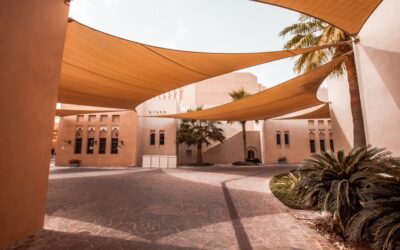
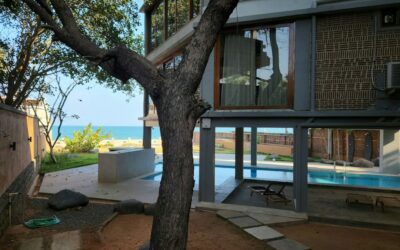
Stock shade sails come in tidy squares and triangles, but backyards rarely do. Your house corner, a mature tree and the fence line almost never land at the exact spacing of a 16-foot triangle. Custom shade sails are cut to your actual anchor points, which means better coverage, tighter tension and a cleaner look, at a higher price and with a wait of several weeks.
Go custom when your anchor points are irregular, when you need more than about 18 feet on a side, or when you want commercial-grade fabric and hardware. Stay with a standard size when you can place posts wherever you like and a stock shape covers the area.
- When Custom Shade Sails Make Sense
- How to Measure Anchor Points for a Fabricator
- Custom vs Standard Pricing
- Installed Costs With Posts
- Safety and Structural Must-Knows
- Choosing Fabric and Hardware Grade
- Lead Times and Ordering Tips
- Troubleshooting
- When to Call a Licensed Professional
- Frequently Asked Questions
When Custom Shade Sails Make Sense
The biggest advantage of custom shade sails is fit. A fabricator builds the sail to your measured points, subtracts the right amount for tensioning hardware, and adds a curved (catenary) edge that pulls the fabric taut. Off-the-shelf sails force you to move anchors to match the sail, which often means extra posts.
- Irregular shapes: four-point sails with uneven sides, or sails that wrap around a tree or roofline.
- Large spans: stock sizes top out early; custom shops build large sails with reinforced corners.
- Heavier fabric: commercial knitted HDPE and waterproof fabrics with stronger stitching and corner hardware.
- Color matching: a wider palette and multi-sail layouts that overlap at different heights.
Breathable shade sail fabric (knitted HDPE) lets hot air escape and does not pool water, which makes it the usual choice. Waterproof fabric blocks rain but needs a steep slope and stronger anchors because water and wind both load it more heavily.
How to Measure Anchor Points for a Fabricator
Fabricators build from your numbers, so accuracy matters. A mistake of a few inches can leave a sail too loose or impossible to tension. Most shops want point-to-point measurements, not the size of the sail.
Tools and materials
- 100-foot tape measure (fiberglass, not cloth, to avoid stretch)
- A helper
- Stakes or chalk to mark post locations
- Line level or laser level for heights
- Notepad and a simple sketch labeling points A, B, C and D
Measuring steps
- Mark each anchor point. For a house wall, mark where the eye bolt or fascia bracket will go. For new posts, stake the post center.
- Measure every side. A to B, B to C, C to D and D to A, measured at the attachment height, pulled tight and straight.
- Measure both diagonals. A to C and B to D. Diagonals let the shop confirm the true shape of a four-point sail.
- Record each attachment height. Varying heights create the twist (hypar) that sheds water and adds strength.
- Note the attachment type at each point: post, wall, fascia or tree, so the shop can size hardware.
- Photograph the space from several angles and send it with your sketch.
Do not subtract for hardware yourself unless the shop asks you to. Most fabricators deduct a set allowance (often several percent of each side, plus turnbuckle length) to leave room for tensioning. Ask a shade sail installer to verify measurements if you are pouring new footings, since moving a post after concrete sets is expensive.
Custom vs Standard Pricing
Standard sails sold online are mass produced, so a mid-size triangle or square often costs from under a hundred to a few hundred dollars. Custom sail shades are priced by square footage, fabric grade and edge finishing. As a general range, custom fabric and fabrication usually cost several times more than a stock sail of similar area, and large commercial-grade sails can reach the low thousands for the fabric alone.
| Item | Standard | Custom |
|---|---|---|
| Fit | Fixed sizes | Built to your points |
| Fabric grade | Residential | Residential to commercial |
| Corner reinforcement | D-rings, basic stitching | Heavier rings, webbing, stronger thread |
| Lead time | Ships in days | Often 2 to 6 weeks |
| Fabric cost | Low | Moderate to high |
Installed Costs With Posts
The fabric is often the smaller part of the bill. Posts, footings and hardware drive the total. For a custom sun shade sail installed with new steel posts, total project costs commonly reach the low to mid thousands for a single residential sail, and multi-sail layouts with engineered footings can run well into five figures.
- Posts: galvanized or powder-coated steel posts cost more than wood but resist rot and bending.
- Footings: concrete footings sized for wind load, often several feet deep. Rock, clay or high water tables add labor.
- Hardware: stainless steel turnbuckles, shackles, pad eyes and eye bolts. Use marine-grade stainless near pools or the coast.
- Permits and engineering: some towns require permits and stamped footing designs for sails above a certain size.
Safety and Structural Must-Knows
A tensioned sail puts surprising force on its anchors, and wind multiplies it. Never anchor a sail to deck railings, gutters, downspouts, light fixtures or thin fascia boards. These were not built for lateral pull and can rip free. Wall anchors should go into solid framing or masonry with properly rated hardware, and posts need concrete footings sized by an engineer or to the manufacturer’s specification.
- Call 811 before digging any footing so buried utility lines are marked.
- Rake posts slightly away from the sail so tension does not pull them inward.
- Use rated tension hardware and keep enough turnbuckle thread to retighten as fabric settles.
- Set ladders on firm, level ground and keep three points of contact when attaching corners. Leave second-story attachments to pros.
- Take sails down before major storms, hurricanes or heavy snow.
Choosing Fabric and Hardware Grade
Fabric weight and UV rating set the lifespan of the sail. Residential knitted fabrics typically block most UV and carry warranties in the range of several years, while heavier commercial knitted fabrics often carry longer warranties and hold their shape better under constant tension. For an outdoor sail shade over a pool or play area, the heavier fabric usually pays off, since it resists stretching and tearing when kids pull on it or wind gusts hit.
Edge construction matters too. A sewn-in wire rope or webbing along the curved edges spreads load evenly toward the corners, and reinforced corner patches keep the rings from tearing out. Ask whether the thread is UV stable, because ordinary thread can break down in a few summers and let seams open long before the fabric fails. On the hardware side, match every component to the same load rating so one weak shackle is not the point that gives way. Lighter colors stay cooler to the touch, while darker colors block more glare and often hide dirt better.
Lead Times and Ordering Tips
Custom fabrication usually takes 2 to 6 weeks, longer in spring when demand peaks. Order in late winter if you want shade by early summer. When requesting quotes, ask each shop for fabric grade and UV warranty, thread type (UV-stable thread outlasts standard polyester), corner hardware, edge finishing and the hardware deduction they apply.
Troubleshooting
- Sail wrinkles or flaps: tension is too low or anchors are out of position. Tighten turnbuckles evenly.
- Water pooling: increase the height difference between corners to create more slope.
- Post leaning: footing is undersized or post was set plumb instead of raked. A pro may need to reset it.
- Corner fraying: hardware is rubbing. Add a shackle or swap to smoother fittings.
When to Call a Licensed Professional
Hire a pro if you need new posts with footings in tough soil, any wall attachment on stucco, brick veneer or a second story, or a sail large enough to trigger a permit. An engineer should size footings for big spans, waterproof sails or high-wind regions. Many installers measure, order and install as one package, which shifts the fit risk off your shoulders.
Frequently Asked Questions
How much more do custom shade sails cost than standard ones?
Custom fabric often costs several times more than a stock sail of the same area, and posts, footings and installation usually add more than the fabric itself.
How do I measure for a custom shade sail?
Measure point to point between every anchor at attachment height, measure both diagonals, record each height and note the attachment type for each corner.
How long does a custom shade sail take to make?
Most fabricators quote 2 to 6 weeks, with longer waits in spring.
Can I attach a shade sail to my deck railing?
No. Railings are not designed for the lateral load of a tensioned sail. Use posts with proper footings or anchors into solid framing.
Is breathable or waterproof fabric better?
Breathable knitted fabric suits most yards because it vents heat and does not hold water. Waterproof fabric needs steeper slopes and stronger anchors.