For years the rule was that bathrooms had to be bright and white to feel clean. That rule is gone. Done right, dark bathroom designs read as the most luxurious, spa-like, and dramatic spaces in the entire home, like stepping into a high-end hotel rather than a hospital. The secret is that going dark is not just about painting walls a deep color; it is about controlling light, layering materials, and using contrast so the room feels rich and intentional instead of dim and cramped. Here is how to make a moody bathroom that works.
Choose the Right Dark Palette
“Dark” covers a wide range, and the shade you pick sets the whole mood. Charcoal and soft black feel modern and architectural. Deep navy reads classic and a touch nautical. Forest and emerald green bring an organic, jewel-box warmth, while deep plum or burgundy feels indulgent and unexpected.
Most successful dark bathrooms avoid pure flat black, which can feel harsh and show every water spot. Instead, designers reach for near-blacks with an undertone, charcoal with a hint of blue, or a black-green. Pick one dominant dark tone and let it carry the room, rather than mixing several deep colors that compete.
Lighting Is Everything
The number one mistake in a dark bathroom is poor lighting, which is what turns moody into cave-like. Because dark surfaces absorb light instead of bouncing it, you need more fixtures and more layers than a white room would. Plan three layers: ambient overhead light, task lighting at the mirror, and accent light for atmosphere.
Put vanity lighting on both sides of the mirror at face height for even, shadow-free light when you shave or apply makeup. Add recessed ceiling lights for general brightness, and consider warm LED strips under floating vanities or in a niche for a glow that flatters the dark surfaces. Use dimmers throughout so you can go bright for grooming and low for a relaxing soak.
Work With Contrast
Dark spaces come alive through contrast. Pairing your deep walls or tile with lighter or metallic elements keeps the room from reading as one heavy block. Brass, gold, and matte black fixtures all pop against a dark backdrop, and warm metals especially add a hint of glamour.
White or light-toned countertops, a marble vanity top, or a pale stone basin create breathing room and a focal point. Even a single contrasting element, a white tub against a black wall, or brass sconces flanking a navy vanity, gives the eye somewhere to land. Without contrast, a dark bathroom flattens; with it, the depth becomes the point.
Layer Texture and Materials
In a monochrome dark scheme, texture does the work that color usually would. Mixing finishes keeps the space from feeling flat. Combine matte and gloss, smooth and rough, to create visual interest within a tight palette.
- Tile: mix a matte large-format wall tile with a glossy subway or zellige tile that catches light.
- Stone: honed black marble or soapstone adds natural veining and depth.
- Wood: a warm walnut vanity softens dark walls and adds organic contrast.
- Metal and glass: a frameless glass shower and metallic fixtures reflect light and lighten the feel.
The interplay of these surfaces under good lighting is what gives an expensive, layered look rather than a one-note dark box.
Consider the Room Size and Light
Be honest about your space. A small windowless powder room is actually a great candidate for going dark, because you embrace the cozy, jewel-box intimacy rather than fighting it; nobody expects a half bath to feel airy. A small bathroom you use daily for getting ready needs extra lighting investment to stay functional in a dark scheme.
Natural light helps enormously. If you have a window or skylight, dark walls will look dramatically different through the day, deep and rich in sun, moody at night. With abundant daylight you can go darker with confidence. With none, lean toward charcoal rather than true black and over-invest in fixtures.
Flooring and the Fifth Wall
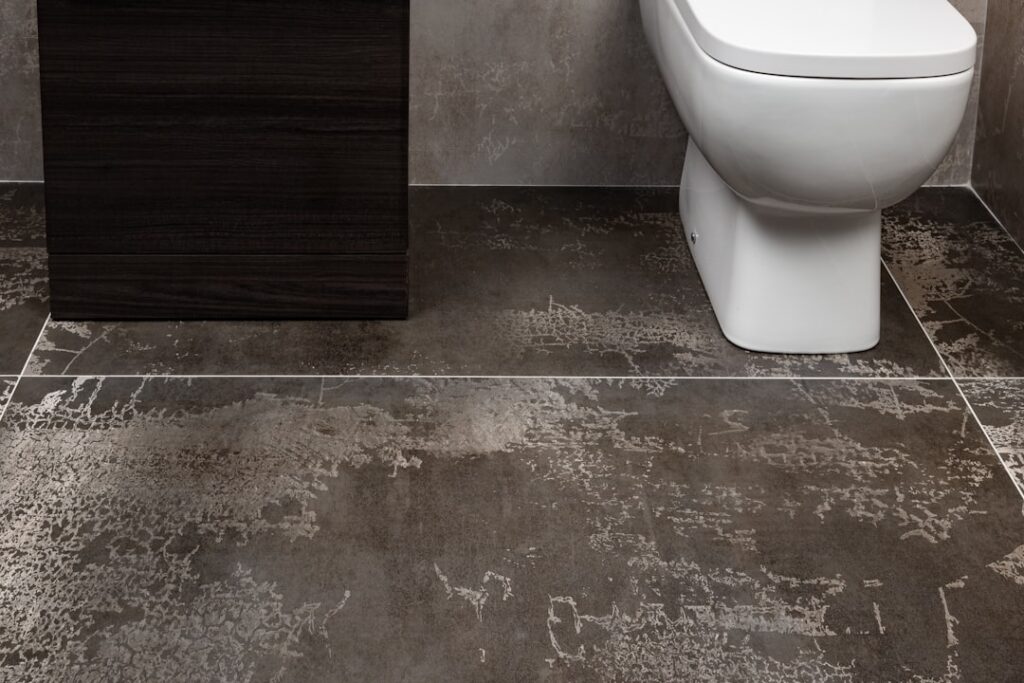
Do not forget what is underfoot and overhead, because both shape how a dark scheme reads. For flooring, you can go full drama with dark stone, black hexagon tile, or near-black wood-look plank for a cocooning effect, or create contrast with a lighter floor that grounds the deep walls and keeps the room from feeling closed in. Patterned encaustic or cement tile in a muted palette adds character without fighting the dark walls. Heated floors are a worthwhile upgrade here, since dark, spa-like baths invite barefoot lounging.
The ceiling, often called the fifth wall, is an easy place to amplify the mood. Painting it the same deep color as the walls erases the boundary and makes a small bath feel like an enveloping jewel box, while a lighter ceiling lifts the space and reflects more light. In a room with good height, a dark ceiling with a statement light fixture feels intimate and high-end. Match your choice to the ceiling height and how much daylight the room gets.
Finishing Touches
The accessories pull a dark bathroom together. Fluffy white or cream towels provide soft contrast and a spa feel against deep tile. Greenery, a trailing plant or a small fern, adds life and a pop of color that dark backgrounds make vivid. A large mirror, ideally with backlighting, bounces what light there is and visually expands the room.
Metallic and reflective accents earn their place here. A gilt-framed mirror, polished nickel or brass hardware, and a few glass or crystal pieces catch and bounce the available light, adding sparkle that keeps a dark room from feeling flat. Even small touches, a brass towel ring, a mirrored tray, a glass vase, add the glints of brightness that make a moody scheme feel intentional and luxurious rather than simply dim.
Keep clutter off the surfaces, since busy countertops read as messy faster in a dark, dramatic setting. Choose a few quality pieces, a stone soap dish, a brass tumbler, over a crowd of plastic bottles. With a considered palette, generous layered lighting, deliberate contrast, and rich textures, dark bathroom designs deliver the most atmospheric, hotel-worthy room in the house, proof that going dark, done thoughtfully, is anything but gloomy.