A 200-foot perimeter fence can run anywhere from $1,800 to $14,000 depending on what you build. The different types of fences sold today each solve a specific problem — privacy, pets, security, looks, or just keeping the deer out of the tomatoes. Picking the wrong material wastes money twice, first on the install and then on premature replacement when the fence rots, sags, or loses its color in five years.
- Wood Fences: Classic and Customizable
- Vinyl Fences: Low Maintenance, Higher Upfront Cost
- Chain Link: The Budget Workhorse
- Aluminum Fences: The Wrought Iron Lookalike
- Composite and Bamboo: The Newer Options
- Wrought Iron and Steel: For Security and Showpieces
- Cost Comparison at a Glance
- Common Pitfalls and Code Issues
- Choosing Between the Different Types of Fences
Wood Fences: Classic and Customizable
Wood remains the most common residential fence in the US for one reason: it looks like a fence is supposed to look. Pressure-treated pine costs $15 to $25 per linear foot installed, cedar runs $25 to $40, and redwood pushes $35 to $55. Cedar resists rot and bugs naturally and weathers to a silver gray without staining. Pressure-treated pine needs sealing every 2 to 3 years to last 15 years.
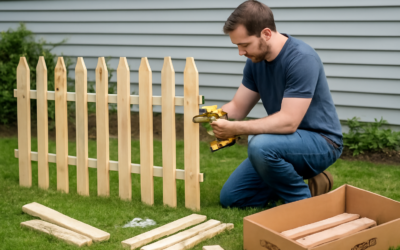
Common styles include shadowbox (boards alternated on both sides of the rails), board-on-board (overlapping for full privacy), picket (3 to 4 feet tall with gaps), and split rail (rustic ranch look). A 6-foot privacy fence is the suburban default; check local codes, since front-yard fences are often capped at 4 feet.
Vinyl Fences: Low Maintenance, Higher Upfront Cost
Vinyl (PVC) fence panels cost $25 to $45 per linear foot installed and last 25 to 30 years with virtually no maintenance — a hose-down once a year is the entire upkeep program. Quality varies a lot. Cheap big-box vinyl panels (under $20 each) yellow within five summers. Premium brands like CertainTeed Bufftech and ActiveYards use UV inhibitors that hold color for two decades.
- Privacy panels: 6 feet tall, tongue-and-groove, blocks sightlines
- Semi-private: spaced pickets with lattice tops
- Picket vinyl: mimics traditional white picket without the painting
- Ranch rail vinyl: three-rail style for horse farms and large lots
Downside: cracked panels are not repairable — you replace the whole 8-foot section, which means matching color from the original manufacturer years later.
Chain Link: The Budget Workhorse
Chain link runs $9 to $18 per linear foot installed for a 4-foot galvanized version, or $15 to $30 for a 6-foot vinyl-coated black mesh. It contains pets, marks property lines, and lasts 20 to 25 years. The galvanized look is industrial and unpopular in front yards; the black vinyl coating disappears visually and works well around backyard pools and play areas.
Privacy slats inserted into the mesh ($1 to $3 per linear foot) turn chain link into a partial privacy barrier, though they look obviously aftermarket. For tennis courts, dog runs, and side-yard utility areas, chain link is hard to beat for the money.
Aluminum Fences: The Wrought Iron Lookalike
Powder-coated aluminum mimics wrought iron at a fraction of the weight and price. Cost runs $30 to $55 per linear foot installed for a 5-foot ornamental style. Aluminum will not rust, holds its black powder coat for 25+ years, and meets pool fence codes when the pickets are spaced 1-3/4 inches apart with a self-closing gate.
Brands worth knowing include Jerith (premium, made in Pennsylvania), Specrail, and Ameristar. The big-box panels at $99 each are thinner gauge — fine for decorative use, but kids leaning on them will bend the rails. Pay $20 to $30 more per panel for residential-grade aluminum if the fence will see actual use.
Composite and Bamboo: The Newer Options
Composite fences from Trex Seclusions ($45 to $70 per linear foot installed) combine recycled plastic and wood fiber. They look like wood, never need staining, and carry 25-year warranties. The downside is weight — composite panels weigh nearly twice as much as vinyl, requiring beefier posts and concrete footings.
Bamboo fences ($15 to $30 per linear foot) are the budget exotic option. Treated rolled bamboo lasts 8 to 12 years in moderate climates and gives a tropical, resort-like look. Untreated bamboo from the garden center fades and splits in two seasons — buy the heat-treated commercial-grade product instead.
Wrought Iron and Steel: For Security and Showpieces
True wrought iron is rare today; what is sold is welded steel powder-coated black. Cost is steep at $40 to $100 per linear foot installed, but lifespan tops 50 years with periodic touch-up paint. Best uses are front-yard accents, pool enclosures, and anywhere a heavier security barrier is needed. Steel rust is the long-term enemy — coastal homes should specify hot-dip galvanized steel under the powder coat.
Cost Comparison at a Glance
For a typical 150-foot suburban backyard project:
- Chain link, 4 ft galvanized: $1,400 to $2,700 installed
- Pressure-treated wood, 6 ft privacy: $2,300 to $3,800 installed
- Cedar, 6 ft privacy: $3,800 to $6,000 installed
- Vinyl, 6 ft privacy: $3,800 to $6,800 installed
- Aluminum, 5 ft ornamental: $4,500 to $8,300 installed
- Composite, 6 ft privacy: $6,800 to $10,500 installed
- Steel ornamental, 5 ft: $6,000 to $15,000 installed
Common Pitfalls and Code Issues
Before any fence goes up, check three things:
- Property lines: install a foot inside the line to avoid disputes; spring for a $400 to $700 survey if uncertain
- HOA rules: many neighborhoods restrict materials, colors, and heights
- Permits: most cities require a permit for fences over 6 feet, and pool fences have strict latch and height codes
Also call 811 before digging post holes — hitting a buried gas or fiber line is a $1,500 minimum repair plus potential criminal liability.
Choosing Between the Different Types of Fences
For most homeowners, the choice comes down to three questions: How long do you plan to live there? What does the HOA allow? And how much yard work do you actually want to do? Pressure-treated wood wins on price for short-term owners; cedar or vinyl wins for 10+ years; aluminum or composite wins for low-maintenance lifers. Whichever of the different types of fences you pick, spend the money on quality posts and concrete footings — that is what determines whether the fence stands straight in 15 years or leans like a sailboat in a storm.