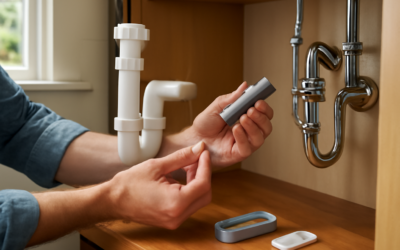
Most DIYers stand around staring at a fresh sink drain wondering when they can run water again. The short answer might surprise you. Does plumbers putty need to dry? No — and that’s actually the whole point of using it. Plumbers putty is engineered to stay soft and pliable indefinitely so it can flex with the joint instead of cracking like caulk. You can turn the water on within minutes of installing it, with no cure time required.
How Plumbers Putty Is Designed to Work
Plumbers putty is a soft, dough-like sealant made from a base of clay, limestone, or talc bound with linseed oil or a synthetic substitute. The mixture has the consistency of cold modeling clay and stays that way for years. Unlike silicone caulk, which cures into a rubber-like solid, putty seals by mechanical compression — the threaded fitting or flange clamps it tight against the porcelain or stainless steel surface, and the soft body fills every microscopic gap.
That permanent plasticity is the key feature. Sinks, drains, and faucet bases experience constant micro-movement from temperature changes, water pressure shifts, and physical pressure from daily use. A rigid sealant would crack at those joints within months. Putty just flexes and stays sealed.
Where Plumbers Putty Belongs
Use plumbers putty for compression seals where the joint is mechanical, not adhesive. The list is shorter than most DIYers think.
- Sink strainer baskets in stainless steel, cast iron, and porcelain sinks.
- Pop-up drain assemblies in bathroom sinks.
- Faucet bases on kitchen and bath fixtures (when the manufacturer doesn’t specify silicone).
- Tub drain shoes on cast iron and steel tubs.
- Threaded fittings on toilets at the tank-to-bowl gasket on some older models.
Always roll the putty into a 3/8-inch rope and press it firmly into place with even thickness. Tighten the fitting until the excess oozes out, then trim the surplus with a plastic putty knife.
Where Plumbers Putty Will Fail
Three surfaces should never see plumbers putty, and ignoring this rule causes the most common warranty rejections in residential plumbing.
- Plastic fittings: The oils in standard plumbers putty leach into plastic and cause stress cracking over time. Use a non-staining or stainless plumbers putty (like Hercules Sta Put) only if the manufacturer approves it, or switch to silicone.
- Marble, granite, and natural stone: The oil bleeds into porous stone and creates a permanent dark halo around the fitting. Use silicone or a stone-safe putty alternative.
- Pressurized water lines: Putty is a static seal. It will fail under any actual water pressure. Pressurized joints need PTFE tape, pipe dope, or threaded fittings with O-rings.
The “non-staining” labels you see on some tubs of putty solve the stone-staining problem but not the plastic compatibility issue. Read the manufacturer’s compatibility chart, which is printed on every can.
How Long Does Plumbers Putty Last?
In service, plumbers putty performs reliably for 2 to 5 years before it dries out, hardens, and starts to leak. The clay binder slowly loses oil to evaporation and absorption into surrounding materials. Once it loses pliability, it cracks and water seeps past.
The shelf life of an unopened can is much longer — typically 5 to 10 years if stored at room temperature with the lid sealed. An open can left in a hot garage or attic can dry out in a single summer. If your putty crumbles or feels stiff when you press it, throw it away and buy a fresh can. They cost $4 to $8.
Plumbers Putty vs Silicone Caulk: When to Pick Each
Both products seal water joints, but they work in completely different ways. Pick the right one based on the surface and the type of joint.
- Plumbers putty: Compression joints. Easy to remove if you ever need to disassemble the fitting. Works instantly. No cure time.
- 100% silicone: Permanent adhesive joints, plastic surfaces, stone surfaces. Requires 24 hours to cure before water exposure. Hard to remove without damage.
The fact that putty is removable matters more than people realize. Five years from now, when you replace the faucet or strainer, putty peels right off. Silicone has to be cut away with a razor knife — and on porcelain sinks, that often leaves scratches.
Common Mistakes That Cause Putty to Fail
Most putty leaks aren’t the product’s fault. They come from installation errors that beginners repeat.
- Rolling the rope too thin (under 1/4 inch) so there isn’t enough material to compress.
- Cleaning the surface with oily residue still present, which prevents seal contact.
- Over-tightening, which squeezes nearly all the putty out and leaves bare metal-on-metal contact.
- Using putty on plastic strainer baskets — common in cheap drop-in sinks, where silicone is the correct choice.
- Storing the can with the lid loose, drying out the entire batch.
Frequently Asked Questions
Can I run water immediately after installing plumbers putty?
Yes. Putty seals on contact and needs no cure time. Run the faucet within minutes if you want to test for leaks.
How do I know if plumbers putty has gone bad?
Press a piece between your fingers. Fresh putty stays soft and rolls into a rope without cracking. Bad putty crumbles, feels stiff, or shows surface cracks. Toss it.
What’s the difference between regular and stainless plumbers putty?
Stainless or non-staining versions use a synthetic binder instead of natural oils, so they don’t bleed into porous stone or stain plastic. They cost about 30 percent more and are required for marble and granite installations.
Can plumbers putty be used on threaded pipe joints?
No. Threaded pipe joints under pressure need PTFE thread tape or pipe dope. Putty has no thread-engagement strength and will blow out under water pressure.