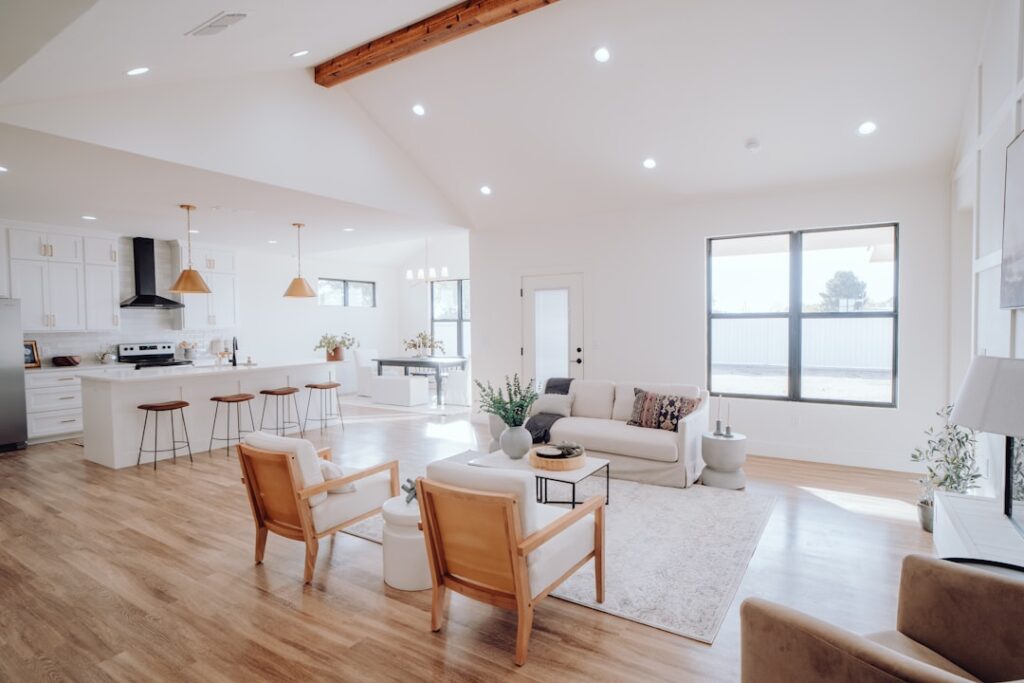
Doma is a Canadian-based engineered hardwood brand that has quietly built distribution into the high-end US design market. Where the mainstream big-box stores stock Bruce and Shaw, design-forward homeowners and interior designers gravitate to doma flooring for the European white oak visuals, wide planks, and herringbone patterns that mass-market brands do not consistently offer. Knowing what you actually get — and what you pay — helps decide whether Doma fits your project.
Who Makes Doma Flooring?
Doma is owned and operated out of Vaughan, Ontario, with manufacturing partners in Europe. The brand sources white oak from sustainable forestry operations in Germany, France, and Croatia, mills the wood into engineered planks at European facilities, and ships finished product to North American distributors.
Doma does not sell through Home Depot or Lowes. Distribution runs through independent flooring showrooms, interior designers, and high-end architectural firms. That positioning keeps prices stable but limits availability — you cannot grab a box on a Saturday for a quick repair.
Doma Product Lines
Current collections include:
- Doma Plank — wide-plank European white oak, 7.5″ and 9.5″ widths; $9 to $14 per sq ft
- Doma Herringbone — classic herringbone pattern in 4″ or 5″ individual blocks; $11 to $16 per sq ft
- Doma Chevron — angled French pattern with mitered ends; $14 to $20 per sq ft
- Doma Parquet — large-format parquet panels in custom geometric patterns; $18 to $30 per sq ft
All Doma products are engineered hardwood with a 4mm to 6mm European oak wear layer over multi-ply Baltic birch plywood core. Thicknesses range from 15mm to 21mm depending on collection.
Visual Quality and Finish Options
Doma’s defining characteristic is the surface treatment range. Options include:
- Brushed and oiled — natural matte finish, easy to spot-repair
- Smoked — ammonia-treated for deeper natural color before staining
- Reactive stained — chemical reactions creating one-of-a-kind color variation
- UV-cured lacquer — modern matte finish with strong wear resistance
- Hard wax oil — Rubio Monocoat and Osmo-grade treatments available
Plank lengths run up to 96 inches on some SKUs, with mixed-length cartons creating a more natural floor pattern than uniform-length budget engineered products.
Pros of Doma Flooring
The European white oak base material is genuinely high quality. Where North American red oak shows strong grain and color variation, European white oak has tighter grain, more consistent color, and accepts stains and reactive finishes more predictably.
The 4mm-plus wear layer means Doma floors can be sanded and refinished two or three times in their service life — comparable to solid hardwood and superior to budget engineered products with 1mm to 2mm veneers.
Herringbone and chevron patterns from Doma are available pre-finished, which is rare and a significant labor saver. Most herringbone projects in the US require unfinished blocks installed, sanded, and finished on site at $15 to $25 per sq ft in additional labor.
Design support is part of the package. Doma representatives work directly with designers and architects on custom finishes, pattern layouts, and stair nosings.
Cons and Limitations
Price is the obvious barrier. At $9 to $20 per sq ft for materials before installation, Doma sits at the top of the residential market. A 1,200 sq ft project lands $20,000 to $35,000 installed — three to five times what mid-tier engineered hardwood costs.
Availability is limited. Doma stocks dealers in major metropolitan areas (NYC, LA, Chicago, Toronto, Vancouver, Miami), but homeowners in smaller cities may have to order through a designer or pay shipping from a regional distributor.
Lead times can stretch 6 to 12 weeks for less common SKUs, especially custom finishes. Plan project timelines accordingly.
Repair availability is the other concern. If you damage a plank in year ten and the specific finish has been discontinued, blending a replacement is harder than with mass-market brands that keep older SKUs in production.
Installation Requirements
Doma engineered hardwood can be installed glue-down over concrete or plywood, nailed-down over plywood, or floated over an underlayment. Most professional installations use glue-down for stability, especially for herringbone and chevron patterns.
Acclimation matters more with European oak than domestic species. Plan on 5 to 7 days of acclimation in the room before installation, with relative humidity between 35 and 55 percent.
Installer skill is critical for herringbone and chevron. The math on layout, the dry-lay before glue-down, and the precision miter cuts all require a wood floor specialist — not a generalist who normally installs LVP.
Doma vs Other Premium Brands
Doma competes with Mirage Engineered, Mercier, Lauzon (also Canadian), and European brands like Bauwerk and Junkers. Pricing is comparable across the premium tier. The differentiators are pattern availability (Doma’s strength), domestic species availability (Mirage and Mercier do North American hardwoods better), and lead times (varies by SKU).
For a homeowner specifically wanting herringbone or chevron in European white oak with reactive finishes, Doma is among the best three or four brands to consider.
Where to Buy Doma
The Doma website lists authorized dealers by region. Start there, then visit a showroom to see actual samples — finishes vary enough that screen photos are not reliable. Get quotes from two or three dealers in your area for the same SKU; pricing can vary 10 to 20 percent.
Bottom Line
Doma flooring is a premium engineered hardwood choice for homeowners who want European white oak, wide planks, and pattern options not available at mainstream retailers. The cost is significant but justified by the wear layer, visual quality, and design support. If budget and lead time allow, Doma delivers floors that hold up for decades and look better with age.
Prefer to explore on your own?
See how new flooring looks in your actual room in seconds — free, no signup.
Try the free Floor Studio →