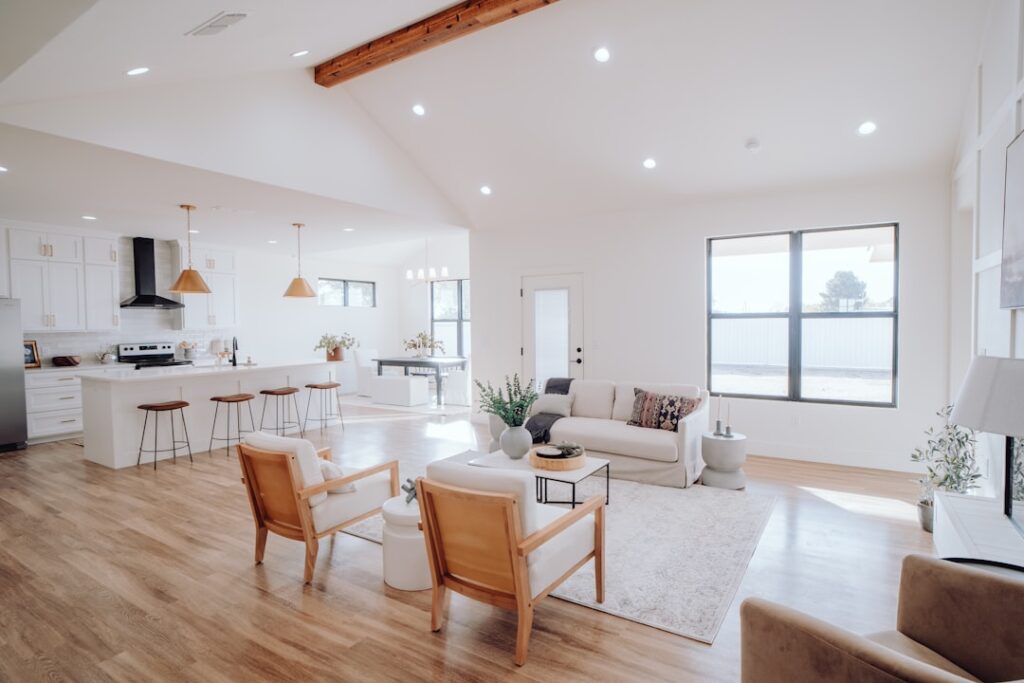
If you’ve found old “DuPont” laminate planks in a home and gone looking to buy more, you’ve probably hit a dead end, and there’s a good reason for that. DuPont flooring refers mainly to laminate flooring once sold under the DuPont name, most notably the “DuPont Real Touch Elite” line, along with DuPont’s broader role in floor finishes and coatings. DuPont is a chemical company, not primarily a flooring manufacturer, so understanding what it actually made, and makes today, saves a lot of confusion. This honest guide lays it out.
- What DuPont Actually Is
- The DuPont Real Touch Elite Story
- DuPont’s Role in Finishes and Coatings
- What This Means for Buyers Today
- How to Evaluate Laminate Like DuPont’s
- Pros and Cons of the DuPont Flooring Legacy
- Buying Tips Going Forward
- What to Do With an Existing DuPont Floor
- Avoiding Brand-Name Confusion
- Other DuPont Surfaces You Might Encounter
- The Bottom Line
What DuPont Actually Is
DuPont is a long-established American chemical and materials company, known for products like Teflon, Tyvek, Kevlar, and Corian solid surface. Flooring has never been its core business. Where DuPont has touched the floor is mostly through licensing its name to laminate products and through the coatings and finishes used on floors, not through running large flooring factories of its own.
That distinction matters because shoppers sometimes assume DuPont is a dedicated flooring brand with a current catalog and dealer network. In practice, DuPont-branded flooring was largely a licensed and time-limited venture.
The DuPont Real Touch Elite Story
For a period, laminate flooring was sold under the DuPont name, including the “Real Touch Elite” line, often through home centers. These were laminate products that carried DuPont branding and finish technology, marketed for realistic wood looks and durability. Over time, the DuPont-branded laminate lines were discontinued and the branding largely faded from the retail flooring market.
If you own this flooring today, finding exact-match replacement planks can be difficult because the lines are no longer in regular production. That’s a common reality with discontinued, licensed-brand flooring.
DuPont’s Role in Finishes and Coatings
Beyond branded laminate, DuPont’s more lasting flooring connection is chemistry. The company has been associated with floor finishes, coatings, and protective technologies used in flooring products, the kind of wear-layer and surface science that makes a laminate or a coating durable. So while DuPont may not be milling planks, its materials science has historically played a behind-the-scenes role in how floors are protected.
What This Means for Buyers Today
Be realistic about what you can and can’t buy. Practical takeaways:
- Don’t expect a current DuPont flooring catalog: The branded laminate lines are largely discontinued.
- Matching old DuPont laminate is hard: Treat it like any discontinued floor and look for close visual matches from current brands.
- Verify any “DuPont flooring” listing: Older stock, third-party sellers, or relabeled product may appear; confirm what you’re actually getting.
- Focus on specs, not the name: Judge any laminate by its wear layer, AC rating, and warranty rather than a legacy brand badge.
How to Evaluate Laminate Like DuPont’s
If you liked the look and performance of old DuPont laminate, shop current products by the metrics that actually matter:
- AC rating: AC3 for residential, AC4 to AC5 for heavy or light-commercial traffic.
- Wear layer and core: A dense HDF core resists impacts and edge chipping.
- Water resistance: Look for water-resistant or waterproof cores if moisture is a concern.
- Texture and visuals: Embossed-in-register surfaces give the most realistic wood feel.
- Warranty: Compare residential wear warranties, typically 15 to 30 years.
Pros and Cons of the DuPont Flooring Legacy
Looking back honestly:
- Pro: DuPont-branded laminate brought recognizable finish technology and decent durability in its day.
- Pro: DuPont’s coatings expertise contributed to wear-resistant surfaces broadly.
- Con: The branded flooring lines are discontinued, making replacement and matching difficult.
- Con: The name can mislead shoppers into thinking it’s a current, full-line flooring brand.
Buying Tips Going Forward
Whether you’re matching old DuPont floors or just shopping smart:
- If matching, bring a plank sample to a flooring store to find the closest current product.
- Buy laminate by AC rating, core type, and warranty rather than brand nostalgia.
- Order extra boxes from the same lot so future repairs match.
- Verify the seller and product details on any item marketed as “DuPont flooring.”
- Acclimate and install per the actual product’s instructions to protect the warranty.
What to Do With an Existing DuPont Floor
If you already have DuPont laminate and need to repair or extend it, take a practical approach:
- Pull a spare plank from a closet or under an appliance and bring it to a flooring store.
- Ask for the closest current laminate match in color, plank size, and finish.
- For small repairs, search for old new-old-stock boxes through resellers, but verify condition and lot.
- If matching is impossible, consider replacing a full room rather than patching mismatched planks.
- Keep any leftover original planks you find as future repair stock.
Discontinued floors are a normal reality, and the strategies above apply whether the brand is DuPont or any other line no longer in production.
Avoiding Brand-Name Confusion
The flooring market is full of names that imply more than they deliver, and legacy or licensed brands are a common source of confusion. A floor carrying a famous chemical or materials brand isn’t automatically better than a current product engineered to a high AC rating with a thick wear layer and a strong warranty. When you shop, let the specifications, not the badge, drive your decision. A well-built modern laminate from a reputable current manufacturer will almost always serve you better than chasing a discontinued name for nostalgia’s sake. Read the spec sheet, compare warranties, and judge the product on its merits.
Other DuPont Surfaces You Might Encounter
While DuPont-branded laminate has faded, the company’s name appears on other home surfaces, which adds to the confusion. DuPont developed Corian, a popular solid-surface material used mainly for countertops, and Zodiaq quartz surfacing, both of which are surfacing products rather than flooring. People sometimes assume these signal a broad DuPont flooring line, but they don’t. If you’re researching DuPont for a home project, be precise about what you’re after: countertops and solid surface are a different category from flooring entirely. For floors specifically, the practical reality remains that DuPont is not a current full-line flooring manufacturer, so your shopping should center on dedicated flooring brands and the specifications that matter, not the DuPont name.
The Bottom Line
DuPont flooring is best understood as a legacy: laminate lines like Real Touch Elite that carried the DuPont name and are now largely discontinued, plus DuPont’s behind-the-scenes role in floor coatings and finishes. DuPont is a chemical company, not a current full-line flooring maker. If you have old DuPont laminate, treat it as discontinued and match by appearance and specs, and when buying new, judge any laminate by its AC rating, core, and warranty rather than the name on the box.
Prefer to explore on your own?
See how new flooring looks in your actual room in seconds — free, no signup.
Try the free Floor Studio →