
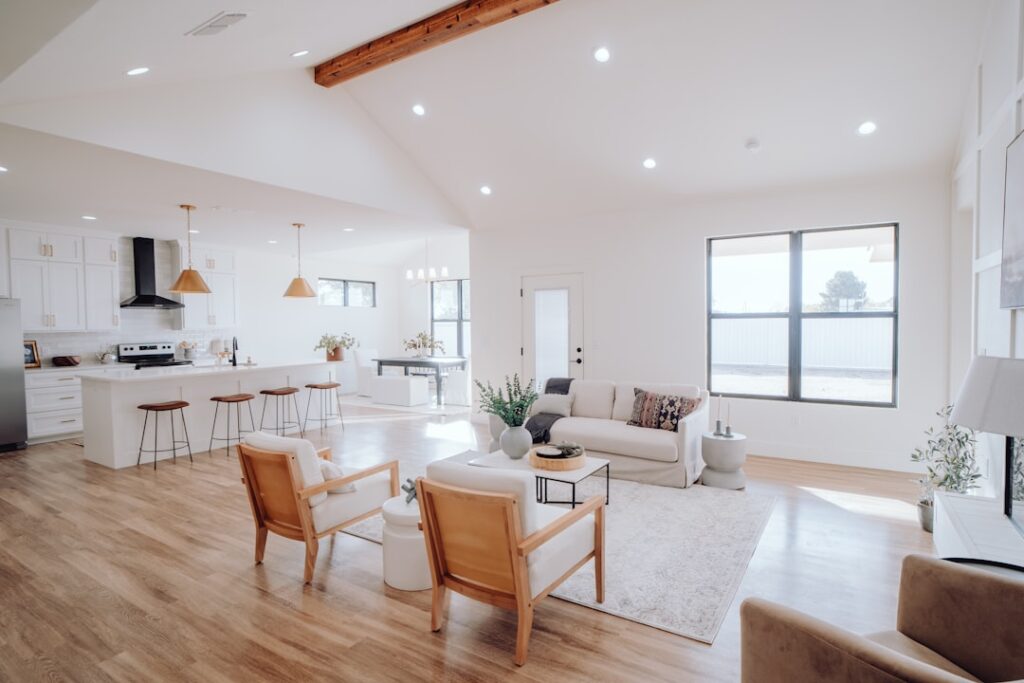
Step onto a tile bathroom floor on a winter morning and you immediately understand why heated floors feel like a luxury. Electric flooring, more precisely electric underfloor or radiant heating, uses thin heating cables or mats installed beneath your finished floor to warm the surface directly. Instead of blowing hot air around, it radiates gentle, even heat upward from the ground, eliminating cold spots and drafts. It is one of the most popular bathroom and kitchen upgrades because the system is thin, retrofit-friendly, and dramatically improves comfort underfoot.
How Electric Underfloor Heating Works
The system is essentially a resistive heating element that warms when current passes through it. A thin cable, usually 1/8-inch, is either pre-spaced on a mesh mat or loose-laid in a serpentine pattern, then embedded in thinset, self-leveling compound, or under the floor covering. A floor sensor and programmable thermostat control the temperature, switching the element on and off to hold the floor at a set warmth, typically around 80F to 84F at the surface. Because the heat rises from the entire floor, rooms feel warm at a lower air temperature.
System Types
Electric radiant comes in a few formats for different installations.
- Heating mats: Cable pre-attached to mesh, rolled out across the floor. Fastest install for open areas.
- Loose cable: Bare cable spaced by hand for irregular rooms and tight layouts. More labor, better coverage of odd shapes.
- Foil and film mats: Thin heating film designed for floating floors like laminate and engineered wood.
Mats suit square rooms, loose cable suits complex layouts, and film mats are made specifically for floating floor systems.
What It Costs to Install and Run
Material for electric radiant typically runs $8 to $15 per sq ft, with mats on the lower end and premium systems higher. Add installation labor and a new thermostat, usually $150 to $250 each. Because electric systems are most economical in smaller rooms, they shine in bathrooms, kitchens, and entryways rather than whole houses. Running costs depend on local electricity rates and usage, but a typical bathroom used a few hours a day costs only a modest amount per month, especially with a programmable thermostat that heats just before you need it.
Best Floor Coverings for Radiant Heat
Not every floor pairs well with electric heat.
- Tile and stone: The ideal partner, conducting and holding heat efficiently.
- Engineered wood and laminate: Compatible if rated for radiant heat, with temperature limits to prevent gapping.
- Luxury vinyl: Many LVP and SPC products allow radiant heat up to about 82F to 85F, check the spec.
- Carpet: Possible but inefficient, as thick carpet and pad insulate against the heat.
Always confirm the floor covering’s manufacturer approves radiant heat and respect their maximum surface temperature.
Pros and Cons of Electric Flooring
Radiant heat is comfortable and clean, but it has trade-offs.
- Pros: Even, draft-free warmth; silent operation; no blown dust or allergens; thin profile that barely raises floor height; zone control room by room; and easy retrofit during a floor replacement.
- Cons: Higher running cost than hydronic for large areas; best as supplemental rather than whole-home heat; the element is buried, so repairs mean lifting the floor; and electrical work usually requires a licensed electrician for the dedicated circuit and thermostat wiring.
Installation Basics
Plan the layout to keep the element out from under fixed cabinets, toilets, and tubs, where trapped heat serves no purpose. Test the cable resistance before, during, and after installation to catch any damage from a stray trowel. Embed the element in thinset or self-leveling compound for tile, then install the floor as normal. The thermostat and dedicated circuit should be wired by a licensed electrician to meet code, including GFCI protection in wet areas.
Electric vs Hydronic Radiant
Electric is one of two radiant approaches, and knowing the difference clarifies when each makes sense. Hydronic systems pump warm water through tubing in the floor, heated by a boiler, and are far more economical to run over large areas, which makes them the choice for whole-home heating in new construction. The trade-off is a much higher install cost and complexity, including a boiler, manifolds, and pumps. Electric systems flip that: cheap and simple to install, especially as a retrofit during a single room’s floor replacement, but more expensive per hour to run. The rule of thumb is electric for small targeted rooms and remodels, hydronic for whole houses and ground-up builds.
Sizing the System and Thermostat Features
Getting the coverage right is critical, because the heating element should fill the open, walkable floor area but never run under cabinets, vanities, or large fixed appliances where the heat is wasted and can overheat the cable. Measure the net heated area carefully and order a mat or cable kit rated for it; do not cut or overlap heating cable to make it fit. On the control side, a programmable or smart thermostat pays for itself by warming the floor only on a schedule, say 30 to 60 minutes before you wake, rather than running constantly. Floor-sensing thermostats hold the surface at a set temperature and many now offer app control and energy monitoring so you can track exactly what the floor costs to run.
Is It Worth It?
For bathrooms, kitchens, and entries, electric flooring delivers a comfort upgrade that most homeowners say is among the best money they spent in a renovation. It is best deployed in targeted rooms as supplemental heat, where its low install footprint and zone control shine. Pair it with tile or a radiant-rated floor, use a programmable thermostat, and you get warm floors on demand without the cold-tile shock that drives the whole upgrade in the first place.
Prefer to explore on your own?
See how new flooring looks in your actual room in seconds — free, no signup.
Try the free Floor Studio →

