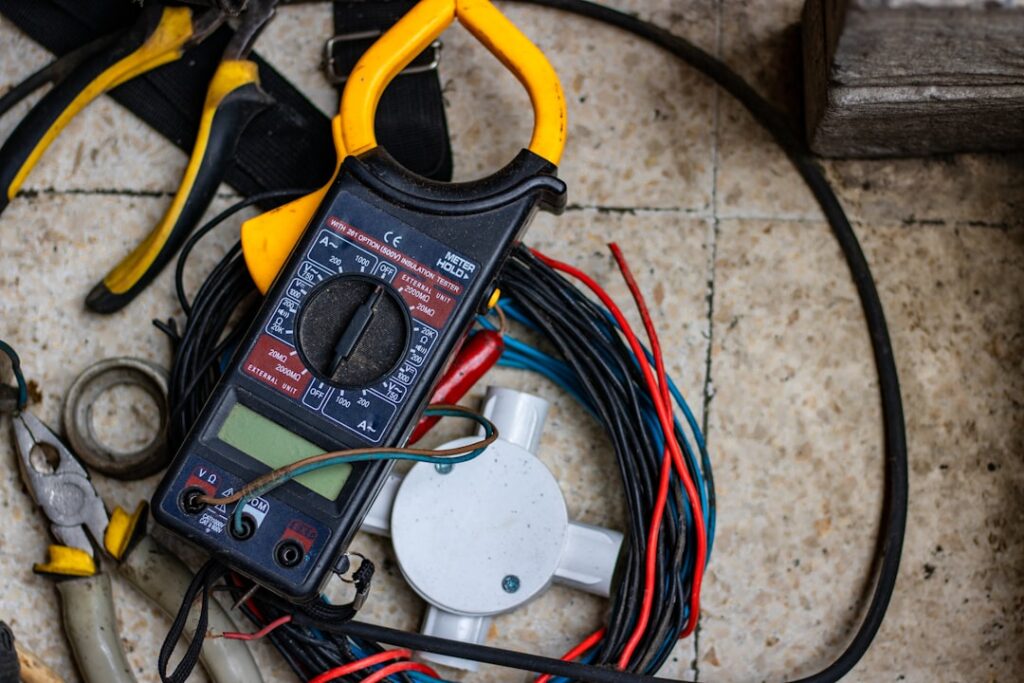
Sizing the wire for a kitchen range trips up a lot of homeowners, and getting it wrong is genuinely dangerous. The correct electric range wire size depends on the appliance’s amperage rating and the breaker protecting the circuit, and for most modern ranges that means a dedicated 240-volt circuit with heavy copper conductors. This article explains how to read your range’s rating, match it to the right gauge, and understand the circuit, while being clear about where the line is between homeowner knowledge and licensed work.
- Start With the Range's Amperage Rating
- Matching Amperage to Wire Gauge
- Why 6 AWG Comes Up So Often
- The Circuit: 240 Volts and a Dedicated Run
- Cable Type and Installation Details
- Safety and When to Call a Licensed Electrician
- Cost of Wiring or Upgrading a Range Circuit
- Signs Your Existing Circuit Needs Attention
- Frequently Asked Questions
Before anything else: a 240-volt range circuit carries enough current to start fires and cause fatal shocks. Installing or altering one should be done by a licensed electrician who pulls a permit and has the work inspected. Treat the information below as a way to understand the job and talk intelligently with your pro, not as a green light to rewire your kitchen yourself.
Start With the Range’s Amperage Rating
Every electric range lists its power draw on a nameplate, usually inside the door frame or on the back, and in the installation manual. That rating drives every wiring decision. Most standalone electric ranges fall into one of these bands:
- Small or apartment ranges: around 30 amps.
- Standard full-size ranges: 40 amps, by far the most common.
- Large or high-output ranges: 50 amps.
- Pro-style and double-oven units: sometimes 50 amps or more, occasionally requiring 60 amps.
You never guess this number. Read the nameplate, confirm it in the manual, and size the circuit to match the manufacturer’s requirement. The breaker and wire are selected for that specific appliance.
Matching Amperage to Wire Gauge
Wire gauge is measured in AWG, and the smaller the number, the thicker the wire. For a typical 240-volt residential range, the general pairing of copper conductors to circuit size looks like this:
- 30-amp circuit: 10 AWG copper.
- 40-amp circuit: 8 AWG copper.
- 50-amp circuit: 6 AWG copper.
Because so many full-size ranges land at 40 to 50 amps, 6 AWG copper on a dedicated 240-volt circuit is a common and code-aligned choice for a 50-amp setup, and it also has capacity to spare on a 40-amp breaker. Many electricians run 6 AWG so the circuit can serve a larger future range without a rewire. Smaller ranges genuinely rated at 30 amps may use 8 or 10 AWG, which is why reading your specific nameplate matters so much.
Aluminum wire uses a different, larger sizing chart and different terminations, so never assume aluminum and copper interchange. A pro will select the conductor material and gauge together.
Why 6 AWG Comes Up So Often
The reason 6 AWG copper is the default answer for many kitchens is simple: it comfortably carries the 40-to-50-amp load that standard and large ranges demand, and it gives headroom. A 50-amp breaker requires 6 AWG copper conductors, and since ranges creep upward in power over the years, sizing the circuit for 50 amps future-proofs the kitchen. Undersizing, on the other hand, causes the wire to overheat under load, which degrades insulation and creates a fire risk long before the breaker ever trips.
The breaker protects the wire, not the appliance, so the breaker and conductor must be matched. You cannot put a 50-amp breaker on a circuit wired with 8 AWG and expect it to be safe, because the breaker would let the thinner wire overheat.
The Circuit: 240 Volts and a Dedicated Run
An electric range needs its own dedicated 240-volt circuit; it cannot share with other outlets or appliances. Modern installations use a four-conductor cable: two hot legs, a neutral, and a ground. The two hots provide the 240 volts for the heating elements, while the neutral and ground handle the 120-volt controls and safety grounding.
Older homes sometimes have three-wire range circuits without a separate ground. Current code calls for the four-wire configuration on new work, and this is one more reason to involve a licensed electrician who knows what your jurisdiction requires. The receptacle, typically a 14-50R for a 50-amp circuit, must match both the breaker and the range’s cord.
Cable Type and Installation Details
The wire does not run bare. For a range it is usually installed as part of a cable assembly or pulled through conduit, and the type depends on the route:
- Nonmetallic sheathed cable rated for the gauge, run inside walls and floors.
- Individual THHN conductors pulled through conduit in exposed runs like a basement or garage.
- Correctly sized wire connectors and a properly rated receptacle at the appliance.
Distance matters too. On long runs the voltage drop can be enough that an electrician sizes up a gauge to compensate. A short run in a compact home may not need that, but a range far from the panel might. This is a calculation, not a guess, and it is another reason to leave the final sizing to a professional.
Safety and When to Call a Licensed Electrician
Here is the honest boundary. Reading a nameplate, understanding gauges, and confirming your electrician’s plan are all reasonable homeowner activities. Actually installing or modifying a 240-volt circuit is not a casual DIY project. If you ever do open a panel or work near this circuit, at minimum:
- Shut off the correct breaker and, ideally, the main.
- Verify the circuit is dead with a tested voltage tester before touching a conductor.
- Never work on a live 240-volt circuit.
Even with those precautions, permit-pulled, inspected work by a licensed electrician is the right call for a range circuit. The cost of a pro is small against the risk of a fire or a shock, and an inspection protects you when you sell the home. If you are unsure about anything, from the nameplate rating to the breaker size, stop and hire a licensed electrician.
Cost of Wiring or Upgrading a Range Circuit
Knowing rough numbers helps you plan and spot a fair quote. Prices vary by region, wire length, and whether the panel has a spare slot, but these ranges are typical:
- New dedicated circuit, short run: roughly $300 to $800 in labor and materials when the panel is close and has capacity.
- Longer runs through finished walls: $800 to $1,500 once drywall repair and fishing cable are involved.
- Panel upgrade or added breaker space: $1,500 to $4,000 if the service or panel needs work first.
- Receptacle and cord swap only: $150 to $400 when the circuit already exists and just needs the right outlet.
Permit fees are usually modest, often $50 to $200, and they buy you an inspection that confirms the work is safe. That inspection is not red tape; it is a second set of trained eyes on a circuit that can kill.
Signs Your Existing Circuit Needs Attention
If you are replacing a range rather than wiring new construction, check the existing circuit before you assume it is fine. A few warning signs tell you to call an electrician before plugging in a new appliance:
- A three-prong outlet where the new range expects a four-prong cord, which signals an older ungrounded circuit.
- A breaker that trips when the oven and elements run together, hinting the circuit is undersized for the new range.
- Warm or discolored receptacle faces, which point to loose or overheating connections.
- A new range with a higher amperage rating than the old one, which may outgrow the existing wire.
Matching a modern range to a decades-old circuit is exactly where undersized wire hides, so verify the gauge and the breaker before the delivery truck leaves.
Frequently Asked Questions
What wire size do I need for a 50-amp electric range?
A 50-amp 240-volt range circuit typically uses 6 AWG copper conductors on a dedicated circuit. Always confirm against your range’s nameplate rating, and have a licensed electrician verify the sizing and installation.
Can I use 8 AWG wire for an electric range?
8 AWG copper suits a 40-amp circuit, which many standard ranges use. It is not adequate for a 50-amp breaker. Match the wire to both the breaker and the appliance’s rating, and let a professional confirm the pairing.
Does an electric range need 240 volts?
Yes. Standard electric ranges run on a dedicated 240-volt circuit, using two hot legs plus a neutral and ground in modern four-wire installations. They cannot share a circuit with other outlets or appliances.
Is wiring a range circuit a DIY job?
It should not be treated as one. A 240-volt range circuit carries lethal current, and code compliance and inspection matter. Hire a licensed electrician who pulls a permit; understanding the electric range wire size just helps you plan and communicate.
Get the electric range wire size right by starting from the nameplate, matching the gauge to the breaker, and respecting the 240-volt circuit’s demands. For most full-size ranges that points to 6 AWG copper, but the safe, correct path is always to have a licensed electrician size and install the circuit under permit.