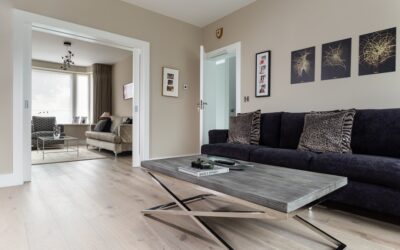
Melbourne’s notorious four-seasons-in-one-day climate is brutal on solid timber. Floorboards expand during humid summers, contract during dry winters, and develop gaps you can drop a coin into by the time the second year rolls around. Engineered flooring Melbourne homeowners install today is built specifically to handle that swing, with a multi-layer plywood core that stays dimensionally stable when solid oak would cup or crown.
This guide breaks down what to look for, where to buy it, and what installation actually costs in the Melbourne metro in 2026. Expect to spend AUD $90 to $220 per square meter supplied and installed depending on species and grade.
Why Engineered Beats Solid in Melbourne’s Climate
Solid hardwood is one continuous piece of timber, so it moves with humidity. Engineered planks consist of a 3 to 6 mm hardwood wear layer bonded over five to nine layers of cross-grained plywood. The cross-graining cancels out movement in all directions, which is exactly what you want when daytime humidity hits 75 percent and overnight drops to 30 percent.
That stability also lets you install engineered boards over concrete slabs and hydronic underfloor heating, both of which would destroy a solid timber floor. In Melbourne’s growing apartment market and slab-on-grade townhouses, that compatibility is non-negotiable.
Popular Species for Victorian Homes
European oak dominates the Melbourne market, but Australian native species are making a strong comeback as buyers look for local provenance. The choice comes down to grain character, hardness, and how closely you want to match existing trim or cabinetry.
- European oak: $95 to $160 per sqm, Janka 1,360, light golden tones
- Spotted gum: $130 to $180 per sqm, Janka 2,470, warm chocolate streaks
- Blackbutt: $120 to $170 per sqm, Janka 2,030, pale honey color
- Jarrah: $150 to $220 per sqm, Janka 1,910, deep red heritage look
- American walnut: $180 to $250 per sqm, Janka 1,010, rich dark brown
For high-traffic family homes, anything above Janka 1,800 will resist dog claws and dropped toys far better than soft European oak.
Wear Layer Thickness Matters
The hardwood top layer determines how many times you can sand and refinish the floor. A 2 mm wear layer is essentially single-use, while a 6 mm layer can be refinished three or four times over a 30 to 50 year lifespan.
For a forever home, insist on 4 mm minimum and ideally 6 mm. For a rental or a property you plan to flip in five years, 2 to 3 mm saves money without sacrificing the look. The plank surface looks identical regardless of wear layer depth.
Where to Buy in Melbourne
The metro area has dozens of timber flooring suppliers, but a handful consistently deliver on quality and after-sales support. Visit at least three before committing to a purchase, and always ask for full-size sample boards rather than 100 mm chips.
- Hurford Hardwood (Brunswick): Australian-made, strong native species range
- Premium Floors (Notting Hill): Quick-Step and Clever Choice ranges
- Carpet Court (multiple locations): Quickly available oak in stock
- Choices Flooring (Heidelberg, Cheltenham): Godfrey Hirst engineered range
- Floors Direct (Dandenong): Trade pricing on European imports
Online direct importers like Hurford and Decor8 sometimes undercut showroom prices by 20 to 30 percent, but you handle delivery and installation arrangements separately.
Installation Methods and Costs
The three installation methods used for engineered flooring Melbourne contractors offer are floating (click-lock), glue-down, and secret nailing. Floating is fastest and least expensive, glue-down provides the most solid feel underfoot, and secret nailing is reserved for traditional timber subfloors.
- Floating install: AUD $35 to $55 per sqm labor, no underfloor preparation
- Glue-down install: AUD $55 to $85 per sqm labor, requires moisture-tested slab
- Secret nail install: AUD $65 to $90 per sqm labor, timber subfloor only
Add AUD $15 to $25 per sqm for slab moisture testing and damp-proof membrane on concrete substrates. Skipping the moisture test is the single biggest cause of warranty claims in Melbourne’s notoriously damp inner-city slabs.
Warranty and Australian Standards
Look for products certified to Australian Standard AS/NZS 4587 for stability and AS 1684 for structural compatibility. Reputable engineered floors carry a 25-year residential structural warranty and a 10 to 15 year wear-layer warranty.
Cheap imported brands often advertise lifetime warranties that exclude practically every realistic failure mode. Read the warranty document, not the marketing flyer, before signing the order.
Maintenance in the Melbourne Climate
Engineered floors need humidity control between 35 and 65 percent year-round. Most Melbourne homes sit in that range naturally except during August dry snaps and February heatwaves. A small evaporative humidifier in winter and avoiding wet-mopping in summer will keep the floor flat for decades.
Sweep daily, vacuum weekly with a hard-floor head, and clean spills with a barely damp microfiber. Use only pH-neutral cleaners specifically labeled for prefinished engineered timber. Bona Hardwood Floor Cleaner remains the gold standard at around AUD $25 per liter.
Frequently Asked Questions
Can engineered flooring go over existing tiles?
Yes if the tile is level, well-bonded, and properly sealed. Floating installations work best in this scenario.
How long does engineered flooring last in Melbourne?
A 4 to 6 mm wear layer floor lasts 30 to 50 years with one or two refinishes during that span.
Is engineered flooring waterproof?
No. It tolerates spills better than solid timber but standing water will still damage it. Wipe up immediately.
Do I need underlay for floating installation?
Yes. A 2 mm acoustic underlay is mandatory in most apartment buildings and improves the feel underfoot in houses.
Can I install engineered flooring myself?
Click-lock floating systems are achievable for confident DIYers with patience and basic carpentry tools. Glue-down and nailing installations should be left to licensed installers to preserve the manufacturer warranty and ensure proper expansion gaps around the perimeter.
Does engineered flooring work with pets?
Yes when you choose a wear layer of 4 mm or more in a harder species like spotted gum or jarrah. Trim pet nails regularly and place mats at exterior doors to catch grit before it reaches the floor.
Prefer to explore on your own?
See how new flooring looks in your actual room in seconds — free, no signup.
Try the free Floor Studio →