Fort Wayne winters are hard on garage floors. Road salt, slush, and the relentless freeze-thaw cycle of northern Indiana attack bare concrete, leaving it pitted, stained, and dusty. That’s exactly why epoxy flooring Fort Wayne homeowners install has become such a popular upgrade. A properly applied epoxy coating seals the concrete, resists salt and chemicals, and turns a tired garage into a clean, easy-to-mop surface. But epoxy only performs if it’s installed correctly for the local climate, and Indiana’s temperature swings make proper prep and product selection non-negotiable.
Why Epoxy Suits Fort Wayne Garages
The Allen County climate combines cold, wet winters with humid summers, a tough combination for unprotected concrete. Salt and de-icer tracked in on tires seep into porous concrete and accelerate spalling. A quality epoxy coating creates a non-porous barrier that blocks salt, oil, antifreeze, and moisture from penetrating the slab.
The payoff is a floor that wipes clean, brightens the whole garage by reflecting light, and resists the staining that plagues bare concrete. For homeowners who use the garage as a workshop or gym, the seamless, dust-free surface is a major quality-of-life upgrade.
The Freeze-Thaw Challenge
Here’s where Fort Wayne installs differ from those in warm climates. Epoxy must be applied within a specific temperature range, typically above 50°F to 60°F for the concrete and air, and it needs that range to hold throughout curing. In an unheated garage during a Fort Wayne winter, that’s impossible, so most installs happen from late spring through early fall.
Moisture is the other concern. Cold slabs can carry vapor that pushes up through the coating and causes peeling. A reputable installer performs a moisture test, often a calcium chloride or plastic-sheet test, before coating, and uses a moisture-tolerant primer when needed. Skipping this step is the most common cause of epoxy failure in the Midwest.
Epoxy Systems and Their Costs
Not all epoxy is equal, and the system you choose affects both durability and price:
- DIY water-based epoxy kits: $0.50 to $1.50 per square foot in materials. Thin, less durable, and prone to peeling without proper prep.
- Professional solid epoxy with flakes: $4 to $8 per square foot installed. The popular decorative-flake garage system, durable and attractive.
- Polyaspartic and polyurea topcoats: $5 to $12 per square foot. Cure fast even in cooler temps and resist UV yellowing, making them ideal for the short Indiana install season.
For a standard two-car garage of about 400 to 500 square feet, a professional flake system typically runs $2,000 to $4,000.
Surface Prep Is Everything
The single biggest predictor of an epoxy floor’s lifespan is preparation. Concrete must be mechanically profiled, ideally by diamond grinding or shot blasting, not just acid-etched, so the coating bonds into the surface. Oil stains must be degreased, and cracks and pits filled before coating.
This is why the cheapest bids often disappoint. A contractor who grinds the slab, fills imperfections, and primes properly is investing the labor that keeps your floor from peeling under hot-tire pickup, the phenomenon where warm tires lift poorly bonded coatings. Ask any installer exactly how they’ll profile your concrete; “we just etch it” is a warning sign.
Choosing a Fort Wayne Installer
Local experience with Indiana’s climate matters. When vetting installers, confirm:
- They diamond-grind or shot-blast rather than only acid-etch.
- They perform moisture testing before coating.
- They use a fast-curing polyaspartic topcoat for durability and UV stability.
- They carry liability insurance and offer a written warranty.
- They have local references and photos of completed Fort Wayne garages.
Color, Flake, and Finish Options
Beyond protection, epoxy lets you customize the look of a garage or basement floor. The most popular residential choice is a flake (or chip) system, where colored vinyl flakes are broadcast into the wet base coat to create a speckled, terrazzo-like finish. Flakes hide dirt and minor imperfections and add slip resistance, which is welcome on a floor that sees melting snow.
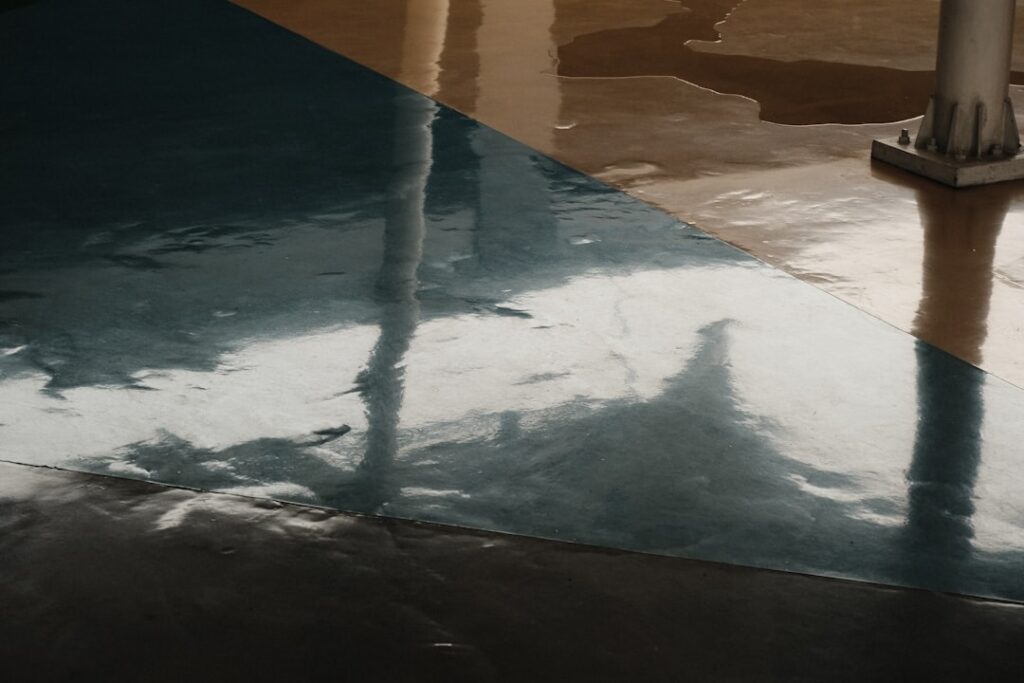
You can also choose solid colors, metallic epoxy for a marbled high-gloss look, or a quartz-broadcast system for heavy-duty slip resistance. Standard flake colors range from grays and tans to blue and black blends, letting you match the garage to the home. A matte or satin topcoat reduces glare and shows fewer tire marks than high gloss, a practical consideration for a working garage.
Indoor Uses Beyond the Garage
While garages are the most common application, epoxy works well in other Fort Wayne spaces that face moisture or heavy wear. Unfinished basements benefit from epoxy because it seals the slab against the damp that northern Indiana basements often battle, creating a clean, finished surface that resists musty odors and is easy to mop.
Workshops, laundry rooms, and mudrooms are also good candidates, since epoxy shrugs off chemicals, water, and foot traffic. In a basement, pairing epoxy with proper exterior drainage and a dehumidifier addresses the moisture at its source while the coating handles the surface. Just remember the same temperature and moisture-testing rules apply indoors as in the garage, so schedule the work when the slab is warm and dry enough to cure properly.
Maintenance and Longevity
A well-installed epoxy floor in Fort Wayne can last 10 to 20 years with simple care. In winter, let slush and salt drip off, then mop occasionally with a mild cleaner to remove de-icer residue before it dulls the finish. Place a mat under vehicles during the worst of the salt season for extra protection.
Avoid harsh solvents and sharp metal scraping, which can gouge the topcoat. With a quality polyaspartic finish and minimal upkeep, epoxy flooring Fort Wayne residents install will stay bright and salt-proof through many brutal Indiana winters. Match the right system to a contractor who respects prep, moisture testing, and the local install season, and your garage floor becomes one of the best-performing surfaces in the house.