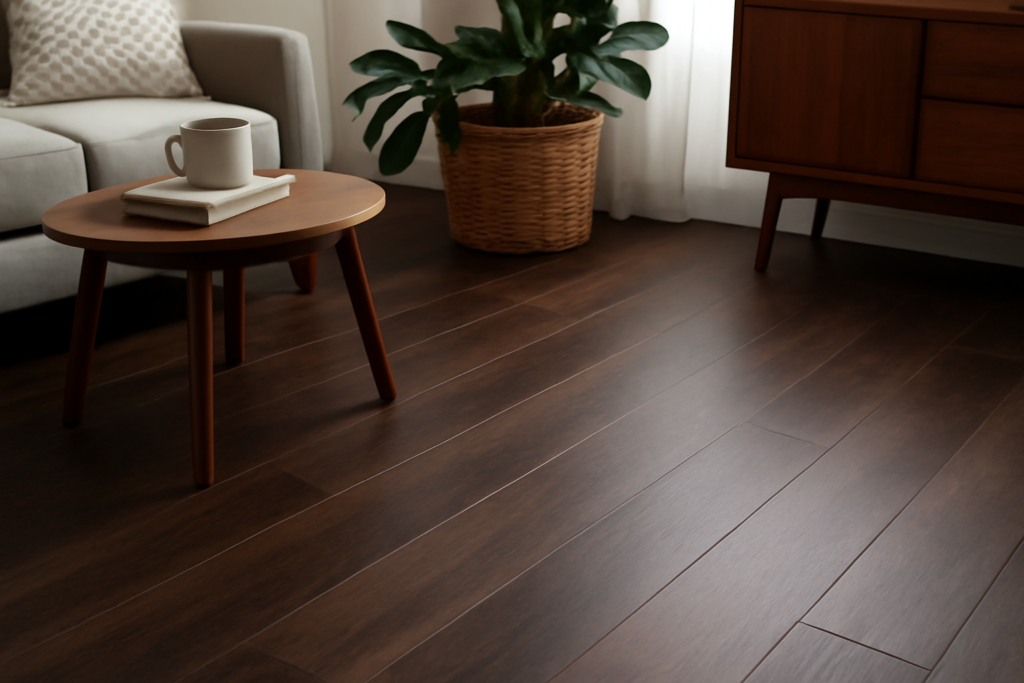
Few flooring choices feel as instantly upscale as a deep, coffee-colored floor stretching wall to wall. Espresso vinyl plank flooring takes the near-black richness of espresso-stained hardwood and delivers it in a waterproof, budget-friendly, dent-resistant plank. The color reads as sophisticated and grounding, anchoring a room the way a dark suit anchors an outfit. It is a genuinely beautiful look, but dark floors ask something of you in return, and knowing the trade-offs up front keeps you happy with the choice.
What “Espresso” Really Looks Like
Espresso is not simply brown or black. It is a very dark brown with warm undertones, often carrying hints of chocolate, mahogany, or even a whisper of red depending on the manufacturer. The best planks layer in subtle grain, knots, and tonal variation so the floor does not read as a flat black slab. That variation is what keeps a dark floor from feeling like a void and gives it the depth of real oak or walnut.
When you shop, look at how much grain contrast a plank has. More visible grain and color movement helps the floor look natural and, conveniently, disguises dust and scuffs better than a uniform matte black.
The Rich Look and What It Does to a Room
Dark floors carry real design power. They create contrast under light walls and cabinetry, making whites and creams pop and giving a space a crisp, tailored feel. They convey warmth and formality at once, which is why espresso tones are a staple in traditional homes, transitional kitchens, and moody modern lofts alike. A dark floor also visually grounds a room, drawing the eye down and making tall furniture and light walls feel balanced.
Because it absorbs rather than reflects light, espresso flooring can make a large, bright room feel cozier and more intimate. In a small, dim room, however, it can close the space down, so pair it with good lighting.
The Honest Downside: Dust and Scratches
Here is the truth every dark-floor owner learns fast. Espresso vinyl plank flooring shows dust, pet hair, lint, and footprints far more readily than a light or mid-tone floor. The same darkness that looks so elegant also acts as a backdrop that highlights every crumb and dry-skin smudge. You will sweep and dust more often, and in a household with pets or kids, that means daily attention to keep it looking its best.
Scratches are the second concern. On a dark surface, a scuff exposes the lighter core or wear layer beneath, creating a visible pale line. A higher-quality wear layer and a matte or textured finish help enormously, both by resisting scratches and by scattering light so minor marks are less obvious.
How to Keep It Looking Sharp
Maintenance is manageable with the right routine and products.
- Sweep or dust-mop daily with a microfiber pad that grabs fine particles
- Choose a matte or low-sheen plank to hide dust far better than glossy
- Use felt pads under all furniture legs to prevent pale scratch lines
- Place mats at entries to trap grit that scours the finish
- Damp-mop with a pH-neutral cleaner, avoiding streaky all-purpose sprays
A textured, hand-scraped, or wire-brushed embossing is your friend here, since the surface variation camouflages both dust and hairline wear between cleanings.
What to Pair It With
Espresso is a strong neutral that plays well with plenty of palettes. Bright white cabinets and trim create the classic high-contrast kitchen look that feels clean and timeless. Warm grays and greiges soften the contrast for a calmer, transitional feel. For warmth, pair espresso floors with cream, camel, brass, and natural wood tones; for drama, lean into charcoal, deep green, or navy. Just be cautious mixing espresso floors with espresso furniture, since too much dark in one space can feel heavy and flatten the room.
Bring in area rugs with lighter grounds to break up large expanses and add softness, and keep window treatments light to preserve balance.
Light, Room Size, and How Espresso Reads
Because a dark floor absorbs light rather than bouncing it around, the amount of light in a room dramatically changes how espresso flooring looks and feels. In a bright, sun-filled space with big windows, an espresso floor looks rich and luxurious, and the light keeps the room from feeling closed in. In a dim room with small windows or northern exposure, the same floor can make the space feel smaller, heavier, and cave-like.
Room size matters too. In a large open-plan area, dark flooring adds grounding and drama without any downside. In a small, low-light room, consider layering in lighter walls, a pale rug, and plenty of lamps to balance the darkness, or reserve espresso for the rooms that can carry it. Testing a sample on the floor at different times of day, morning, midday, and evening, tells you far more than a showroom ever will.
What to Expect on Installation Day
Espresso planks install like any other quality luxury vinyl, but a few habits protect that flawless dark surface. Because scratches and scuffs show so clearly, keep grit off the subfloor during installation and avoid dragging tools or boxes across finished sections. A clean, well-leveled subfloor matters extra here, since any low spot that lets a plank flex will eventually reveal itself as a shiny wear line on the dark surface.
After installation, hold off on placing heavy furniture for 24 hours if you used any adhesive, and add felt pads to every leg before pieces go down for good. Lay down entry mats immediately so tracked-in sand never gets a chance to scour the finish. The extra care during setup pays off in how long the floor keeps that showroom-fresh, deep espresso glow.
Is Espresso Right for Your Home?
Choose espresso vinyl plank flooring if you love a formal, high-contrast, richly grounded look and you are realistic about cleaning frequency. It rewards homes with good natural or artificial light, light walls to play against, and owners who do not mind a quick daily sweep. If you have shedding pets, a sandy entry, or a strong preference for low-maintenance floors, a mid-tone wood-look plank hides life’s debris more forgivingly. Matched to the right room and routine, though, an espresso floor delivers a level of drama and sophistication that few other colors can touch. When you shop, prioritize a thick wear layer of at least 20 mil for busy homes, a matte or textured embossed surface, and a plank with visible grain movement rather than a flat, uniform tone. Those three features do the most to keep an espresso floor looking rich while quietly forgiving the dust and scuffs that dark flooring is prone to showing.
Prefer to explore on your own?
See how new flooring looks in your actual room in seconds — free, no signup.
Try the free Floor Studio →