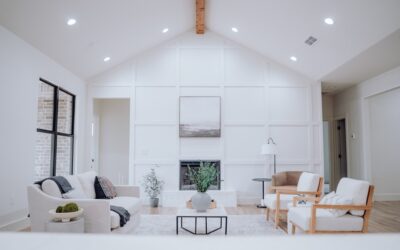
Farmhouse style has dominated US interior design for almost a decade, and flooring is where most renovations make or break the look. Real reclaimed barnwood costs $14-$22 per square foot installed and arrives full of nails, splits, and lead paint surprises. Farmhouse vinyl flooring hits the same weathered, wide-plank aesthetic for a fraction of the price, holds up against muddy boots and golden retrievers, and installs in a weekend. The trick is choosing the right plank width, color palette, and texture to avoid the obviously fake LVP look.
What Defines the Farmhouse Look in Vinyl
Three visual cues separate convincing farmhouse LVP from generic wood-look plank. Width comes first. Authentic barnwood ran 6-12 inches wide; modern luxury vinyl plank in the 7-to-9-inch range hits the proportions farmhouse style demands. Anything narrower than 6 inches reads as contemporary or mid-century. Length matters next. Random-length planks from 48-72 inches mimic actual sawn lumber. The mass-market 36-inch planks at big-box stores look uniform and modern even in a rustic colorway.
Color is the third pillar. Weathered grays, whitewashed oaks, smoky browns, and soft greige tones dominate farmhouse interiors in 2026. Pure orange-red oak and dark espresso both fight the look. Look for SKUs marketed as “barnwood,” “reclaimed,” “weathered,” or “hand-scraped” in the product name.
Top Farmhouse Vinyl Plank Picks
- Karndean Korlok Select Rustic Limed Oak — 7-inch wide, 48-inch long, 20-mil wear layer, around $6 per sq ft
- COREtec Pro Plus Enhanced Bevelle Pine — 9-inch wide, hand-scraped, 28-mil wear, $4.50-$5.50 per sq ft
- Mannington ADURA Max Apex Napa Tannin — 7-inch wide, deep registered emboss, around $5 per sq ft
- Shaw Floorte Pro Endura Plus Reclaimed Pine — 8-inch wide, weathered look, $4-$5 per sq ft
- LifeProof Sterling Oak (Home Depot) — 7-inch wide budget pick at $2.79-$3.49 per sq ft
If your budget allows the upgrade, Karndean and COREtec produce the most convincing reclaimed visuals because they scan actual reclaimed barnwood samples for their print plates rather than rendering grain digitally.
Texture and Bevel Matters
Smooth-surface farmhouse LVP looks wrong. The barnwood aesthetic requires deep texture, registered embossing that aligns with the printed grain, and ideally hand-scraped or wire-brushed surface treatment. EIR (embossed-in-register) is non-negotiable. Without it, you get a flat plank with a rustic photo printed on top, and the disconnect is visible from across the room.
Micro-beveled edges on all four sides cast individual shadow lines that make each plank read as a separate board. Square-edge LVP merges visually into a continuous sheet, killing the farmhouse plank appearance.
Brand Spotlight: Karndean Korlok Select
Karndean built its US reputation on hyper-realistic wood and stone visuals, and the Korlok Select line is its farmhouse workhorse. Each plank uses K-Guard surface protection with a textured matte finish in the 5-7 sheen range, which mimics aged wood that has lost its original gloss over decades. The reclaimed-look SKUs include species like Limed Cottage Oak, Whitewashed Character Oak, and Aged Kauri, all printed from scans of genuine antique flooring pulled from US and European barns. The 20-mil wear layer carries a 25-year residential warranty and survives dragged furniture, pet nails, and dropped cast-iron skillets. Installation goes floating with the K-Lock click system at roughly $5-$8 per square foot installed depending on regional labor.
Where Farmhouse Vinyl Fits Best
Farmhouse vinyl flooring works in nearly every room of the house, including spaces where real barnwood fails completely. Kitchens benefit from full waterproofing and easy cleanup. Bathrooms accept LVP where solid wood would warp within months. Mudrooms and entries handle constant snow, salt, and grit without sealing maintenance. Basements stay dry over concrete with proper vapor retarder underlayment.
The only spaces where farmhouse LVP struggles are sunrooms with direct south-facing exposure, where temperatures above 140 degrees Fahrenheit can cause expansion and joint separation. Verify the manufacturer’s maximum surface temperature spec before installing in three-season rooms.
Installation Quick Reference
Floating click-lock farmhouse LVP installs over almost any flat subfloor. Concrete needs moisture testing per ASTM F1869 or ASTM F2170, with maximum readings of 5 lbs per 1,000 sq ft per 24 hours or 80 percent RH for most LVP brands. Wood subfloors need flatness within 3/16-inch over 10 feet. Always leave 1/4-inch expansion gaps at all walls, covered by quarter-round or baseboard.
- DIY install time: 8-10 hours for a 250-square-foot room
- Tools needed: tapping block, pull bar, miter saw, oscillating multi-tool, spacers
- Material waste factor: 8-10 percent for straight rooms, 12-15 percent for diagonal layouts
- Underlayment: most premium LVP includes attached pad; verify before buying separate foam
Pairing Farmhouse LVP With Trim and Cabinetry
Farmhouse LVP looks best when the surrounding trim and cabinetry support the aesthetic rather than fight it. Shaker-style white painted cabinets paired with a weathered gray oak LVP create the quintessential modern farmhouse look that dominates Pinterest boards in 2026. Adding 5-1/2-inch baseboard in matching white painted MDF and quarter-round in the same finish creates visual continuity from floor to ceiling. Avoid orange-toned oak trim against gray LVP; the warm-versus-cool color clash undermines the farmhouse coherence. For darker weathered brown LVP, natural cedar or knotty pine trim works beautifully, especially in mountain or country farmhouse interiors. Hardware finishes that complement farmhouse LVP include matte black, brushed brass, and oil-rubbed bronze. Brushed nickel and chrome read as too contemporary and clash with the rustic aesthetic. Coordinating these supporting elements early in the renovation prevents expensive rework once the floor is down.
Cost Compared to the Real Thing
Authentic reclaimed barnwood costs $14-$22 per square foot installed and demands a specialty installer comfortable with non-tongue-and-groove boards, varying thicknesses, and nail removal. Premium farmhouse vinyl flooring installs for $6-$9 per square foot all-in, which represents 30-50 percent savings on the total project. New solid oak with a custom weathered stain runs $9-$13 per square foot installed but requires sanding, staining, and three coats of polyurethane on top of subfloor prep.
For the farmhouse aesthetic on a normal renovation budget, vinyl plank in the $4-$6 material range delivers the best combination of authentic visual, waterproof durability, and DIY-friendly installation. Real barnwood remains beautiful, but the practical advantages of luxury vinyl have closed the gap to the point where most homeowners cannot justify the premium for the wood version.
Prefer to explore on your own?
See how new flooring looks in your actual room in seconds — free, no signup.
Try the free Floor Studio →