Plenty of homeowners plant the fastest maple at the garden center, then spend the next twenty years dealing with cracked sidewalks, clogged sewer lines and storm-broken limbs. Fast growing maple trees can shade a yard in under a decade, but speed comes with tradeoffs in wood strength and root behavior. Choosing the right species and planting it in the right spot matters more than raw growth rate.
Here is the short answer. Red maple and Freeman maple are the best all-around choices for quick shade, growing about 1 to 2 feet or more per year with good fall color and reasonably strong wood. Silver maple grows fastest, often 2 to 3 feet a year, but its brittle wood and aggressive surface roots make it a poor fit near homes. Sugar maple grows more slowly but lives longer and offers the best fall color.
Plant large maples at least 20 feet from the house, and farther from sewer lines, driveways and sidewalks. Call 811 before you dig so underground utilities are marked. We compare the main species, explain mature size and root spread, and walk through planting and early care.
Comparing Fast Growing Maple Trees
Growth rate depends on soil, water and climate, so treat these numbers as typical ranges for a healthy young tree in decent conditions.
| Species | Growth per year | Mature height | Main drawback |
|---|---|---|---|
| Silver maple | 2 to 3 ft | 50 to 80 ft | Brittle wood, surface roots |
| Freeman maple | 1.5 to 2.5 ft | 40 to 60 ft | Can be large for small lots |
| Red maple | 1 to 2 ft | 40 to 60 ft | Chlorosis in alkaline soil |
| Sugar maple | 1 ft or less | 60 to 75 ft | Slow, dislikes road salt |
Red Maple
Red maple is the workhorse of fast shade. It handles a wide range of climates, tolerates wet soil and turns brilliant red or orange in fall in many varieties. Its canopy typically spreads 30 to 50 feet. The main weakness is alkaline soil, where leaves can yellow from iron deficiency. Many homeowners who search for a fast growing red maple choose a named cultivar selected for reliable fall color and an upright, tidy form. Roots can rise near the surface in compacted or wet ground, so give it room.
Silver Maple
Silver maple is the speed champion. It can put on 3 feet in a good year and casts shade quickly. The cost is weak wood that splits in ice and wind storms, heavy seed drop and roots that crowd the surface and seek out moisture in drain and sewer lines. It is best reserved for large rural properties, stream banks and open areas far from buildings and pipes.
Freeman Maple
Freeman maple is a natural cross between red and silver maples. It inherits much of the silver’s speed with stronger branch structure and better fall color from the red side. If you want a fast growing maple tree that still behaves near a house, a Freeman cultivar is often the best compromise. Expect a canopy 30 to 40 feet wide at maturity.
Sugar Maple
Sugar maple is not fast, but it belongs in the conversation because it is the long game. It forms a dense, oval crown, has excellent wood strength and produces some of the best orange and yellow fall color of any tree. It struggles with road salt, heat and compacted soil, so it suits lawns and open yards in cooler regions rather than tight street-side strips.
Mature Size and Root Spread
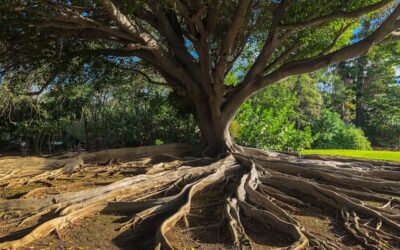
The small tree in a nursery container does not show how large it will become. Most shade maples reach 40 to 75 feet tall with canopies 30 to 50 feet wide. Roots usually spread well past the edge of the canopy, often two to three times the crown width, and most of them sit in the top 12 to 18 inches of soil.
Shallow, wide roots are why maples are notorious for lifting sidewalks and making lawns hard to mow. They are not usually able to break a sound foundation on their own, but in clay soils a large, thirsty tree can draw enough moisture to contribute to soil shrinkage near a house. Roots also exploit existing cracks in older clay or cast-iron sewer pipes, where they find water and nutrients.
How Far to Plant From the House and Utilities
Distance is the single best way to avoid future problems. Use these as starting points and add space for silver maple or very large cultivars:
- House foundation: at least 20 feet for medium maples, 30 feet or more for large ones like silver maple.
- Sewer and septic lines: at least 20 to 30 feet, and farther for silver maple. Find your sewer lateral before choosing a spot.
- Sidewalks and driveways: at least 8 to 10 feet, more for species with surface roots.
- Overhead power lines: plant large maples well clear of the lines so the mature canopy never reaches them. Choose a small ornamental tree for spots under wires.
- Property lines and fences: leave enough room that the canopy and roots stay mostly on your side.
Before digging any planting hole, call 811 or use your state’s online request at least a few business days ahead. The service is free, and utility crews will mark buried gas, electric, water and communication lines so you do not strike one with a shovel.
Tools and Materials for Planting
- Healthy container or balled-and-burlapped maple
- Round-point shovel and a spade
- Tape measure and marking flags
- Garden hose and a tree watering bag
- Shredded hardwood mulch
- Pruners for damaged roots
- Stakes and soft tree straps for windy sites only
- Gloves and sturdy boots
Planting Step by Step
- Call 811 and wait for marks. Do not dig until the utility locate is complete.
- Pick the spot. Measure distances from the house, pipes, pavement and wires. Look up to check for overhead lines.
- Find the root flare. The flare is where the trunk widens into the roots. Remove excess soil from the top of the root ball until you see it.
- Dig wide, not deep. Make the hole two to three times as wide as the root ball and only as deep as the distance from the flare to the bottom of the ball.
- Loosen circling roots. Tease apart or cut roots that wrap the container. For burlapped trees, remove twine and cut away as much burlap and wire as you can once the tree sits in the hole.
- Set and backfill. Place the tree so the flare sits at or slightly above grade. Backfill with the native soil, firming gently to remove air pockets.
- Water deeply. Soak the root ball and surrounding soil right after planting.
- Mulch. Spread 2 to 3 inches of mulch in a wide ring, keeping it a few inches away from the trunk. Avoid volcano-style mounds.
Watering and Early Care
For the first two growing seasons, water deeply about once a week when rain falls short, more often in hot, dry spells. A tree watering bag releases water slowly into the root zone and makes this easy to keep up. A good rule is roughly 10 gallons per inch of trunk diameter each week during dry periods. After establishment, maples handle most dry spells on their own, though extended drought still calls for supplemental water.
Skip fertilizer at planting unless a soil test shows a real deficiency. Do structural pruning while the tree is young: remove competing leaders, narrow crotches and crossing branches so the tree develops a single strong trunk. Keep lawn mowers and string trimmers away from the bark, since trunk wounds are a common cause of decline.
Troubleshooting Common Problems
Yellow leaves with green veins: often iron chlorosis in alkaline soil, common in red maple. A soil test confirms it, and treatment options include soil acidification or choosing a better-adapted species.
Scorched leaf edges in summer: heat or drought stress. Water deeply and maintain mulch.
Roots lifting the lawn: typical of silver and red maples. Avoid tilling or cutting large roots near the trunk. Add a thin layer of soil and reseed, or convert the area to mulch or shade-tolerant ground cover.
Split limbs after storms: common in silver maple. Have an arborist assess the structure and remove weak limbs before they fail.
Typical Costs
Small container maples are inexpensive, often under fifty dollars, while larger balled-and-burlapped trees can cost several hundred dollars before delivery and planting. Professional planting of a large tree adds labor. Long-term costs include occasional pruning by an arborist, which commonly ranges from a few hundred dollars upward for a mature shade tree.
When to Call a Licensed Professional
Hire a certified arborist to plant large balled-and-burlapped trees, to prune once limbs are out of reach, and to assess any maple leaning toward a structure. Roots in a sewer line call for a licensed plumber who can camera the line and recommend repair. Never prune or plant near overhead power lines yourself, and contact your utility about trees growing toward wires.
Fast growing maple trees deliver shade quickly when you match the species to the site. Choose red or Freeman maple for most yards, give every tree plenty of room from the house and pipes, and call 811 before the shovel goes in.
Frequently Asked Questions
What is the fastest growing maple tree?
Silver maple is the fastest, often growing 2 to 3 feet a year. Its brittle wood and invasive roots make it better suited to large open spaces than to yards near homes.
Is red maple a fast growing tree?
Yes. Red maple typically grows 1 to 2 feet per year and is one of the most popular choices for quick shade with strong fall color.
How far from a house should a maple tree be planted?
Plant medium maples at least 20 feet from the foundation and large species like silver maple 30 feet or more away.
Do maple tree roots damage foundations?
They rarely break a sound foundation directly, but they can lift sidewalks, invade cracked sewer pipes and contribute to soil shrinkage in clay soils near a house.
How long does it take a maple tree to give shade?
Fast species like red and Freeman maple often provide useful shade within 8 to 12 years of planting a young tree.