Walk into any pre-1940s Pacific Northwest home and chances are the original floors are fir. Fir flooring built America’s western housing stock for half a century, and surviving boards from that era still rank among the most beautiful aged wood floors anywhere. New fir is making a comeback alongside the broader interest in domestic, character-grade wood, but the species lives in a peculiar gap between hardwood and softwood that buyers often misunderstand. This guide explains what fir actually is, how it performs, and where it makes sense in modern homes.
What Fir Flooring Actually Is
Most fir flooring sold in the US is Douglas fir (Pseudotsuga menziesii), a Pacific Northwest conifer that produces dense, tight-grained lumber despite being technically a softwood. Janka hardness runs around 660 to 710 — softer than oak (1290) but harder than eastern white pine (380) and significantly harder than Eastern hemlock or spruce.
The species sells in two main grades. Vertical grain (VG) shows tight, parallel growth lines from quartersawn cuts and runs at the premium tier. Flat grain (FG) shows the cathedral-like grain pattern of plain-sawn lumber and runs cheaper. A third category, mixed grain, blends both at moderate cost.
Reclaimed fir is a separate category — boards salvaged from demolished factories, warehouses, and old growth structures, often dating to before 1920. The dense old-growth wood from that era was harvested from trees 300 to 800 years old and has tighter grain than any available new-growth fir.
The Pros That Make Fir Worth Considering
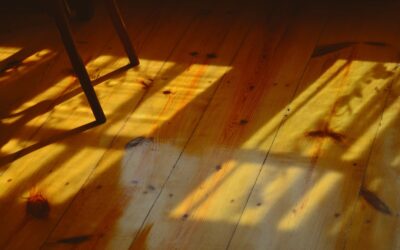
Color and grain are distinctive. Fresh-cut fir runs honey-amber with reddish heartwood streaks. The wood ages to deep golden-brown with light exposure, and old fir floors develop a patina nothing else matches.
Cost sits below most domestic hardwoods. New Douglas fir runs $4 to $7 per square foot for material. Vertical grain commands a premium at $6 to $10. Reclaimed fir runs $9 to $18.
Sustainability stacks up well. Douglas fir grows quickly in the Pacific Northwest and is the dominant timber species in the region. FSC-certified product is widely available.
Workability during install is straightforward. Fir cuts cleanly with sharp blades, accepts nails without splitting, and finishes nicely. Site-finishing produces particularly good results because the wood absorbs stain evenly with proper conditioning.
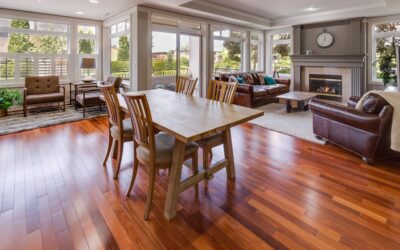
The vintage aesthetic appeals to buyers restoring craftsman bungalows, mid-century homes, and Pacific Northwest historic architecture. New fir flooring matches the original character of period homes better than modern oak or hickory.
Honest Drawbacks
Softness shows. Fir dents more easily than oak. Dropped tools, dog claws, and high heels leave visible marks. Households that demand pristine floors will find fir frustrating.
Color shifts dramatically with UV exposure. Expect 30 to 40 percent ambering within the first 18 months, particularly in sunlit rooms. Rugs and furniture leave outline patterns until the floor catches up.
Sap pockets and resin streaks appear in some lots. These are natural to the species but can complicate finishing. Quality mills cull the worst, but expect occasional resin features even in select grades.
Cupping risk runs higher than oak in humid climates. Fir moves more with seasonal moisture changes. Maintain 35 to 55 percent indoor humidity to minimize seasonal movement.
Engineered fir flooring is uncommon. Most fir sells as solid plank, which limits installation to nail-down over plywood subfloor in non-slab homes.
Choosing the Right Fir Product
Use this checklist:
- Vertical grain for cleaner, more refined look — best for primary living spaces
- Flat grain for rustic character with cathedral grain patterns
- Plank widths from 3 to 8 inches; wider boards highlight grain patterns better
- Tongue-and-groove milling on all four sides
- Kiln-dried to 6 to 9 percent moisture content
- Sourced from FSC-certified mills for traceability
- Reclaimed if you want old-growth tightness and authentic patina
Top Sources
Pioneer Millworks and Olde Wood Limited are the leading reclaimed Douglas fir suppliers, offering antique boards salvaged from historic structures. Carlisle Wide Plank custom-mills new vertical grain Douglas fir to spec. Hull Forest Products and Goodwin Heart Pine source Pacific Northwest fir alongside their southern pine catalogs.
For new growth, mills like Sutherlin Lumber and Boise Cascade produce commodity Douglas fir flooring at competitive prices. The grade variation matters more than brand — specify a clear or select grade for premium installations and standard or #2 for rustic looks.
Finishing Fir Properly
Fir notoriously blotches when stained directly. Apply a wood conditioner — Minwax Pre-Stain Wood Conditioner or shellac sealer cut 1:1 with denatured alcohol — before any stain to even out absorption.
Penetrating oil finishes like Rubio Monocoat or Pallmann Magic Oil enhance grain and accept repairs invisibly. The natural look highlights fir’s character. Multiple coats of water-based polyurethane provide harder protection but reduce the wood’s depth visually.
Oil-based polyurethane ambers fir even more aggressively than the natural UV shift. Use it intentionally if you want maximum warmth, avoid it if you prefer the wood’s natural color.
Installation Notes
Solid Douglas fir installs nail-down over 3/4 inch plywood subfloor with cleats every 6 to 8 inches. Wider planks (6 inches and up) benefit from glue-assist alongside nailing.
Acclimate at least 7 days in the install room with HVAC running at normal occupancy levels. Fir moves more than oak, and rushing this step is the leading cause of mid-winter gapping calls.
Pre-drill nail holes near plank ends to prevent splitting. Fir end-grain splits more readily than oak when cleated too close to the cut edge.
Where Fir Works Best
Pacific Northwest historic restorations, craftsman bungalows from the 1900s through 1930s, and mid-century homes with original wood detailing. Cabin and lake house interiors where the wood’s warmth complements rustic finishes. Primary bedrooms and formal living rooms where dent risk is low.
Skip fir in: families with large dogs unless you accept the patina-as-feature mindset, kitchens with frequent dropped-cookware risk, and high-design contemporary interiors where uniformity is the goal.
Maintenance and Longevity
Sweep or vacuum weekly with a soft-bristle attachment. Damp-mop with a wood-floor cleaner — never wet-mop. Recoat the finish every 5 to 8 years with a maintenance coat. Plan a complete sand-and-refinish every 25 to 35 years depending on traffic. Solid Douglas fir takes 4 to 6 refinishes over its lifetime, so a quality install easily lasts 100+ years with proper care.
Frequently Asked Questions
Is fir flooring durable enough for a family home?
Yes, with the understanding that the floor will collect character marks. Vertical grain Douglas fir handles family traffic better than flat grain. Marks become part of the look over time.
Can fir flooring be installed over radiant heat?
Solid fir generally does not — seasonal movement is too pronounced for slab-mounted radiant systems. Engineered fir, where available, can work with radiant up to 80°F surface temperature.
How does Douglas fir compare to pine for flooring?
Fir runs 50 to 80 percent harder than eastern white pine and slightly softer than southern yellow pine. The grain patterns differ significantly — fir reads more linear, pine more random.
Will new fir flooring match an existing fir floor in an old house?
Approximately. New growth Douglas fir lacks the tight grain of old-growth pre-1920s lumber. Reclaimed fir from the same era as the original floor produces the closest match.
Prefer to explore on your own?
See how new flooring looks in your actual room in seconds — free, no signup.
Try the free Floor Studio →