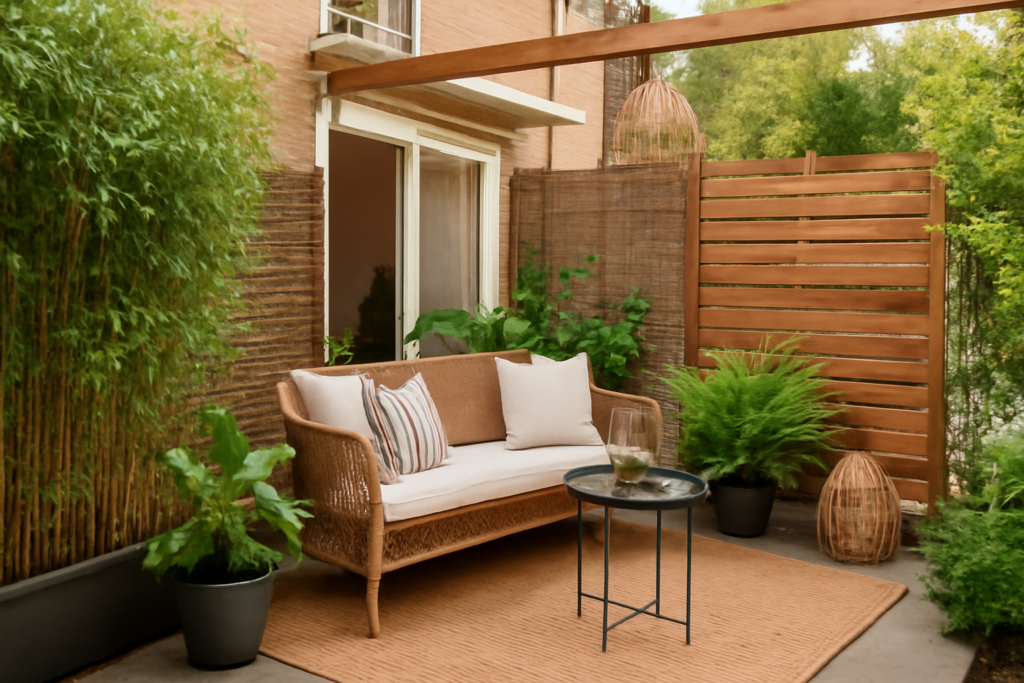
Ground-floor units get the best access to outdoor space, but that convenience comes at a cost — neighbors walking past, sightlines straight into your living room, and almost zero separation from a shared courtyard. Good first floor apartment patio privacy solutions solve that problem without violating your lease, and most of them can go up in a single weekend for less than a few hundred dollars. I’ve helped renters screen off patios in everything from garden-style complexes to converted rowhouses, and the same handful of approaches work almost everywhere because they don’t require drilling into anything permanent.
Part of our Decks & Outdoor guide — explore the full guide →
Start With Your Lease Before You Buy Anything
Before ordering screens or planters, check your lease and any HOA or property management rules about patio modifications. Most apartment communities allow freestanding privacy solutions but prohibit anything attached to the building exterior, railing, or fence with screws, nails, or adhesive that could damage paint or siding. Many also restrict height — commonly capping additions at 4 to 6 feet — and some limit what’s visible from the street or common walkways for aesthetic consistency across the property. A five-minute read of your lease can save you a security deposit deduction later, and it’s worth calling the leasing office directly if anything is ambiguous.
Freestanding Privacy Screens
A freestanding screen is the single most versatile option for renters because it requires zero attachment to anything and can move with you when your lease ends. These come in a range of materials and price points:
- Bamboo or reed screening on a frame: Budget-friendly at $40 to $120 per panel, natural-looking, and effective at blocking sightlines while still allowing airflow.
- Metal or composite privacy panels: More durable and weather-resistant, typically $80 to $250 per panel, often with a decorative cutout pattern that softens the “walled-in” look.
- Outdoor folding screens: Portable and easy to store, running $60 to $180, ideal if you only need privacy occasionally or want to reposition based on the sun and foot traffic patterns.
Weight matters as much as height. A lightweight screen without a stable base will topple in any real wind, so look for panels with a wide footed base or plan to add sandbags or weighted planters at the base for stability, especially in exposed courtyards or upper-level winds that funnel down between buildings.
Tall Planters and Living Screens
Plants solve privacy and decor in one move, and they’re almost universally allowed since they don’t attach to anything. The trick is picking plants that grow tall and dense quickly without needing a trellis anchored to the building.
- Bamboo in large containers: Clumping (non-running) bamboo varieties can reach 6 to 10 feet in large pots within one to two growing seasons and create a dense, fast screen. Avoid running bamboo varieties even in containers, since roots can escape drainage holes.
- Arborvitae in pots: A classic privacy hedge plant that also does well container-grown, reaching 4 to 6 feet in a few years with minimal maintenance.
- Ornamental grasses: Varieties like feather reed grass or maiden grass grow 4 to 6 feet tall in a single season, filling in quickly for immediate coverage.
- Vining plants on a freestanding trellis: Clematis, climbing hydrangea, or even fast annuals like morning glory can cover a standalone trellis panel within one growing season for a lush, green privacy wall.
Large planters run $30 to $100 each depending on material, with plants adding another $20 to $80 per specimen. Budget for the pot size to match mature plant size — a 5-gallon nursery plant needs at least a 15 to 20-gallon container to thrive long-term on a patio.
Outdoor Curtains
Outdoor curtain panels hung from a freestanding curtain rod or tension rod system are an underused option that adds softness and privacy at the same time. Weather-resistant fabric panels run $15 to $40 per panel, and a freestanding rod system (rather than one mounted to the building) runs $40 to $100.
Curtains work particularly well on patios with an existing pergola-style structure or a freestanding frame you can hang rods from, since they offer flexible, adjustable coverage — pull them closed when you want privacy, open when you want the view. Choose a fabric rated for outdoor use (usually solution-dyed acrylic) so color doesn’t fade after a season of sun exposure.
Lattice Panels on a Freestanding Frame
Lattice offers partial privacy while still letting light and airflow through, which some renters prefer over a solid screen that can make a small patio feel boxed in. Vinyl or wood lattice panels cost $15 to $40 each and can be mounted into a freestanding wood frame built with basic 2×4 lumber, avoiding any attachment to the building itself. A simple freestanding frame runs $30 to $60 in lumber for a typical 4-by-6-foot section.
For more privacy without losing the airflow benefit, layer lattice with climbing vines or hang outdoor fabric behind it — you get the structure of lattice with the fuller coverage of a solid screen once plants fill in.
Outdoor Rugs and Furniture Layout
Privacy isn’t only about blocking sightlines — it’s also about how the space feels. An outdoor rug anchors the patio and visually signals “private space” even before any screening goes up, while thoughtful furniture placement can angle seating away from the most common sightline, such as a shared walkway or a neighboring unit’s window. Positioning a loveseat or two chairs to face inward, rather than outward toward the walkway, does more for the feeling of privacy than people expect, and it costs nothing beyond rearranging what you already own.
Combining Approaches for Maximum Coverage
The most effective first-floor patios usually combine two or three of these ideas rather than relying on one. A common and highly effective combination: a freestanding privacy screen or lattice panel on the side facing the walkway, tall potted plants at the corners for softness and additional height, and an outdoor rug plus curtain panels to define the space and add flexible coverage. This layered approach typically runs $200 to $500 total and creates meaningfully more privacy than any single element alone, without a single hole drilled into a fence, railing, or wall.
Seasonal and Storage Considerations
Anything freestanding also needs a storage plan for winter or severe weather. Lightweight screens and lattice frames can usually be stored flat in a closet or under a bed, while larger planters with perennial plants may need to be moved closer to the building wall for winter protection depending on your climate zone. Curtains should come down before major storms since fabric panels catch wind and can pull a freestanding rod system over.
Can I attach a privacy screen to my apartment’s railing or fence?
Check your lease first — many properties prohibit attaching anything to shared railings, fences, or the building exterior. Freestanding screens with their own base avoid this issue entirely and are almost always allowed.
What’s the fastest way to add privacy to a first floor patio?
A freestanding folding screen or a few tall potted plants give the quickest results, often set up in under an hour with no assembly required for the screen and immediate height from mature nursery-grown plants.
Will plants provide enough privacy on their own?
Fast-growing options like clumping bamboo or ornamental grasses can provide solid coverage within one to two growing seasons, but if you need privacy immediately, pair plants with a screen or lattice panel while the greenery fills in.
How do I keep a lightweight privacy screen from blowing over?
Choose a panel with a wide, weighted base, or add sandbags or heavy planters at the footings. Screens positioned between buildings often face funneled wind, so extra weight at the base is worth the small added cost.
Prefer to explore on your own?
See how new flooring looks in your actual room in seconds — free, no signup.
Try the free Floor Studio →