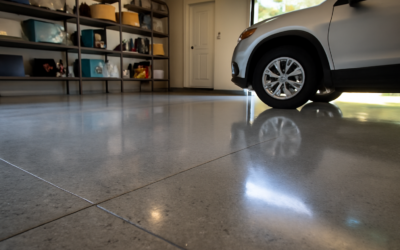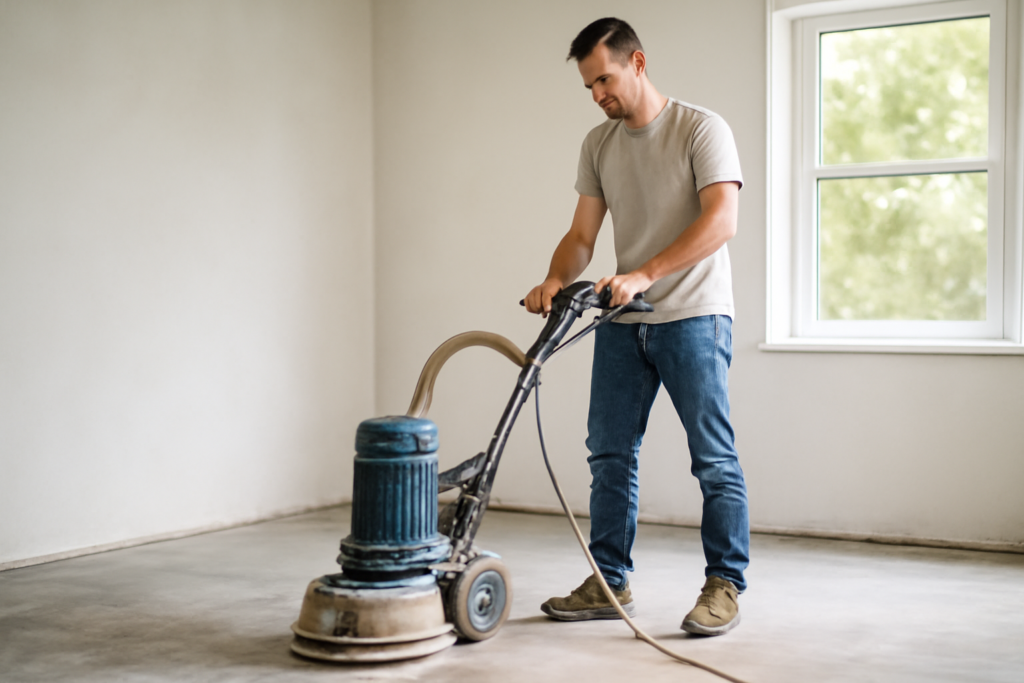
A floor grinder is the heavy-duty machine homeowners turn to when a floor needs more than a sander can give, such as removing thinset, leveling a slab, stripping old adhesive, or prepping concrete for a new coating. Unlike a wood-floor sander, a floor grinder uses abrasive discs or diamond tooling to cut hard surfaces. This guide focuses on the tool itself: the different types, whether to rent or buy, how to pick the right one, and the safety gear that is not optional when grinding masonry.
What a Floor Grinder Does
At its core, a floor grinder spins one or more abrasive discs against the floor to remove material or smooth a surface. Homeowners use them for a handful of common jobs: taking up old carpet glue or tile mastic, knocking down high spots and trowel ridges before new flooring, removing paint or coatings, and grinding or polishing concrete. The aggressiveness depends on the machine’s weight and the tooling you fit, from coarse diamonds that hog off material to fine pads that polish.
Types of Floor Grinders
The right type depends on the size of your job and the surface.
- Single-disc walk-behind grinders: The common rental machine for homeowners. Manageable size, good for garages, basements, and single rooms.
- Planetary (multi-head) grinders: Larger machines with multiple counter-rotating discs for fast, even results on big floors and serious polishing.
- Handheld angle grinders with surface-prep wheels: For edges, corners, stairs, and small patches the walk-behind cannot reach.
- Edger grinders: Specialized for getting tight against walls during a polishing job.
For most DIY projects, a walk-behind rental plus a handheld for the edges covers everything.
Choosing the Right Tooling
The disc or pad matters as much as the machine. Diamond-segmented discs cut concrete and masonry, with coarse grits for removal and leveling and progressively finer grits for refining or polishing. PCD (polycrystalline diamond) tooling is aggressive for stubborn coatings and mastic, while resin pads handle finishing and polishing. For glue removal, a grinder fitted with the right scraping or diamond tooling clears adhesive far faster than hand scraping. Tell the rental shop exactly what you are removing so they fit the correct discs.
Dust and Silica Safety: Non-Negotiable
Grinding concrete, mortar, or thinset releases respirable crystalline silica dust, which is linked to silicosis and other serious, permanent lung disease. This applies any time you grind masonry, and it must be controlled every single time:
- Capture the dust at the source with a grinder fitted with a dust shroud connected to a HEPA-filter vacuum, or use a wet-grinding method that suppresses dust with water.
- Wear real respiratory protection, at minimum a NIOSH-approved N95, and ideally a half-face respirator with P100 filters for heavy or extended work.
- Protect your eyes and ears with sealed goggles and hearing protection, since grinders are loud and throw grit.
- Seal off the work area from the rest of the house and keep others out until the dust settles.
Never dry-grind indoors without dust collection. Silica particles at the dangerous size are invisible, so the air can look clean while still being hazardous.
Rent or Buy?
For most homeowners, renting is the smart move. A walk-behind floor grinder typically rents for about $80 to $150 a half day and $120 to $250 per day, with diamond tooling sometimes charged separately. A matching HEPA dust-extraction vacuum often adds $40 to $80 per day and is worth every cent for both safety and a cleaner job. Buying a quality grinder outright starts around $300 to $700 for small machines and climbs quickly for planetary units, so purchasing only pays off if you grind floors regularly.
Operating Tips
Set the machine flat on the floor before starting, keep it moving in slow overlapping passes, and let the tool’s weight do the cutting rather than forcing it. Work the field area first, then switch to the handheld for edges and corners. Keep the vacuum filter clean so suction stays strong, and check your tooling periodically, swapping to finer grits as you progress toward a smooth or polished finish.
Before you start the real job, practice on an inconspicuous area or a scrap piece to get a feel for how the machine pulls and how much material it removes per pass. These machines have torque and can lurch sideways when you first squeeze the trigger, so keep a firm two-handed grip and stand in a balanced stance. Take breaks to empty the vacuum and let the dust settle, and never rush a pass, since an even, methodical pace produces a far better result than aggressive grinding.
Common Home Projects That Need a Floor Grinder
It helps to picture the specific jobs that justify renting one. The most common is prepping a garage or basement slab for an epoxy or polyaspartic coating, where grinding opens the concrete pores so the coating bonds properly; a smooth, sealed, or painted slab simply will not hold a coating without this step. Other frequent uses include removing old carpet glue or vinyl mastic before installing new flooring, knocking down high spots and trowel ridges so tile or LVP lies flat, and stripping failed paint or thin coatings from a slab. Each of these calls for different tooling, so describe your exact project at the rental counter.
Grinder vs Other Prep Tools
A floor grinder is not always the right answer. For a small patch of glue, a hand scraper or an oscillating tool may be enough and far less hassle. For self-leveling a slab, you pour a leveling compound rather than grind. A shot blaster is an alternative for profiling large concrete areas before coating, though it is a heavier commercial tool. The grinder shines when you need to remove material across a meaningful area, level a surface, or create a uniform profile, which hand tools cannot do efficiently. Match the tool to the scope, and you avoid both over-buying and under-tooling.
Final Thoughts
A floor grinder is the right tool when a floor needs aggressive prep, leveling, or coating removal that lighter tools cannot handle. Pick the machine and tooling to match your surface and job size, consider whether a simpler tool would do, rent rather than buy for a one-time project, and treat silica dust control as mandatory with a shroud, HEPA vacuum or water, and a real respirator. Handle the safety side properly and a floor grinder makes tough surface prep genuinely manageable.
Prefer to explore on your own?
See how new flooring looks in your actual room in seconds — free, no signup.
Try the free Floor Studio →