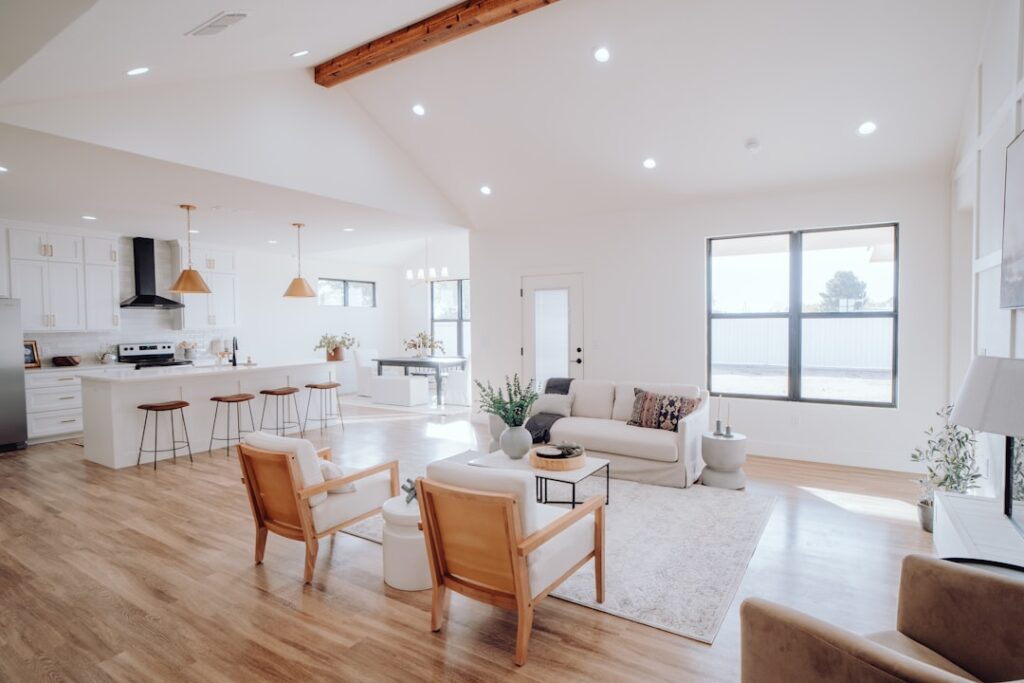
Nothing transforms a room as quickly or affordably as a set of well-hung floor length curtains. By drawing the eye up and framing your windows from ceiling to floor, they make ceilings feel taller, rooms feel larger, and even a modest space look polished and intentional. The catch is that small details, especially length and hanging height, separate curtains that look custom from ones that look like an afterthought. This guide covers how long they should be, where to mount the rod, which fabrics work where, and the styling choices that pull a room together.
- What Counts as Floor Length
- How to Measure for the Right Length
- Hanging Height Makes the Biggest Difference
- Choosing the Right Fabric
- Header Styles and Hardware
- Cost Considerations
- Floor Length vs. Other Curtain Lengths
- Light Control and Energy Savings
- Styling Tips for a Polished Look
- Final Thoughts
What Counts as Floor Length
Floor length curtains are panels that reach all the way down to the floor, as opposed to sill-length or apron-length curtains that stop short of the floor. There are three classic ways to let them meet the floor:
- Float (just kissing the floor): Hems sit about half an inch above the floor for a clean, tailored look that’s easy to vacuum around.
- Break (slight pooling): Panels are an inch or two longer so they touch and gently bend at the floor, a relaxed but neat look.
- Puddle (dramatic pooling): Several extra inches of fabric pool on the floor for a romantic, formal effect, best in low-traffic rooms.
For most homes, the float or slight break reads as the most modern and practical. Puddling looks luxurious but collects dust and gets in the way in busy rooms.
How to Measure for the Right Length
Accurate measuring is the difference between elegant and awkward. Measure from where the rod will sit down to the floor, then decide your finish. For a float, subtract about half an inch. For a break, add an inch or two. Always measure each window, since floors and ceilings are rarely perfectly level. If you’re between standard sizes, size up and hem rather than ending up with curtains that hover several inches above the floor, which looks like high-water pants.
Hanging Height Makes the Biggest Difference
Where you mount the rod matters as much as the curtains themselves. The classic designer trick is to hang high and wide. Mount the rod close to the ceiling, often 4 to 6 inches above the window frame or even right below the crown molding, to draw the eye upward and add the illusion of height. Extend the rod 8 to 12 inches past the window on each side so the open panels frame the glass rather than covering it, letting in more light and making the window appear wider. Curtains hung just above the window frame look short and dated by comparison.
Choosing the Right Fabric
Fabric weight controls light, privacy, and drape. Consider the room when you choose:
- Sheer (linen, voile): Soft, airy light and a gentle glow. Pair with a blackout layer if you need privacy.
- Light to medium (cotton, linen blends): Versatile everyday curtains that filter light and drape cleanly.
- Heavy (velvet, lined cotton): Rich, insulating, and great for blocking light and drafts in bedrooms and media rooms.
- Blackout-lined: Essential for bedrooms and nurseries where darkness and temperature control matter.
Lining adds body, blocks light, protects fabric from sun fading, and helps curtains hang straight. For floor length panels especially, a good lining keeps them from looking flimsy.
Header Styles and Hardware
The top of the curtain, called the header, sets the formality. Pinch pleats and goblet pleats look tailored and traditional, grommet tops give clean modern folds and slide easily, rod-pocket headers offer a casual gathered look, and back-tab or pleat tape headers create soft, uniform waves. Match the rod to the room, with a sturdier rod and rings for heavy panels. Wider windows may need a center support bracket so the rod doesn’t sag.
Cost Considerations
Floor length curtains fit nearly any budget. In current USD, ready-made panels commonly run about $20 to $80 each, mid-range lined panels run roughly $80 to $200, and custom-made curtains in premium fabrics can cost several hundred dollars per panel. Remember that fuller, more gathered looks require more panels, generally two to three times the window width in total fabric for a rich drape rather than a flat, stretched appearance.
Floor Length vs. Other Curtain Lengths
It helps to know why floor length usually wins. Sill-length and apron-length curtains, which stop at or just below the window sill, look casual and work in kitchens and bathrooms where a long panel would be impractical near a sink or counter. But in living rooms, bedrooms, and dining rooms, short curtains tend to look dated and chop up the wall, making ceilings feel lower. Floor length panels, by contrast, draw the eye from ceiling to floor and lend a finished, elegant feel. The only exception is rooms with radiators or heat vents beneath the window, where a sill-length curtain may be the safer practical choice. For most living spaces, going to the floor is the more polished option.
Light Control and Energy Savings
Floor length curtains do more than decorate; they help manage light and temperature. Heavier lined or blackout panels block sunlight for better sleep and protect furniture and floors from fading. They also add a layer of insulation at the window, slowing heat loss in winter and blocking solar heat gain in summer, which can trim energy bills in rooms with large or older windows. Hanging the curtains close to the wall and extending them slightly beyond the window frame on each side helps seal in that insulating air pocket. For the best of both worlds, layer sheer panels for daytime softness with heavier drapes you can close at night.
Styling Tips for a Polished Look
- Buy enough width so panels look full even when closed, not pulled taut.
- Steam or iron panels before hanging to remove packaging creases.
- Use tiebacks or holdbacks to soften the look and let in daylight.
- Train new curtains by tying them in soft folds for a few days so they hang with neat pleats.
Final Thoughts
Floor length curtains are an easy upgrade that makes a dramatic difference, but the magic is in the details. Hang the rod high and wide, get the length right with a clean float or slight break, choose a fabric suited to the room, and buy enough width for a full drape. Nail those points and your windows will look custom-tailored, your ceilings taller, and your whole room more put together.
Prefer to explore on your own?
See how new flooring looks in your actual room in seconds — free, no signup.
Try the free Floor Studio →