
Traditional string mops push dirty water around more than they lift it, which is why so many homeowners finish mopping only to see streaks dry across the floor. A floor scrubber mop solves that by combining mechanical scrubbing action with controlled moisture, so you loosen ground-in grime and pick it up in one pass instead of smearing it. Whether you are dealing with a busy kitchen, sealed hardwood, or a basement full of tile, the right scrubbing mop cuts your cleaning time roughly in half. This guide breaks down the main types, what to look for, and how to get salon-clean floors without wrecking your finish.
- What a Floor Scrubber Mop Actually Does
- Types of Floor Scrubber Mops
- Matching the Mop to Your Floor
- Pads, Brushes, and Solutions
- How to Use a Floor Scrubber Mop the Right Way
- Maintenance That Keeps It Working
- Powered Scrubbers Versus Manual Models
- Common Mistakes to Avoid
- Is a Floor Scrubber Mop Worth It?
What a Floor Scrubber Mop Actually Does
Unlike a flat mop that relies purely on a damp pad, a scrubber mop adds agitation. Some use spinning brush heads, others use vibrating or oscillating pads, and a few combine a spray nozzle with a stiff microfiber pad you drive back and forth by hand. That agitation is what breaks the bond between dried spills and the floor surface.
The payoff shows up on textured and porous surfaces. Grout lines, slate, and matte porcelain trap food and grease that a flat mop glides right over. A scrubbing head works into those low spots and lifts the residue, so your floor looks cleaner and stays cleaner longer between deep cleans.

Types of Floor Scrubber Mops
The category has grown fast, and the four main styles suit very different homes and budgets.
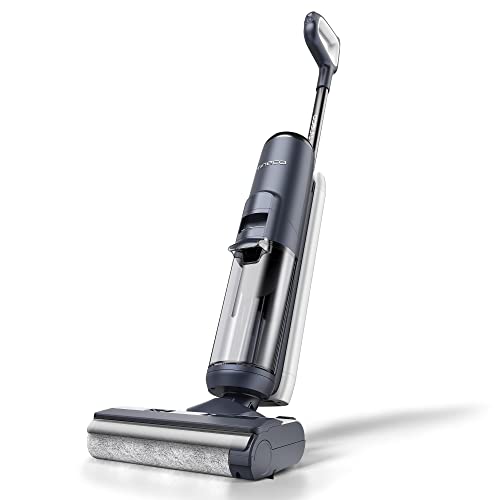
- Cordless powered scrubbers: Battery-driven units with dual spinning or rolling pads that scrub and often vacuum at once. Prices run $120 to $500, with runtimes of 20 to 40 minutes per charge.
- Spin mops: A bucket with a centrifugal basket that wrings the microfiber head; you supply the scrubbing motion. Typically $30 to $60, no power needed.
- Spray mops: A refillable reservoir triggers a fine mist ahead of a flat scrubbing pad. Usually $25 to $45 and great for quick daily passes.
- Steam scrubber mops: Heat water to about 250°F and blast it through a pad to sanitize and lift grime. Expect to pay $50 to $150.
For most households, a cordless powered scrubber delivers the biggest labor savings, while a spray mop is the affordable everyday workhorse. Steam models excel at sanitizing but should never touch unsealed wood or vinyl seams.
Matching the Mop to Your Floor
Not every scrubbing mop belongs on every surface, and using the wrong one is how finishes get dull or damaged. Sealed hardwood and laminate want minimal water — a lightly damp microfiber pad and a nearly dry pass, never a soaking-wet head. Excess moisture creeps into seams and swells the core.
Tile, stone, and luxury vinyl plank tolerate more aggressive scrubbing and higher moisture, making them the ideal home for powered and steam units. Textured slate and porous travertine benefit most from a stiff-bristle scrubbing head. When in doubt, test any new floor scrubber mop in a closet corner first and watch for clouding or streaking as it dries.
Pads, Brushes, and Solutions
The consumable side of the equation gets overlooked, yet it controls results. Microfiber pads trap fine dust and grease better than cotton and machine-wash clean; keep three or four on hand so you always start with a fresh one. Swap to a scrub-textured or looped pad for heavy soil and a smooth flat pad for delicate finishes.
Cleaning solution matters just as much. Skip oil soaps and wax-based cleaners on modern floors — they leave a film that dulls over time. A pH-neutral floor cleaner diluted per the label works for almost everything. For a cheap all-purpose mix, a quarter cup of distilled white vinegar in a gallon of warm water handles tile and vinyl, though you should avoid vinegar on natural stone because the acid etches marble and travertine.
How to Use a Floor Scrubber Mop the Right Way
Technique separates a streaky result from a spotless one. Follow a simple sequence every time.
- Dry-clean first. Sweep or vacuum so loose grit does not get dragged across the finish and scratch it.
- Work in sections. Clean 4-by-4-foot zones so the solution never dries before you lift it.
- Scrub in overlapping passes. Move with the grain on wood and in a slight side-to-side motion on tile to reach grout lines.
- Rinse or swap pads. A saturated, dirty pad just redeposits soil; change it or rinse the head often.
- Finish nearly dry. A final low-moisture pass removes residue so floors dry streak-free in minutes.
Always work backward toward a doorway so you never trap yourself on a wet floor, and keep pets and kids off the surface until it fully dries.
Maintenance That Keeps It Working
A scrubber mop only saves time if you maintain it. Empty and rinse any dirty-water tank after every use, because standing gray water breeds odor and bacteria within a day. Pop out the brush rollers on powered units weekly and cut away wrapped hair with scissors.
Descale steam and spray reservoirs monthly if you have hard water, running a vinegar-and-water solution through to clear mineral buildup that clogs the nozzle. Store the unit with the pad removed and the head elevated so it dries fully and never sits compressed against a wet surface. These five-minute habits easily double the working life of the machine.
Powered Scrubbers Versus Manual Models
The biggest decision most buyers face is whether to spend on a powered unit or stick with a manual spin or spray mop. Powered cordless scrubbers do the physical work for you, spinning or oscillating the pads at 300 to 500 rotations per minute while you simply guide the head. For anyone with wrist, back, or knee issues, that assistance is worth every dollar, and the self-propelled models glide across large kitchens with almost no effort.
Manual models still hold their ground. A spin mop costs a fraction of a powered unit, needs no charging, and never leaves you stranded mid-clean with a dead battery. The trade-off is elbow grease — you supply the scrubbing motion, which tires you out on big jobs. As a rough rule, homes under 800 square feet of hard flooring do fine with a quality manual mop, while larger homes and anyone cleaning several times a week get real value from a powered scrubber.
Common Mistakes to Avoid
Even a great machine underperforms when misused. The most frequent error is flooding the floor. More water does not mean cleaner floors; it means longer dry times, streaks, and swollen seams on wood and laminate. Keep the pad damp, not dripping.
Two other slip-ups show up constantly. Homeowners skip the dry-sweep step and end up grinding grit into the finish, and they reuse a filthy pad until it just smears soil around. Start with a clean pad, swap it the moment it looks gray, and your results improve instantly with no change in equipment.
Is a Floor Scrubber Mop Worth It?
For anyone with more than a few hundred square feet of hard flooring, the answer is usually yes. A quality floor scrubber mop turns a 30-minute chore into a 12-minute one and produces a visibly deeper clean, especially on tile and textured surfaces where a flat mop struggles. The upfront cost of a good cordless model pays for itself against years of replacement string mops and cleaning-service visits.
If your home is small or mostly hardwood, a simple spray mop with quality microfiber pads may be all you need. Match the tool to your floors and your tolerance for maintenance, keep fresh pads in rotation, and you will spend far less time on your hands and knees chasing stubborn spots that a proper scrubbing mop lifts in a single pass.
Prefer to explore on your own?
See how new flooring looks in your actual room in seconds — free, no signup.
Try the free Floor Studio →

