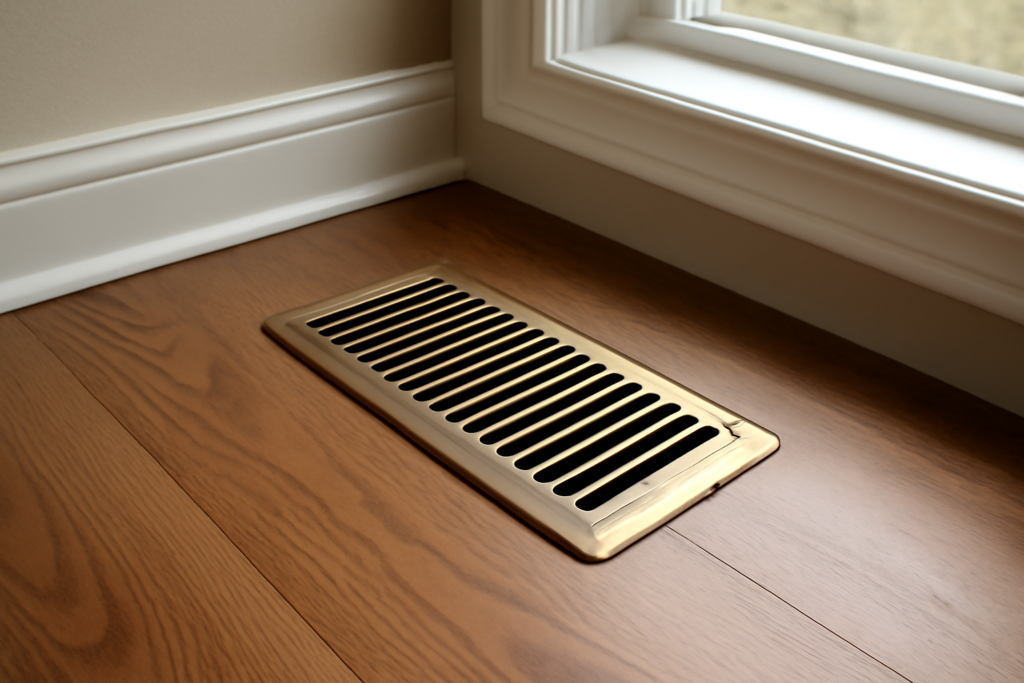
It is easy to overlook the humble floor vent, but these registers play a real role in how comfortable and efficient your home feels. They direct heated and cooled air into your rooms, and the right vent can improve airflow, complement your floors, and even reduce dust. This guide covers the types of floor vents, how to measure and choose one, airflow considerations, cost, and the maintenance that keeps your system running well.
Vents, Registers, and Grilles
People use these terms interchangeably, but there is a useful distinction. A register has adjustable louvers or a damper that lets you control or close off the airflow, while a grille is a fixed cover with no damper, used mainly for return air. Most of what homeowners call a floor vent is technically a floor register, since it lets you direct or shut off the air to a room.
Knowing the difference helps you buy the right part. Supply vents that deliver conditioned air usually have dampers, while return-air openings typically use simple grilles.
Common Materials
Floor registers come in several materials, each with trade-offs:
- Steel — affordable, widely available, and painted in many colors, though it can dent and may rust in damp areas.
- Aluminum — lightweight and rust-resistant, a good choice for bathrooms and basements.
- Brass and bronze — decorative and durable, with a premium look for traditional and high-end homes.
- Wood — flush-mount wood registers blend seamlessly into hardwood floors for a custom appearance.
- Plastic and composite — budget-friendly and rust-proof, though less sturdy underfoot.
Match the material to the room’s moisture level, the look you want, and how much foot traffic the vent will take.
How to Measure for a Replacement
Buying the right size is the most common stumbling block. Floor registers are sized by the duct opening they cover, not the outer faceplate. Measure the length and width of the actual hole in the floor, also called the boot or duct opening, and order a register listed at that hole size, such as 4-by-10 or 6-by-12 inches. The faceplate will be larger than the hole to cover the edges.
If you order by the outer dimension instead of the duct opening, the register will not fit properly, so always measure the hole itself.
Airflow Considerations
A floor vent does more than cover a hole; it shapes how air moves through the room. Choose a register with an adjustable damper so you can fine-tune comfort, opening vents fully in rooms you use and partially closing them elsewhere, though closing too many can strain your system. Look for designs with a high free-area percentage, meaning more open space for air to pass, which improves airflow and efficiency.
Avoid blocking vents with furniture or rugs, since obstructed registers force your HVAC system to work harder and create uneven heating and cooling. Keep a clear path for the air to circulate.
Cost Ranges to Expect
Floor registers are inexpensive. Basic steel registers typically run $8 to $25, decorative metal and brass models range from $25 to $75, and custom wood or designer pieces can exceed $100. Because they are so affordable and easy to swap, upgrading dated vents is one of the cheapest ways to refresh a room’s look.
Cleaning and Maintenance
Floor vents collect a surprising amount of dust, hair, and debris, which gets blown into your air and can build up in the duct below. Pull the register up every few months, vacuum it, and wash metal ones with warm soapy water before drying and replacing them. Reach into the duct boot with a vacuum hose to clear out fallen crumbs and dust.
Clean registers improve air quality and let your system breathe. Inspect for rust or damage during cleaning, and replace any vent that no longer adjusts or sits flush. This five-minute task keeps your air cleaner and your floors looking tidy.
How to Replace a Floor Vent
Swapping out a floor register is one of the easiest home upgrades there is, and it usually takes only a few minutes. Follow these steps:
- Measure the duct opening, the actual hole in the floor, to confirm the correct register size.
- Lift out the old register, which typically just sits in the opening without fasteners.
- Vacuum the duct boot to remove dust, hair, and debris that has collected below.
- Set the new register into the opening, making sure the damper lever faces a spot you can reach.
- Confirm it sits flush with the floor so it does not catch feet or furniture.
No tools are needed for most drop-in registers, which is why upgrading vents is such a cheap, satisfying refresh.
Floor Vents and Energy Efficiency
Vents have a direct effect on your heating and cooling costs. Keeping registers clean and unobstructed lets conditioned air flow freely, so your system does not have to run longer to reach the set temperature. Resist the temptation to close many vents at once to redirect air, since most modern HVAC systems are balanced to push a set volume of air, and closing too many registers can raise duct pressure and strain the blower. Instead, make small adjustments and keep furniture and rugs clear of the vents for the best efficiency.
Common Floor Vent Sizes and Placement
Residential floor registers come in a handful of standard duct openings, which makes shopping easier once you know the language. The most common sizes are 4-by-10, 4-by-12, 6-by-10, and 6-by-12 inches, with larger 6-by-14 and 8-by-14 openings used for bigger rooms or main living areas. The first number is usually the shorter dimension of the duct boot, so measure carefully and order by the opening, not the faceplate.
Placement matters as much as size. Supply registers are typically positioned along exterior walls and under windows, where they counteract the cold air that sinks off the glass in winter. Keeping vents away from doorways and out of high-traffic lanes protects the louvers from being crushed. If a vent sits in an awkward spot under a permanent piece of furniture, a deflector that redirects the airflow into the open room is a cheap fix that restores even heating and cooling.
Choosing the Right Vent for Your Floor
For the best result, match the register style to your flooring and decor. Flush wood registers disappear into hardwood, brushed metal suits modern spaces, and painted steel can match almost any color scheme. With the correct size, a good damper, and regular cleaning, the right floor vent quietly supports comfort and efficiency throughout your home.
Prefer to explore on your own?
See how new flooring looks in your actual room in seconds — free, no signup.
Try the free Floor Studio →