
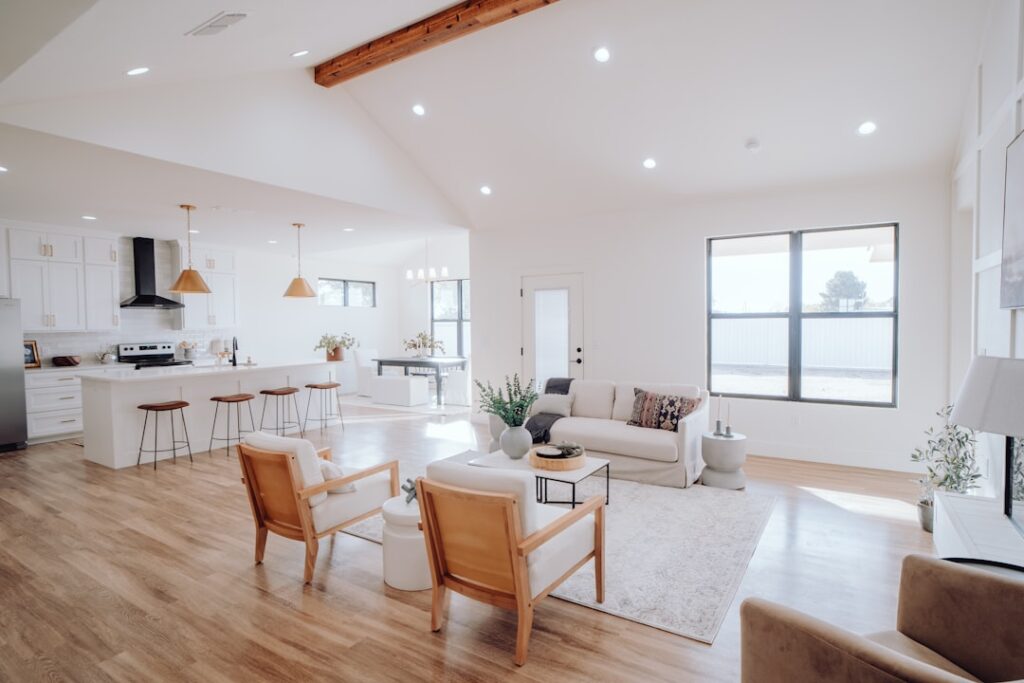
Charlotte’s rapid growth has filled the metro with new construction, but the Carolina climate plays by the same rules in a brand-new Ballantyne build as in an older Dilworth bungalow. Hot, humid summers and red-clay crawl spaces mean moisture is the constant you have to design around. Picking the right flooring Charlotte product means choosing materials that tolerate humidity and protecting wood from the damp air that rises through crawl-space foundations. This guide covers where to shop, what survives the Piedmont climate, and 2026 pricing.
- Where to Buy Flooring in the Charlotte Area
- Why Piedmont Humidity Shapes Your Choice
- Best Flooring Types for Charlotte Homes
- Real Installed Pricing in Charlotte
- The Crawl-Space Factor
- Pros of Buying From a Local Store
- The Drawbacks to Keep in Mind
- Questions to Ask Before You Buy
- New Construction vs. Resale Homes
- Cleaning and Maintaining Floors in Carolina Humidity
- Best Season to Install in the Piedmont
- Final Take
Where to Buy Flooring in the Charlotte Area
From Uptown and South End to Matthews, Huntersville, and the booming suburbs, the Charlotte metro has every kind of flooring seller.
- Full-service showrooms — measure, sell, and install, with knowledge of crawl-space moisture.
- Big-box and warehouse retailers — Home Depot, Lowe’s (headquartered nearby), and Floor & Decor for stock and fast pickup.
- Flooring outlets — closeout lots for budget remodels.
- Specialty hardwood and tile dealers — deeper selection in a single category.
Call ahead to confirm a store handles crawl-space installs and moisture testing, which matter throughout the region.
Why Piedmont Humidity Shapes Your Choice
Charlotte summers are humid and warm, and most homes sit over vented crawl spaces that let damp air rise into the subfloor. That combination expands and contracts wood, causing cupping and gaps if the crawl space is not sealed and the home is not climate-controlled. Engineered wood, LVP, and tile all handle Carolina humidity better than solid hardwood, which is why local installers steer many buyers toward them for ground-floor rooms.
Best Flooring Types for Charlotte Homes
Here is how the popular categories perform in the Piedmont:
- Luxury vinyl plank (LVP): waterproof, humidity-proof, $2.50 to $5 per sq ft.
- Engineered hardwood: real wood with better stability over crawl spaces, $3 to $7 per sq ft.
- Porcelain tile: ideal for entryways and wet rooms, $3 to $8 per sq ft.
- Laminate: scratch-resistant and affordable, $1.50 to $4 per sq ft.
- Carpet: warm and quiet for bedrooms, $2 to $6 per sq ft.
Real Installed Pricing in Charlotte
Labor in the Charlotte market runs $3 to $7 per square foot depending on material and prep. A 300-square-foot living room in mid-grade LVP usually lands between $2,000 and $3,200 installed. Because Charlotte’s building boom keeps crews busy, scheduling can stretch during peak seasons, so book early.
Order 7 to 10 percent extra material for waste, and confirm whether old-floor removal, crawl-space sealing, and subfloor leveling are included in the quote.
The Crawl-Space Factor
This is the detail that trips up Charlotte wood floors. A vented, unsealed crawl space pushes humid air into your subfloor year-round, and that moisture migrates up into hardwood and causes cupping. Before installing wood over a crawl space, make sure it has a vapor barrier on the ground and ideally is encapsulated. A good installer will inspect the crawl space and moisture-test the subfloor before laying a single board.
Pros of Buying From a Local Store
Shopping close to home in the Queen City pays off.
- Installers understand crawl-space moisture and Carolina humidity.
- You can feel samples and judge color under real lighting first.
- Warranty and service claims are easier to resolve in person.
- No freight damage or multi-week pallet shipping delays.
The Drawbacks to Keep in Mind
Local has trade-offs. Independent showrooms hold limited stock, so a specific color may need ordering. Big-box installation is subcontracted, with crew quality that varies, so check references. The building boom means scheduling delays in peak season. And skipping crawl-space moisture control to save money is a false economy that can ruin a wood floor.
Questions to Ask Before You Buy
Bring this checklist to every showroom:
- Is this product rated for Carolina humidity and crawl-space conditions?
- Will you inspect the crawl space and moisture-test the subfloor?
- Is installation in-house or subcontracted, and can I see local references?
- Are old-floor removal and subfloor leveling included?
- What does the warranty cover and what voids it?
New Construction vs. Resale Homes
Charlotte’s market splits between fresh builds in the booming suburbs and established homes in neighborhoods like Plaza Midwood and Myers Park. The flooring considerations differ. New builds often come with builder-grade carpet and entry-level LVP that many owners upgrade within a few years; if you are buying new, factor an eventual flooring upgrade into your budget. Older homes may hide original hardwood worth refinishing, but they also tend to have the vented crawl spaces that demand moisture attention. Either way, the Piedmont climate is the constant: humidity control comes first.
If you are upgrading builder-grade flooring, a 20-mil LVP or quality engineered wood is a worthwhile step up that handles Carolina humidity far better than the cheapest options.
Cleaning and Maintaining Floors in Carolina Humidity
Maintenance here is mostly about managing moisture and grit. Keep your HVAC running to hold indoor humidity in a reasonable range, which protects wood from cupping during muggy summers. Sweep regularly to remove the pollen and dust that coat surfaces in spring, and damp-mop hard floors with the right cleaner for the material, never a soaking-wet mop on wood or laminate. Place mats at entries and wipe up spills promptly. These simple habits add years to any floor in the Charlotte climate.
Best Season to Install in the Piedmont
Timing affects wood and laminate installs in Charlotte’s humid climate. Acclimation works best when indoor humidity is stable, so milder spring and fall windows are ideal, before the deep summer humidity sets in. Installing solid hardwood at the peak of a muggy Carolina summer risks the boards taking on moisture and cupping later. If you install during the humid months, make sure your HVAC and any dehumidification are running steadily and give the wood a full 48 to 72 hours to adjust before the crew begins. A patient acclimation prevents the most common local floor failures.
Final Take
Smart flooring Charlotte shopping leads with humidity and crawl-space moisture, not just the sticker price. Lean toward waterproof or engineered options for ground-floor rooms, seal the crawl space before installing wood, budget $3 to $7 per square foot for installation, and book early in this busy market. Match the product to the Piedmont climate and your floor will hold up for years.
Prefer to explore on your own?
See how new flooring looks in your actual room in seconds — free, no signup.
Try the free Floor Studio →

