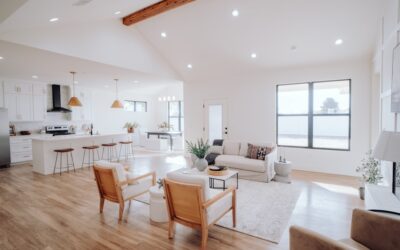
White cabinets are the most popular kitchen choice in America, and they are also the most demanding, because their blank-canvas neutrality means the floor beneath them carries the entire mood of the room. Choosing flooring for white kitchen cabinets comes down to one decision made three ways: how much warmth, how much contrast, and how much undertone harmony you want. Get the pairing right and the kitchen feels intentional and timeless; get it wrong and the white reads as cold or clinical against a clashing floor.
- Start With Undertone, Not Just Color
- Warm Wood Tones: The Classic Choice
- Greige and Light Neutral LVP: The Modern Default
- Dark Floors: High Contrast, High Drama
- Tile Options That Work
- Balancing the Whole Room
- Matching the Floor to Your Kitchen Style
- Practical Performance Still Matters
- Testing Samples the Right Way
- Making the Final Choice
Start With Undertone, Not Just Color
Before you pick a plank, understand that white is never truly neutral. Cabinets range from warm creamy whites to crisp cool whites with gray or blue undertones. The floor must agree with that undertone. Warm white cabinets (creamy, ivory, antique white) pair with warm-toned floors; cool white cabinets (bright, gray-white) pair with cooler, greige, or gray floors. Fighting the undertone is the most common mistake, and it makes an expensive kitchen feel off in a way people sense but cannot name.
Warm Wood Tones: The Classic Choice
Nothing softens white cabinets like natural wood, and warm-toned flooring is the most reliably beautiful pairing. Honey oak, natural hickory, and medium walnut add coziness and keep the space from feeling sterile.
- Honey and golden oak: Traditional, welcoming, and forgiving of dirt and pet traffic.
- Natural hickory: Strong grain and color variation for a lived-in, farmhouse feel.
- Medium walnut: Richer and more formal, adding depth without going fully dark.
These work in real wood, engineered hardwood, or wood-look LVP, and they flatter both warm and cool white cabinets because natural wood tone reads as a friendly neutral of its own.
Greige and Light Neutral LVP: The Modern Default
For contemporary kitchens, greige, the gray-beige blend that dominates current design, is the safest sophisticated choice. Light greige LVP or wide-plank flooring keeps the space bright and airy, pairs effortlessly with cool white cabinets, and hides crumbs and dust between cleanings.
Because it is usually vinyl or tile, this look is also the most practical for a kitchen: waterproof, scratch-resistant, and comfortable underfoot. If you want a light, open, resale-friendly kitchen, a greige rigid-core LVP under white cabinets is hard to beat.
Dark Floors: High Contrast, High Drama
Pairing white cabinets with a dark floor, espresso, dark walnut, charcoal, or near-black, creates crisp, dramatic contrast that reads as modern and high-end. The white pops, the room gains definition, and the effect is striking.
The trade-offs are real, though. Dark floors show dust, crumbs, pet hair, and footprints far more than light floors, which matters in a hardworking kitchen. They also make small kitchens feel smaller. Choose dark floors when the kitchen has good natural light and you accept a bit more sweeping.
Tile Options That Work
If you prefer tile, several directions suit white cabinets beautifully.
- Wood-look porcelain plank: The warmth of wood with the durability of tile.
- Warm gray or greige porcelain: Clean, modern, and endlessly practical.
- Natural stone in beige and cream: Travertine or limestone tones for an organic, Mediterranean feel.
- Patterned cement-look tile: A bold graphic floor that turns the plain white kitchen into a statement.
Balancing the Whole Room
The floor does not live in isolation. Tie it to the countertops, backsplash, and hardware so the palette feels cohesive. Warm wood floors love butcher block, brass hardware, and cream backsplashes. Greige and gray floors pair with quartz counters, matte black or brushed-nickel hardware, and white subway tile. When floor and cabinets share an undertone family, you can afford one bold accent, like a colorful island or a patterned backsplash, without the room feeling busy.
Matching the Floor to Your Kitchen Style
White cabinets appear in nearly every design style, and the floor is what tells the room which style you mean. Pointing the floor and the cabinets in the same stylistic direction is what makes a kitchen feel designed rather than assembled.
- Modern farmhouse: Warm wide-plank oak or wood-look LVP in honey to weathered tones, paired with white shaker cabinets and black hardware.
- Contemporary: Light greige or gray LVP and large-format porcelain, clean and uninterrupted, with handleless or slab-front cabinets.
- Traditional: Rich medium-to-dark hardwood, adding warmth and formality beneath raised-panel white cabinetry.
- Coastal or cottage: Pale whitewashed or driftwood-toned floors that keep the space airy and light.
When the floor’s tone and texture echo the style of the cabinetry, even a simple all-white kitchen reads as intentional and pulled together.
Practical Performance Still Matters
Looks aside, a kitchen floor works hard, so weigh durability alongside color. White cabinets pair beautifully with several materials, but each performs differently underfoot. Wood-look LVP and porcelain tile are the most forgiving in a kitchen, shrugging off spills, dropped pans, and pet traffic, and both come in the warm and greige tones that flatter white. Real hardwood delivers unmatched warmth but needs prompt spill cleanup and the occasional refinish. Whatever you love visually, make sure it can handle a busy kitchen, because a gorgeous floor that stains or scratches quickly will disappoint you long after the color has stopped feeling new.
Testing Samples the Right Way
The single most valuable step before buying is sampling properly in your own kitchen. Showroom lighting is nothing like your home’s, and undertones shift dramatically between the two. Order the largest samples you can, lay several planks or tiles together directly against a cabinet door, and look at them at three points in the day: morning light, midday, and under your kitchen’s evening artificial lighting. Warm-white cabinets can make a floor that looked neutral in the store suddenly read too yellow or too gray. Live with the samples for a few days before committing, and trust what you see in your own light over any showroom impression.
Making the Final Choice
The best flooring for white kitchen cabinets is the one that agrees with your cabinets’ undertone and matches how much contrast you want to live with. Reach for warm wood tones for timeless coziness, light greige LVP for bright modern practicality, or dark floors for bold contrast if you have the light and don’t mind the upkeep. Order large samples, lay them right against a cabinet door in your own kitchen’s light, and view them at different times of day before you commit. The undertone match is everything, and no photograph or showroom display can substitute for seeing the two together in your own space. When the floor and the cabinets finally agree on both tone and contrast, the whole kitchen clicks into place and reads as the timeless, intentional room white cabinets are meant to anchor.
Prefer to explore on your own?
See how new flooring looks in your actual room in seconds — free, no signup.
Try the free Floor Studio →